
Personal journey: Legendary climber Chris Kopczynski talks climbing, friendship
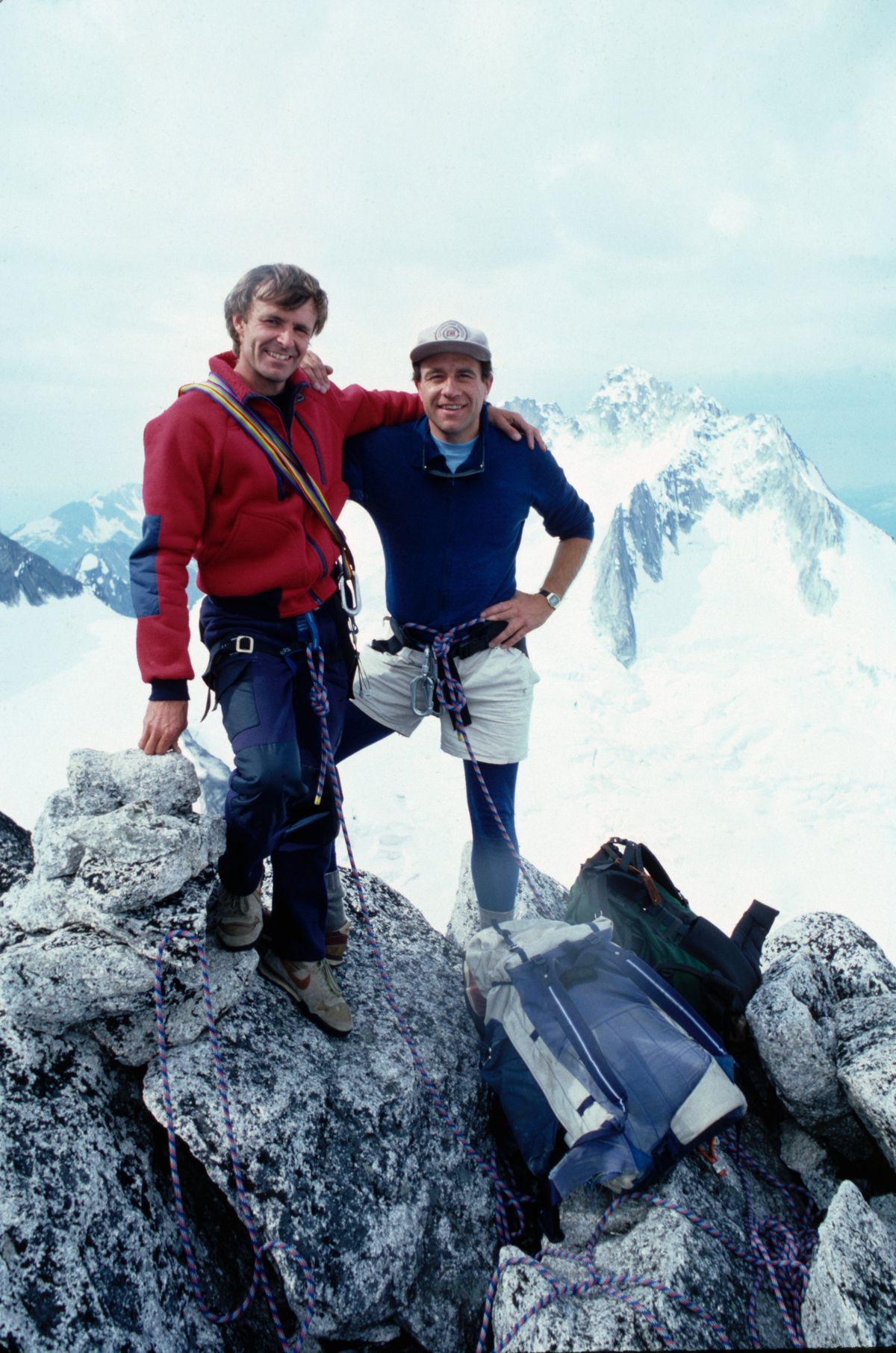
Chris Kopczynski has been in front of a crowd hundreds of times.
He has filled the Spokane Opera House and the Prairie High School gym in Cottonwood, Idaho. Countless times, he’s told climbing stories and shared his photos from places like the Swiss Alps and the Himalayas.
And yet Wednesday night, in front of a crowd that required nearly every available chair at the Shadle Park Library, the legendary mountaineer did something he never had before.
He used notes.
“This is kind of a personal journey tonight,” Kopczynski said. “I wanted to do something a little bit different. And, well, this is going to be different.”
Over the next 90 minutes, Kopczynski cruised through 80 slides in a presentation for the Spokane Mountaineers’ monthly meeting, which he later said was the first time he’d given a presentation to the club in at least a couple of decades.
A lot of ground was covered.
Kopczynski talked about Spanish conquistadors scaling volcanoes in Mexico and Mary Shelley climbing the Matterhorn.
He talked about his own trip up the Matterhorn, the grizzly bear he spooked in British Columbia and the rain jacket he forgot to bring to Mount Kilimanjaro.
He compared belaying his close friend and longtime climbing partner John Roskelley to catching a marlin – “I couldn’t get the rope out fast enough!” – and told stories about the late Joe Collins, to whom he dedicated his presentation.
Collins, who died in 2023 at age 98, was one of Kopczynski’s mentors. They climbed a lot of mountains together, and Kopczynski learned a lot from him – some fit for public consumption, some not.
“He said every time you go out (climbing), each person has his own victory,” Kopczynski said. “That meant a lot to me.”
Kopczynski is 78. By trade, he’s a contractor. But he’s better known for his mountaineering resume – the ninth American to climb Everest, and the 11th person to stand atop the highest peak on each continent, known as the Seven Summits.

His obsession with mountains started as a kid, after he saw the fake Matterhorn at Disneyland and watched the movie “Third Man on the Mountain.” On a family road trip to Banff and Jasper, he saw the Canadian Rockies for the first time, and something clicked. He looked at the mountains and wanted to climb them.
His dad, also a contractor, convinced him to join the Spokane Mountaineers. He went through the mountaineering school and started climbing with the club. He read whatever he could about the sport. It was clear that it was for him.
“There’s no rules,” Kopczynski said. “It’s just you and the peak.”
He met Roskelley on a Mountaineers trip to Mount Shuksan and they started climbing together at home and abroad. They bagged peaks in the Cascades, did Chimney Rock in North Idaho and made trips to places like Switzerland, where in 1974 they became the first Americans to climb the Eiger.
In 1980, the pair organized an expedition to climb Makalu, a Himalayan peak that is the fifth-highest in the world, with fellow Spokanites Jim States and Kim Momb.
Kopczynski recalled raising cash and hunting down supplies for the trip, which required them to be away from home for a long stretch.
“We took off in February and didn’t get back until late May,” Kopczynski said.
Porters helped haul their gear on the trek to base camp – Kopczynski recalled paying them in cash at the end of each day – but it was all on their backs during the climb itself. They set up multiple camps on the way up to make a summit push possible.
Only Roskelley made the summit, becoming the first American to do so, but all considered the expedition a success. In 2003, the American Alpine Club recognized the climb as one of the 10 most important expeditions of the 20th century.
“That was a pretty big deal to me,” Kopczynski said.

The year after climbing Makalu, Kopczynski climbed Everest. After he was done, the mayor of Spokane declared Nov. 6, 1981, to be Chris Kopczynski Day. Two years later, he did Everest again. Then, in 1991, Kopczynski climbed Mount Kilimanjaro, the seventh installment in his quest to bag the Seven Summits.
He told the Kilimanjaro story on Wednesday – how one route wouldn’t work and how he saw a strange atmospheric sight known as the Brocken Spectre. He discussed a little about Everest, but didn’t say much about the other climbs involved in the Seven Summits.
For one thing, it would take a week for him to tell all of his stories. He only had an hour and a half.
For another, he wanted to talk about his friends.
“Friendships are the most important in life,” he said.
He called Roskelley, who was in the crowd on Wednesday, “the GOAT.” He knew early on in their time climbing together that Roskelley was going to be a star, and he was right. Roskelley was recognized as the country’s best mountaineer in the 1980s and collected plenty of first ascents and awards to bolster his case.
Roskelley’s son, Jess, also became one of the world’s top climbers and was for a time the youngest American to summit Everest. Jess died in an avalanche in Canada in 2019, and a foundation in his name now gives grants to climbers. Kopczynski said Jess was a “blazing comet,” and that his favorite Jess story was when he illegally went ice climbing at Palouse Falls.
Kopczynski didn’t have a quick description of Collins, but he had a lot to say about him.
He said Collins, who was a jeweler, never ate a hamburger, drove erratically, and could split a dime 20 ways. He smoked but didn’t inhale, spent all the time he could in the mountains and wouldn’t let Kopczynski drive on their long trips to the Canadian Rockies.
He collected climbing books. He often asked Kopczynski and Roskelley to bring some with them on various trips so they could get them signed by the prominent climbers who wrote them.
After Collins died, Kopczynski and Roskelley got Collins’ vast collection of mountaineering books. Last fall, they donated the collection to Washington State University, along with many of their own.
In 1986, the three of them went to Bugaboo Spire in British Columbia. Collins had always wanted to go, but hadn’t been to the summit.
On that trip, they got him there. He got to sign the summit register.
“It was a pretty special time for Joe,” Kopczynski said.