
The allure of Lake Roosevelt’s rainbows | Michael Wright
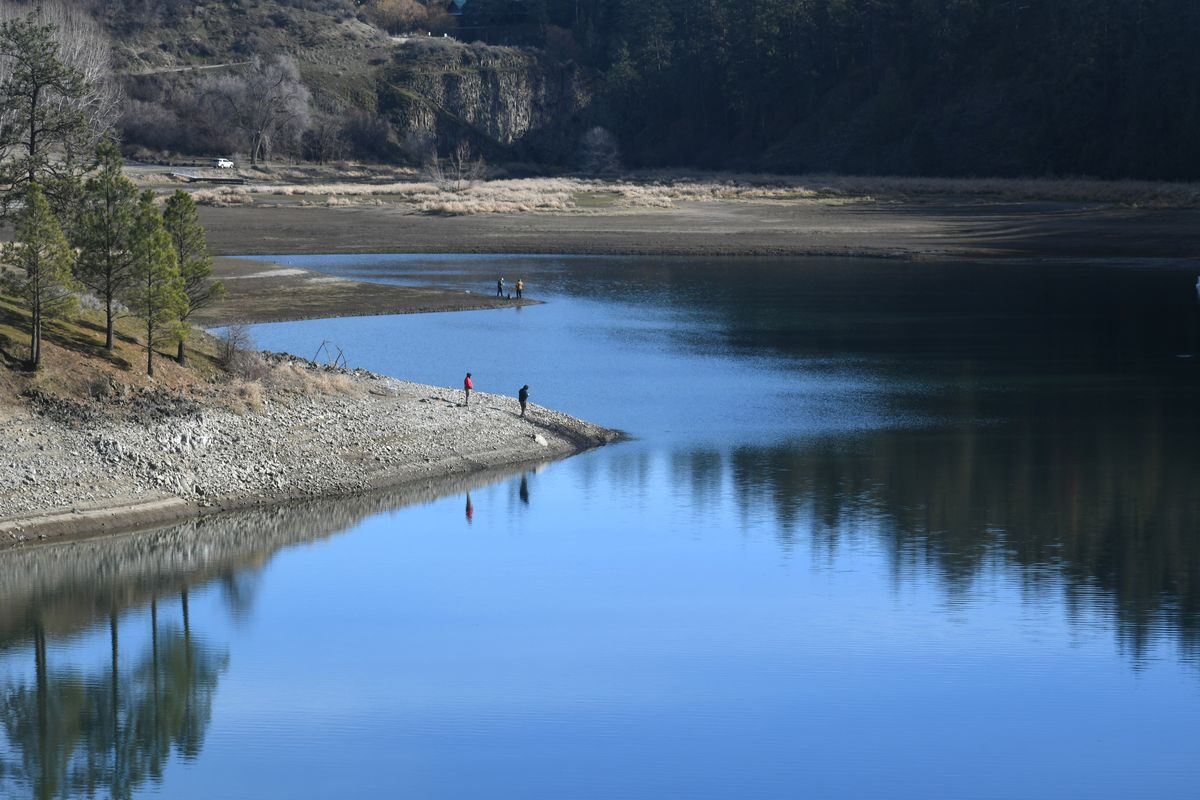
Many Eastern Washington anglers who avoid ice fishing have the same idea in January and February.
Go to Lake Roosevelt.
The massive lake behind Grand Coulee Dam stays ice free and remains a consistent draw for anglers who want to watch bobbers go down and bring home a few pink-fleshed rainbows for the smoker.
As popular as the fishery is, though, there’s plenty of room to spread out. The lake is 150 miles long and has more than 630 miles of shoreline, much of which is publicly accessible.
On a recent Wednesday, the crowd was light at both Fort Spokane and Seven Bays Marina.
More than a half-dozen cars were at the Hawk Creek trailhead when I pulled up, but it took less than a half-mile of walking to leave any hint of a crowd behind.
Roosevelt is a lake of many fishes. Gigantic sturgeon share space with bass, walleye and kokanee salmon. But in the winter, it’s about the rainbows.
The Washington Department of Fish and Wildlife stocks the lake with triploid rainbow trout annually through a cooperative net pen project. Christ Donley, WDFW’s eastern region fish program manager, said the fish eat a diet of mostly zooplankton, and they’re full of fat.
“They’re the best eating trout you’ve ever caught,” Donley said. “They’re almost oily when you cook them.”
Roosevelt is also one of only a few options in the winter, when the lakes with an open season are typically frozen and the rest are closed to give the fish a rest. That begins to change on March 1 with the opening of more than two-dozen lakes on this side of the Cascades. It’s the first big opening day of the year, followed by the more traditional late April opener.
But true stillwater junkies have been scratching out a few fish a day all winter long.
Like Roosevelt, Rock Lake, near St. John, stays open year-round. Chip O’Brien, who works in the fly shop at North 40 Outfitters in Mead, fished there just over a week ago and picked up four trout in about three hours while trolling streamers on a sinking fly line.
“It wasn’t red hot,” O’Brien said. “Anytime you can catch a fish in February, that’s a good thing.”
He’s headed back on Sunday to lead an outing for the Spokane Fly Fishers club. Another spot he’s fished this winter is Fourth of July Lake, near Sprague. That lake is only open in the winter – it closes March 31 – and warm weather has kept it open this year.
“I’ve caught some really nice fish out of there this year,” O’Brien said.
All three options allow anglers to fish however they’d like – bait, gear, fly. Roosevelt, it seems, is by far the most popular. There are several guide services who will help you catch a limit. Or you can flail away on your own on a random afternoon.
I’d been curious about Lake Roosevelt’s rainbows for a couple of years, but had never fished for them. Talk of them being caught on flies and a picture of a giant stack of fillets from former Spokesman-Review Outdoors Editor Rich Landers finally pushed me over the edge.
Odds seemed good when I got to Hawk Creek. A couple of guys on their way home said they’d caught three between them. I found a long stretch of empty beach on a wide bay near the mouth of the creek.
I stomped through soft mud, made a mess of my bobber and flies and ate a mediocre sandwich. No fish came home with me.
Should have gone to Rock Lake.