
Zak! Designs celebrates 50 years: How Irv Zakheim went from selling puka shell necklaces to owning a $150 million mealtime company
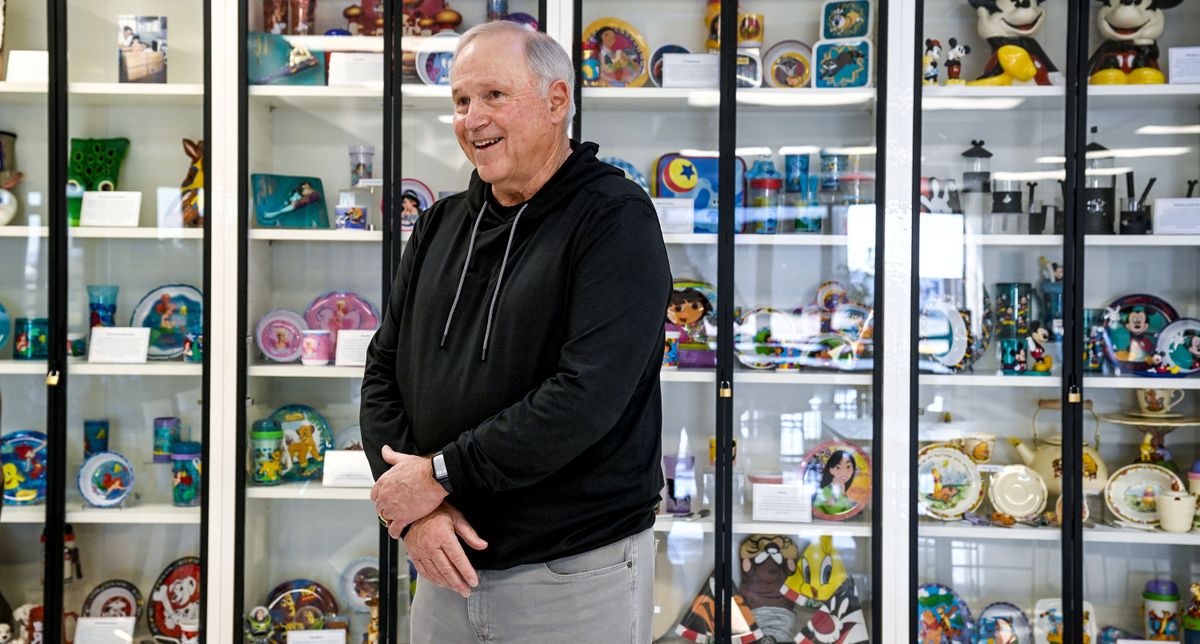
Irv Zakheim was a few years removed from selling puka shell necklaces on the beaches of Hawaii when he had a $150 million dollar dinnerware idea.
And if you have been a child or had a child in the last 50 years, there’s a good chance that you or your kid has eaten off that idea.
Zakheim owns Zak Designs, a business based out of Airway Heights since 1992. From plates with the faces of beloved sisters, Elsa and Anna of Disney’s “Frozen,” to water bottles depicting Ariel from “The Little Mermaid,” Zak Designs has sold all sorts of dinner and drinkware with generations of children’s favorite characters plastered across the front.
If it weren’t for tariffs, 2025 would have been the best year ever for Zak Designs.
“(Tariffs) affected about $20-30 million in sales and about $7-8 million in profits,” Zakheim said. “It was the craziest year in 50 years.”
Regardless of the tariffs’ effects on its operation, the last six years have been extremely successful for Zak Designs, with 2025 being its third most profitable year. Since 2020, the business has tripled its revenue, Zakheim said.
But Zakheim’s journey to where he is now as the “King of Melamine” was far from a straightforward plastic flow.
Zakheim was born in southern California and went to Beverly Hills High School. Many of his peers found success in the entertainment industry, like the late filmmaker Rob Reiner and actor Richard Dreyfuss. The most beneficial high school relationship he ever cultivated from his time in high school, however, was with Ross Bagdasarian Jr., son of the creator of “Alvin and the Chipmunks.”
Throughout high school, Zakheim had a knack for sports, particularly baseball. After graduating, he went on to play Division II college baseball at Cal State Northridge, where he was part of the national championship team in 1970.
The year after, he signed a deal with the Chicago White Sox to play second base. He credits his management style to his time playing sports, though the looming uncertainty of his place in professional sports was a concern for Zakheim.
“The minimum salary in the big leagues was $14,000,” back then, Zakheim said. “The average was $24,000. And I was making, in half a year, selling insurance, over $30,000 … Part of my reasoning is that I could control my own destiny.”
So Zakheim moved to Hawaii after two years in the Minors. By day, he sold puka necklace shells, a popular trend in the 1970s, because of icons like actress Elizabeth Taylor. At night, Zakheim sold insurance.
But his heart wasn’t in it. He wanted a business of his own.
In 1976, he started Zak Designs after visiting the Philippines and finding a suitable location for his first factory. Their headquarters, at that time, was located in Los Angeles.
“The first 10 years, it was really all in textiles,” Zakheim said. “Oven mitts, potholders, I was doing Christmas ornaments all hand embroidered out of the Philippines.”
One of the first major products were the Zany Zoo oven mitts that eventually made their way to the set of the sitcom “Seinfeld.”
Then in 1985, the business shifted when Zakheim came across a shatterproof and chip-resistant plastic called melamine during a trip to Taiwan.
“I said, ‘We’re going to be the king of melamine,’ ” Zakheim said. “Everybody thought it was crazy.”
Limited styles and colors of melamine products may have sounded like a far-fetched business idea to everyone at the time. Everyone but Zakheim.
“We stood out,” Zakheim said. “People were dabbling in (melamine), but they weren’t really doing licenses and they weren’t selling to the mass market. So what I wanted to do is do this with a price that could go to the mass market.”
Starting in 1986, Zak Designs leaned into featuring popular children’s media characters on its products, what would eventually become its signature stamp. An old friend of Zakheim’s, Barney Saltzburg, was a children’s book author who was all for Zakheim creating cups, bowls and more that showcased characters from his books. After that, Zakheim ran into another old friend of his, Bagdasarian Jr., at a high school reunion. He told Bagdasarian, who had taken over “Alvin and the Chipmunks” after his father’s death in 1972, about the potential for Alvin-themed dinnerware. Bagdasarian liked the idea.
Next came products for “Pee Wee Herman.” Those sold so well in stores that it caught the eye of none other than Disney.
Zak Design’s “big break” came in 1989 when he was negotiating the license for “Dick Tracy.” Disney told them that if he wanted to make products for that movie, Zak Designs was going to have to make products for an animated movie about a girl under the sea: “The Little Mermaid.”
In 1990, Zakheim said his business was worth $5 million. By the end of the decade, Zak Designs was worth $55 million.
With products across all the most iconic Disney “Renaissance” movies of the time, like “The Lion King,” “The Hunchback of Notre Dame,” and “Aladdin,” Zak Designs leaned into what separated them from the competition.
Their shelf space in stores like Target gradually increased from 4 feet to 8. Any potential business rivals quickly ran out of steam, Zakheim said, because they were only able to land one or two licenses at a time. Meanwhile, Zakheim and his team spent decades cultivating meaningful relationships with retailers and entertainment conglomerates, like Disney, Mattel and Warner Bros. At any given time, the company has eight to 10 different licenses with the companies previously mentioned.
” ‘Mermaid’ kick started us. ‘Lion King’ made us who we are. ‘Frozen’ took us to a new level,” said Rick Brinkman, the current CEO and president of Zak Designs.
Zakheim credits much of his company’s success to the group of people he works with, many of whom have been at Zak Designs for close to 30 years.
Brinkman is one of those people. He started as a salesman before becoming a regional manager, then a vice president of sales in 2000. In 2014, Zakheim asked Brinkman to come on as president. A couple of months ago, Brinkman took on the role of CEO.
Brinkman has high praise for Zakheim, who he said is, “as good of a human being as you’re going to find.”
When Zakheim asked him to move to Spokane to become vice president of sales, Brinkman was a 35-year-old husband with two small children living in Virginia. As a salesman, Brinkman worked from home but traveled two to three days a week. He was concerned that returning to an office environment, moving to Spokane and continuing to travel for work would be too much for his family. So Brinkman was honest with Zakheim about his reservations.
“(Zakheim) said, ‘Rick, the best employees have a balance in life. It’s not all about work,’ ” Brinkman recalled. “Irv’s son and my son played baseball against each other. Irv and I would be walking out the door together at 2:30 because we’re going to get to that ball game and watch our sons.”
Zakheim said as long as the work gets done, he doesn’t care when his employees take time to be with their families. Since Zak Designs deals with what kids want, Zakheim said he has always encouraged his employees to be good parents and show up for the ones they love.
In 2017, the company tweaked their business model, which is partially why they have been able to triple their profits since the pandemic. They cut back on their dealings with smaller stores and focused instead on the nation’s largest retailers, like Walmart, Target and Amazon, to grow their business.
“Narrowing it down to under 100 customers, from over 1200 customers, all of a sudden everything is just more efficient,” Zakheim said.
They diversified the products they create and focused more on water bottles to expand their presence in a number of different departments within any given store.
In 1992, when Zakheim moved operations from Los Angeles to Spokane, only six out of his 30 total employees went with him. His wife, Angela, was raised in Spokane and wished desperately to leave L.A. behind. When the Rodney King riots engulfed South Central, Zakheim said he knew it was time to relocate. The building he found, located in Airway Heights, was only 63,000 square feet when they moved in. Today, 12 additions later, the size of their headquarters is about 300,000 square feet. The company has about 140 employees, offices in Bentonville, Arkansas; Boston; and multiple factories in Thailand, Malaysia, Indonesia and Vietnam.
In an effort to give back to his community, Zakheim started a golf tournament and auction called the Zak Charity Open. The event was started after Spokane native and Super Bowl MVP Mark Rypien lost his son to cancer in 1998. More than $6 million has been raised through the annual charity event over the last 20 years.
In 2026, most of the day-to-day work of Zak Designs is Brinkman’s responsibility. Zakheim, 77, enjoys a board position and splits his time between Spokane and Palm Springs. Still, he tries to make it to headquarters when he can to check out what’s going on and see how the employees are.
“Fifty years is a long time in anything,” Zakheim said. “But for me, it’s been an incredible journey that I could be doing something for 50 years and enjoy every minute of it. So if anybody’s looking at doing anything that they have a passion for, then every day is a joy.”