
Deer in Ferry County tested for CWD, later test inconclusive

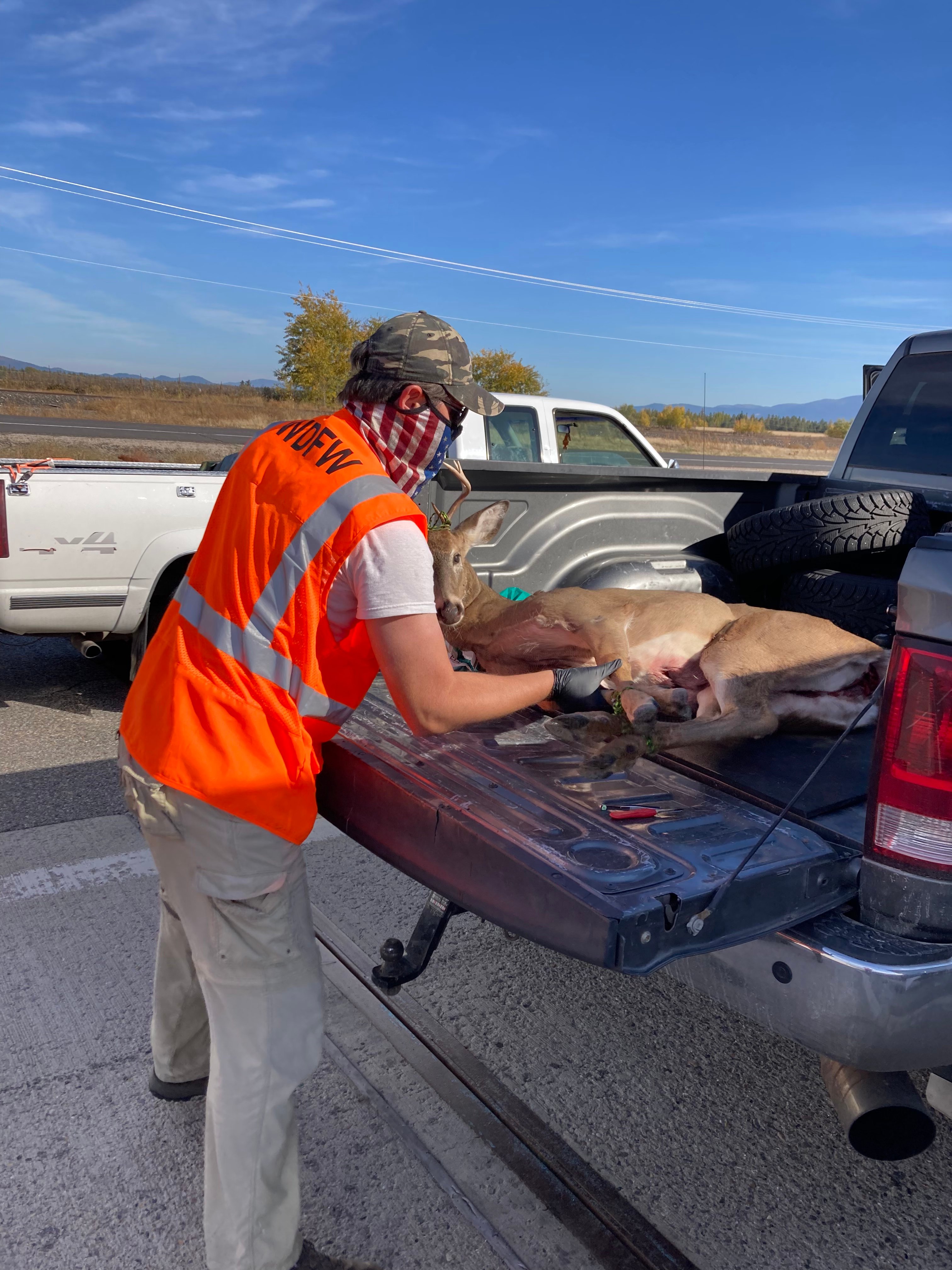
A mule deer killed in Ferry County this past hunting season tested positive for chronic wasting disease in tests performed by a private testing company. However, the tests were inconclusive for CWD when performed by state biologists.
The U.S. Department of Agriculture and the Washington Department of Fish and Wildlife do not recognize commercial testing for CWD.
The case was the first known use of this unapproved test in Washington, which would constitute the first report of the fatal disease in Game Unit 101, and the first possible case of CWD in mule deer in Washington state, according to a news release.
“Even though these results come from an unapproved test, we are doing our due diligence and investigating further to gain more information about this possible detection” Dr. Kristin Mansfield, the WDFW’s state wildlife veterinarian, said in a news release.
A hunter harvested the buck in October and transported it out of the area without submitting thyroid gland samples to the state for testing. Instead, the hunter submitted a sample of muscle to a private laboratory that offers testing for CWD. A subsequent law enforcement investigation determined the hunter “attempted, in good faith, to comply with the CWD rules” and it found the hunter had no criminal intent to circumvent state law, the release said.
The hunter saved a sample of brain tissue, which WDFW officials submitted to the Washington Animal Disease Diagnostic Laboratory. That facility did not detect any prions (the misfolded proteins that cause CWD).
However, because the submitted sample was not part of the brainstem, which is required for CWD testing, the result from the state testing was inconclusive.
“This case underscores how important it is for hunters to follow the Department’s CWD sampling requirements and transport restrictions,” said Mansfield. “These rules are necessary to provide managers with credible and actionable information, limit the disease’s spread, and ultimately minimize its impact to our state’s deer, elk, and moose populations.”
Hunters can send samples to third-party testing companies but they first must submit samples to the state, as required by regulations.
As a result of the possible positive test, Fish and Wildlife officials alerted area tribes and British Columbia officials due to the proximity of this CWD report to their jurisdictions.
To date, the state has confirmed eight cases of CWD in Washington in addition to this potential case.
CWD attacks the nervous systems of deer, elk and moose. It is not known to infect humans, but health officials advise against eating meat from infected animals.
Animals have tested positive for the disease in 35 states and five Canadian provinces. Biologists worry that the disease could decimate wildlife populations if left unmanaged.