
Symphony Review: Trombonist John Church blends naturally into rhythmic performance for ‘Masterworks 4’
The audience at Saturday’s performance of “Masterworks 4” had a good deal to applaud about, and so the evening ended with a predictable and richly deserved ovation. A less customary ovation, but one that was just as deeply felt and perhaps more worthy of note, was given to Music Director and Conductor James Lowe by his orchestra. In a broadcast interview on Friday with Spokane Public Radio’s Jim Tevenan, Lowe remarked that the upcoming program contained some of the most challenging music the orchestra had ever confronted, due to its rhythmic and harmonic complexity. He might have added that it was just as challenging for the conductor, due to the music’s emotional complexity and interpretive ambiguity. Some very fine conductors, while delivering sonorous and note-perfect renditions of this music, have failed to make their listeners see why they should care. Both the audience and the orchestra wanted Lowe to know that he had succeeded, and that they admired and were grateful for the experience the past two hours had held for them.
While it owes less to the traditions of dance than the two works that bookend it on the program, Paul Creston’s “Fantasy” incorporates dance elements in each of its three sections. In light of its date of composition – 1947 – it is surprising that popular dance idioms are not more prominent, since Glenn Miller and Tommy Dorsey – both brilliant trombonists, who led their own dance bands, were among the most famous names in popular music at that time, though Miller had lost his life two years earlier in a plane crash.
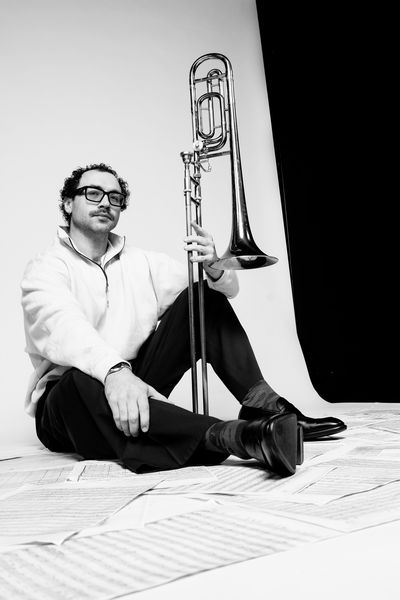
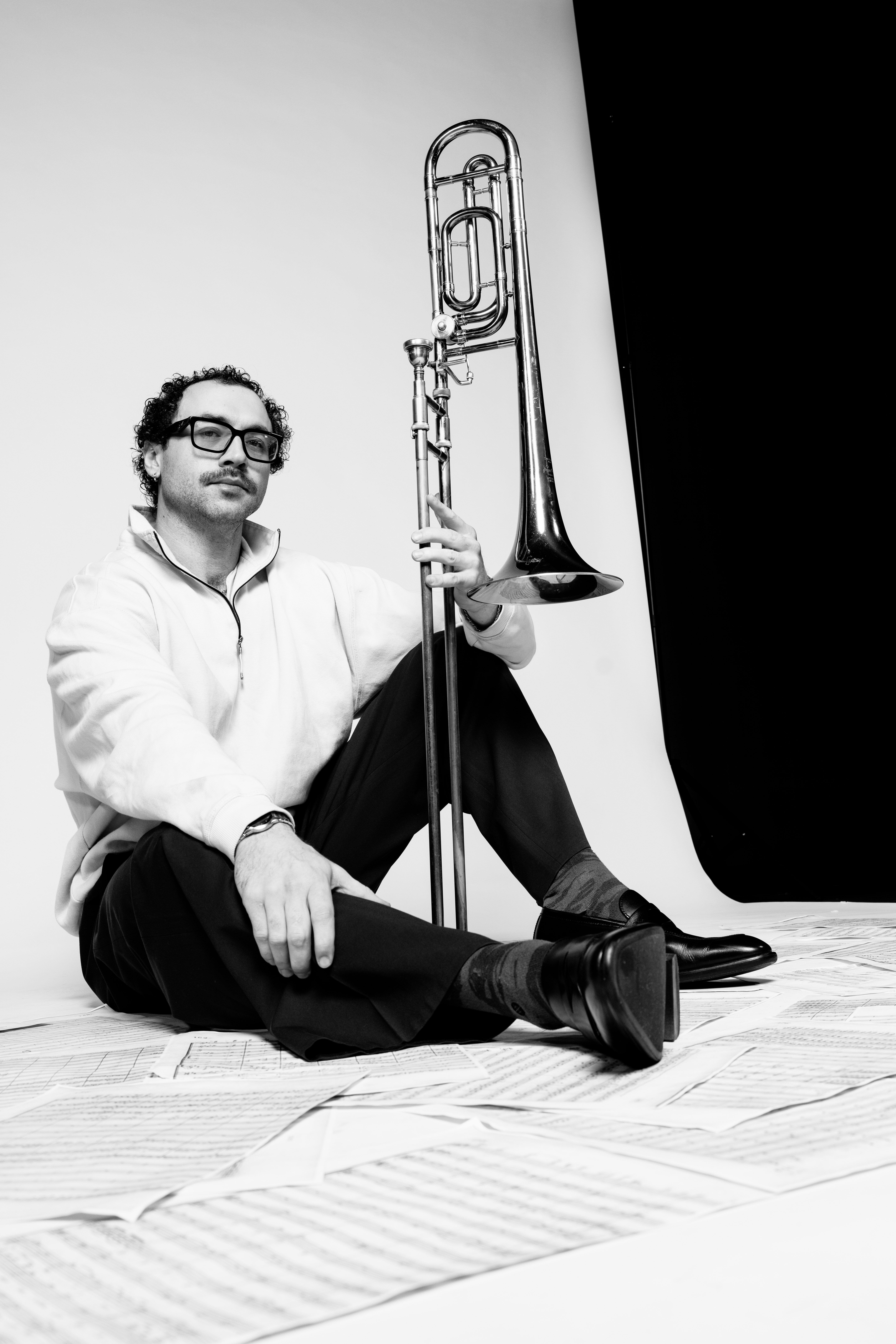
The complexity to which Lowe had alluded is apparent in the interaction of the soloist and orchestra, which do not accompany one another, but rather interleave rhythmic and melodic elements that are quite different from one another, a feat requiring great precision and unanimity of attack. As it happened, it was exactly these qualities that characterized the playing of the Spokane Symphony throughout the evening, not least in their partnering with their own principal trombone, John Church. Church executed Creston’s fearsome solo part with astonishing confidence, overcoming a series of challenges that could populate a textbook in advanced brass performance. More remarkable, he did so in a way that never distracted our attention from Creston’s driving rhythms, beguiling melodies and convincing avoidance of anything routine or obvious.
Church’s technical assurance also avoided the danger of such difficult music to become a mere display vehicle. Equipped with a beautiful, singing tone, Church directed our focus to the lyrical throughline that knits Creston’s Fantasy together, and allows us to see it as a celebration of the broad-shouldered, supremely confident spirit which characterized the United States in the post-war period. As it progressed through the 1950s, that very self-confidence became the target of criticism and disillusionment, as did the works and career of Paul Creston. It is to the great credit of John Church and his colleagues in the Spokane Symphony that we were able to experience this exuberant period in all its freshness and finish.
Leonard Bernstein’s penetrating critique of American self-confidence, which was a constant factor throughout his storied career as the most gifted and most accomplished classical musician born in the U.S., was a primary motivation in the creation of “West Side Story,” from which he drew all the material that makes up his “Symphonic Dances.” No doubt wishing to avoid the pitfalls of that dreariest of all musical forms – the medley – Bernstein was careful to construct a work capable of standing on its own, possessing those qualities of integrity and purposeful structure that Aristotle posits as essential to every artwork.
In his preconcert lecture, Lowe carefully traced Bernstein’s use of melodic and harmonic motifs in tracing the tragic progress of Tony and Maria from shy recognition, through budding hope and ecstatic love to bitter disappointment and death. Plainly, he made the same construction clear to his musicians, who rendered every phrase, every poignant change in harmony both clearly and feelingly. There could be no clearer example of the expressive range of the symphony orchestra than we heard when the melody of “Somewhere” was introduced into the orchestral texture by Concertmaster Mateusz Wolski, then to be played in duet by Principal Cello John Marshall and Principal Viola Nick Carper, only to be passed to the duet of Principal Oboe Keith Thomas and Principal Horn Clinton Webb. At last, the strings enter choir by choir in support of the ravishing flute obbligato of Julia Pyke, who later performed a solo in the hushed transition to the desolate finale that must have stilled the heart of every listener. These passages took only minutes, but they were minutes that will remain in the memories of everyone there.
As challenging as the Creston and Bernstein pieces are to the interpreter, Rachmaninoff’s “Symphonic Dances” must cede pride of place in those sweepstakes. With a few notable exceptions (among which are Dmitri Mitropoulos and Kirill Kondrashin), have failed to win for that work the respect that came so easily to the composer’s piano concertos and Second Symphony. To be honest, one can see why. The piece lacks the big tunes and heady, intoxicating orchestration that have been sweeping audiences off their feet for over a century. The instrumental vocabulary is narrow, more focused, and the emotional character of the music ambiguous. In the first movement, Rachmaninoff introduces a melody, brilliantly voiced by one of our community’s most treasured cultural resources, saxophonist Greg Yasnitsky, that is at once beguiling and foreboding. It was taken up, also very sensitively, by Principal Clarinet Chip Phillips, and ultimately by the whole orchestra, but never resolved. Likewise, there is a gorgeous waltz tune that forms the centerpiece of the Second Movement, but it is given an otherworldly, macabre character by a dissonant commentary by the flute (Julia Pyke strikes again).
Under the clear eye of Lowe, these moments are not allowed to languish as isolated events. Rather, they are shown to identify stages in the composer’s psychological progress from despair and alienation to acceptance. This type of specific, intimate psychological revelation is definitely not a feature of Rachmaninoff’s most widely known and accepted compositions, but Lowe guides us in tracing the composer’s path as a parallel to that of Tchaikovsky, who moved from the detached, ornamental landscapes of the first three symphonies and the First Piano Concerto to the bleak reality of the “Pathetique” Symphony. But the landscape in which we find ourselves at the end of Rachmaninoff’s “Symphonic Dances” is not bleak; it is triumphant. It led to the ovation Lowe received from his orchestra.