
Care, conversations about big topics guide Spokane Children’s Theatre’s ‘Charlotte’s Web’
Outside of an actual voyage, perhaps the best show of “It’s the journey, not the destination” is a theatrical production. After weeks of rehearsals, learning lines and blocking, building sets and crafting costumes, you’ve got yourself a show.
But perhaps more importantly, you’ve also got a new group of friends and a sense of your own strengths and abilities.
In director Dahveed Bullis’ words, “The product is not the play; the product is the growth of the individuals in the play.”
When asked to direct “Charlotte’s Web” at Spokane Children’s Theatre, Bullis was excited for the opportunity to be part of that growth, for the chance to see young performers, many of them making their stage debuts with “Charlotte’s Web,” blossom on and off stage.
“I approach every group the same way, and I have found working with children, they will rise to the expectation I give them, as long as I’m consistent…” he said. “I create this environment that invites people to be their genuine selves by leading with vulnerability.”
“Charlotte’s Web” opens Friday and runs through Feb. 8 at Spokane Children’s Theatre. The show will be ASL interpreted on Sunday, and the Family Value Night performance is at 7 p.m. Jan. 31.
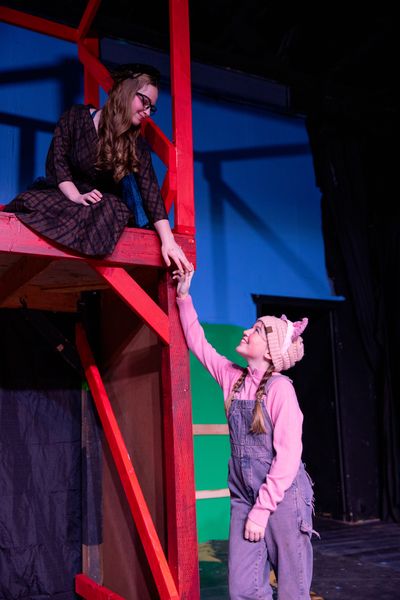
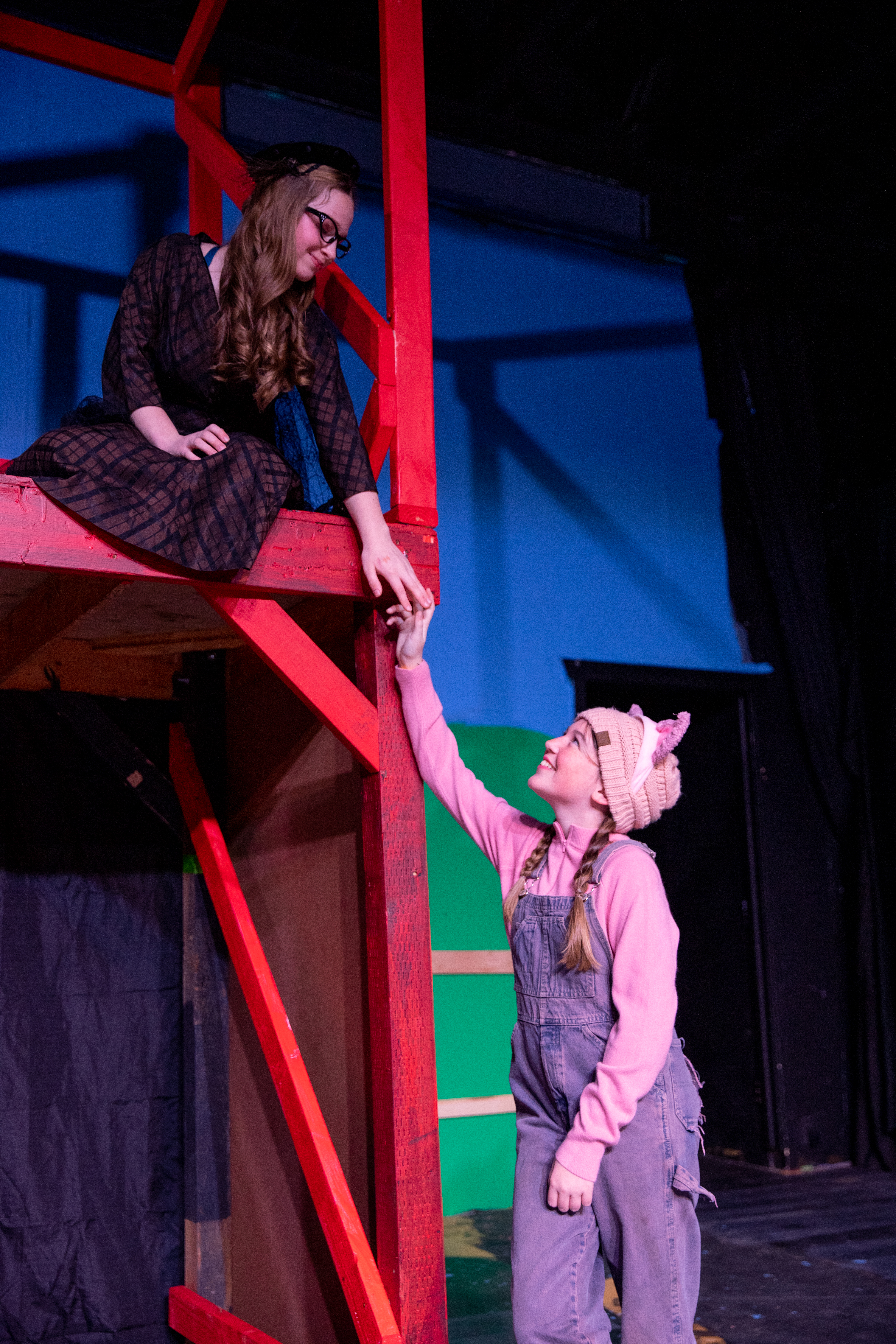
“Charlotte’s Web” is based on the E.B. White story of the same name. In the play, audiences meet Wilbur (Ana Ingoldby), a pig who was the runt of the litter and saved from slaughter by Fern (Alara McDonald).
With Fern’s love and attention, Wilbur grows. When he gets too big, Fern’s dad John (Mark Pinckney) sells him to Fern’s uncle, Homer Zuckerman (Alaric Martin). Though Wilbur is initially distraught to be away from Fern, he begins to make friends, though some animals, including the head ram, don’t treat Wilbur well. The head ram even tells Wilbur that Zuckerman intends to raise him for slaughter and consumption.
As Wilbur cries over his impending death, a spider named Charlotte (Emy Hargrove), comforts him and comes up with a plan she believes will guarantee Wilbur gets to live a long, happy life.
The cast also includes Felina Garegnani, Mischa Seim, Daniel Stuhlmiller, Kaia Donnelly, Tracey Hirt, Zane Belgarde, Vera Woods, Amanda Price, Tristan Corrick, Alyssa McDonald, Lauren Pinckney, Ellie Eddy, Makynzie Hutton, Jessey Porritt, Kavya Arora, Maxwell Bullis, Ashlyn Donnelly, Lennon Drake, Thea James, Madeleine Klingback, Vivenne McDonald, Julian Paul-Tillery, Levi Sampson, Quinelopee Seaton, Zephyr Telford, Charlotte Tillery, Lucy Tillery and Maeve Woods.
The play is directed by Bullis and stage managed by Kezia Rhodes.
Though there is a musical version of “Charlotte’s Web,” this production is a straight play. Nonetheless, Bullis believes the story will translate, saying the show is an opportunity for the performers to get on stage and tell a truth that resonates with a lot of people.
“Charlotte’s Web,” he believes, is likely the first experience a lot of children have with death and the level of friendship and community shown between Wilbur and Charlotte. The idea of growing up is also a strong theme of the story.
Bullis knew going into this production that he wouldn’t shy away from those difficult conversations. A few months past his final performance in Antoinette Chinonye Nwandu’s “Pass Over,” a powerful take on “Waiting for Godot” that features two Black men starting their day as they always do before being disrupted by two white characters, he was familiar with the process of engaging with intense subject matter over and over again.
“As we were building the characters, and as we were building the arc of the story, I would constantly be asking people ‘How are you feeling right now? What is going on in this moment?’ ” he said. “If they started to rush through a line, I start to perceive ‘OK, is that an emotion that’s hard for you to touch? Why is that?’ “
Dealing with deep emotional wells, Bullis said, is like making a scar then constantly picking at the scab to feel those emotions. It’s OK for a performer to do that, but only in a healthy way.
Helping with that is the consent-forward workshops Spokane Children’s Theatre organizes with Dawn Taylor Reinhardt during which young performers learn how to communicate their boundaries.
Bullis let the entire cast, which ranges in age from 7 to late 50s, know that nothing was more important than their safety. If they ever needed a moment, they could say “Hold,” and the rehearsal would pause so they could take a moment and regroup.
He did also advise the cast that, once they got comfortable with those feelings, it can be a little addicting to make audiences experience those emotions.
Helping to really drive those emotions home is the fact that Bullis and costume designer Neva White took a minimalistic approach to the look of the show, ensuring that the face of each actor was clearly visible and not hidden behind a mask or full-body costume.
The set too is fairly minimal, with just a centerpiece acting as the barn, a platform where Charlotte is perched during the show, some blocks, a fence and a trough. “Stage magic” will help bring Charlotte’s everchanging web to life.
“From an artistic perspective, if we can peel away things that people expect to come in and see and then still get them to believe this was real? What an incredible thing that is,” Bullis said. “For me, I find that the minimalism aspect really gets people focused on what’s actually being said and what’s really being felt.”