Unlikely 1981 upset of San Francisco raised the stakes for Gonzaga basketball | West Coast Conclusion
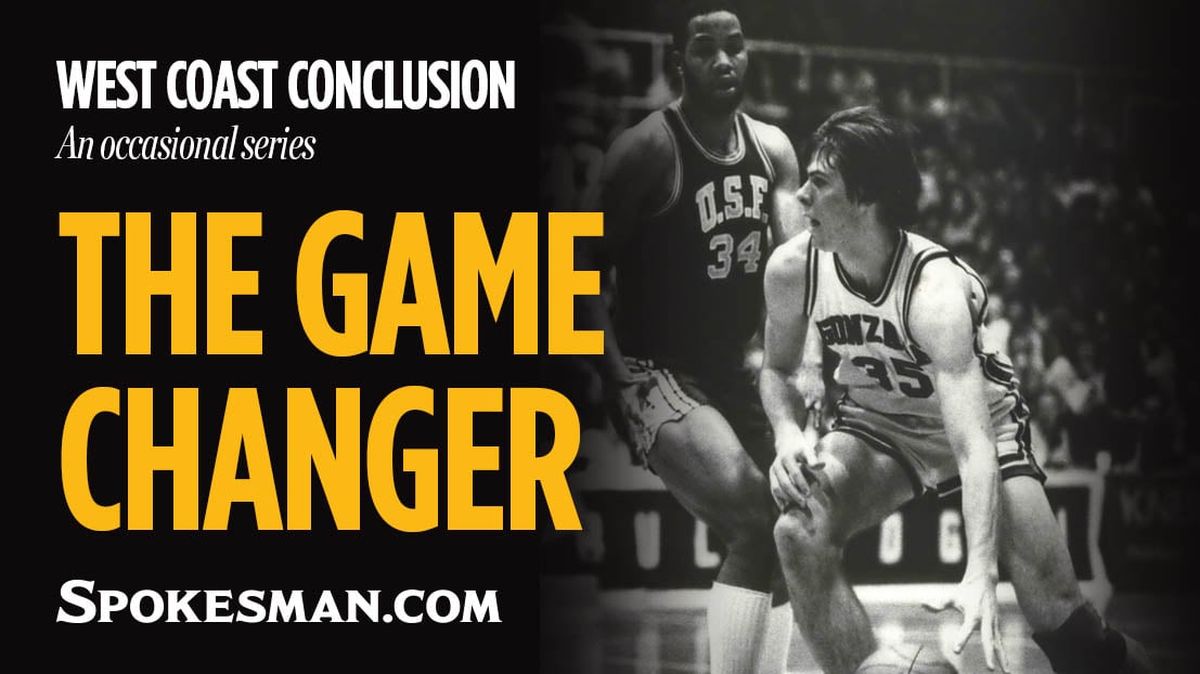
Hugh Hobus would never take credit for being the guy who started the Kennel Club.
However …
A couple of days before the University of San Francisco Dons would make their first visit to the Gonzaga campus back in 1981, Hobus searched out Coach Dan Fitzgerald before practice to present his own, uh, scouting report.
“The baseball players and basketball players at Gonzaga were very much in sync with each other,” Hobus recalled. “We’d all be there at their games, and they’d be at ours to support us.
“So I went to Fitz and said, ‘Listen, we need this place packed. The baseball guys do a big party before the game to get the students here. They’ll get people primed, but you need to buy the keg.’ ”
Responded Fitzgerald, “We’ll do it.”
It was a coaching decision far more crucial than whether to go zone or man-to-man.
By tipoff against the Dons, the old bleachers of Kennedy Pavilion bowed – students standing on both the wooden seats and footboards. This was before the remodel, before it became “The Kennel” and way before the current palace went up next door – where the Dons will make their final visit Saturday night in GU’s last go-round in the West Coast Conference.
But never mind the bleachers. Spectators were backed up six and seven deep at the west-end balcony, and even deeper at the floor entrance. Players had to hand-fight through screens just to get to and from the locker room.
They called the crowd 4,731 and it looked right, even if Kennedy’s listed capacity of 4,000 was a happy fiction.
And not all of those folks had been to the baseball prefunction, of course. But they acted like it.
“It was so loud I thought my temples were going to explode,” junior forward Bill Dunlap said afterward.
And when the Bulldogs upset USF 79-67 and the students hoisted not just Fitz but the good reverend president, Bernard Coughlin, up on their shoulders afterward for a ride around the gym, the noise did not abate.
Zagmania was nearly two decades away. So what was the big deal?
Well, the Dons were pretty much every team’s litmus test in what was then known as the West Coast Athletic Conference – and perhaps a tad haughty about it. Just four seasons earlier they had climbed to the top of the polls en route to winning 29 games with a lineup of five future NBA players – the biggest being Bill Cartwright, who lasted 16 seasons and won three world titles with the Chicago Bulls. They won the WCC that year and the next four, and while they were playing fast and loose with the rules of that era – when there were actual rules about paying players – they were very much a national program.
The team that came to Kennedy that night had “only” two future NBAers – a first-round pick in Quintin Dailey and 7-foot Wallace Bryant. But Ken McAlister was a sensational athlete who spent parts of five seasons in the NFL (two with the Seahawks), and John Hegwood also played baseball at USF, and was drafted in both sports.
“We don’t have anybody who could start for them,” was senior Eddie Taylor’s frank assessment at the time.
But the Zags were on their way to 19 wins themselves, and while you could call them more disciplined, mostly they played with a cause.
“Fitz made it important,” Hobus said. “He made it like a vendetta.”
That partly accounted for why the Bulldogs had torched USF the season before in the old Spokane Coliseum – though it could also be said that the Dons, on NCAA probation that year with a postseason ban, mailed in their effort with postage due. They showed up this time with considerably more siccum, and on four occasions led by nine points with possession of the ball.
And never got it to double figures.
Yet about the only thing the Zags had going for them was grit. They scored just 40 points in the game’s first 31 minutes. They were missing starting guard Tim Wagoner – who suffered a knee injury the week before – and Eddie Taylor, whose 17 points kept Gonzaga afloat despite playing on a fractured big toe, fouled out with 51/2 minutes left. That left Fitzgerald to turn to a freshman named John Stockton, who did not shrink from the assignment – no surprise, in retrospect.
And in searching for offensive answers, the Zags found Dunlap. The 6-foot-9 junior made himself available when Don Baldwin and Hobus managed some penetration and converted a jumper and layup to give the Zags the lead – the first of 17 points he would have in the final six minutes.
Dunlap’s memories, however, center more on the climb up Everest and not the cruise down.
“Wallace Bryant – he was huge and trying to move him was impossible,” he said. “And Quintin Dailey – that was back before the little arc under the basket and we were taught to take charges when they’d come down the lane. But he was so athletic he could jump out of the way without contact.”
He also remembers this:
“It was so wild afterward and of course went to some parties,” Dunlap said, “and the USF guys came out, too.”
No hard feelings, apparently – even after Hobus put an exclamation point on things with a power dunk that loosened the rivets on the roof.
“We were stalling it out and Fitz would always tell you not to shoot,” he said, “but I caught the ball in the corner and thought, ‘Hell, I can do this.’ And I just had to.”
Imprudent? Sure. Proper? Absolutely.
John Hobus – a future Zag in town on his recruiting trip – hugged his older brother and told him how proud he was.
“You don’t get that from brothers very often,” Hobus said.
Nor do you see a team cut down the nets even if they didn’t win the conference – but the Zags did that, too.
“We just got caught up in the moment,” said Baldwin. “We’d been told we were probably going to the NIT if we won, but it wasn’t even that so much. USF was the best team every year and such a tough matchup. Quintin Dailey was the best player I ever played against. They had NBA guys, an NFL guy. And then the atmosphere was just so crazy.”
Oh, the NIT business? Yes, Gonzaga was told to print up tickets – and then the tournament invited all one team west of Central time.
“I still have some in a scrapbook,” Baldwin laughed.
Mike Shields was a freshman that year – one of the guys who actually did launch the Kennel Club – and can still hear all the noise, during the game and later sitting in room 41 at Catherine-Monica, as his beered-up dorm mates dashed up and down the halls.
“I was never on campus when we made the (NCAA) tournament later on,” he said, “but that campus was as bonkers that night as it was for any of those.”