
Spokane historian weighs in on Cesar Chavez after allegations of sexual abuse: ‘His legacy will be revised’

Spokane historian Ray Rast is weighing the future on Cesar Chavez’s legacy following a New York Times investigation detailing allegations that he sexually abused women and girls.
“I have spent about 25 years working with the National Park Service and the Chavez family, the Chavez Foundation and the United Farm Workers Union, so I’m very invested in the story of his life,” said Rast, who’s also a history professor for Gonzaga University. “I’m stunned and heartbroken by these revelations.”
Chavez, who co-founded the United Farm Workers alongside Dolores Huerta, has been seen as a pivotal labor leader and civil rights activist for farmworker rights. His influence reached many farmworkers of Washington state. In April 1968, he led a two-day march of more than 2,000 people from Yakima to Granger, Washington, to demand better conditions for farmworkers. However, the New York Times’ recent publication has shocked communities across the nation.
The New York Times spoke to more than 60 people, including Huerta, who shared stories of sexual abuse from Chavez that they kept secret for years. Huerta issued a statement after the story was published.
“I had experienced abuse and sexual violence before, and I convinced myself these were incidents that I had to endure alone and in secret,” Huerta stated. “… I carried this secret for as long as I did because building the movement and securing farmworker rights was my life’s work.”
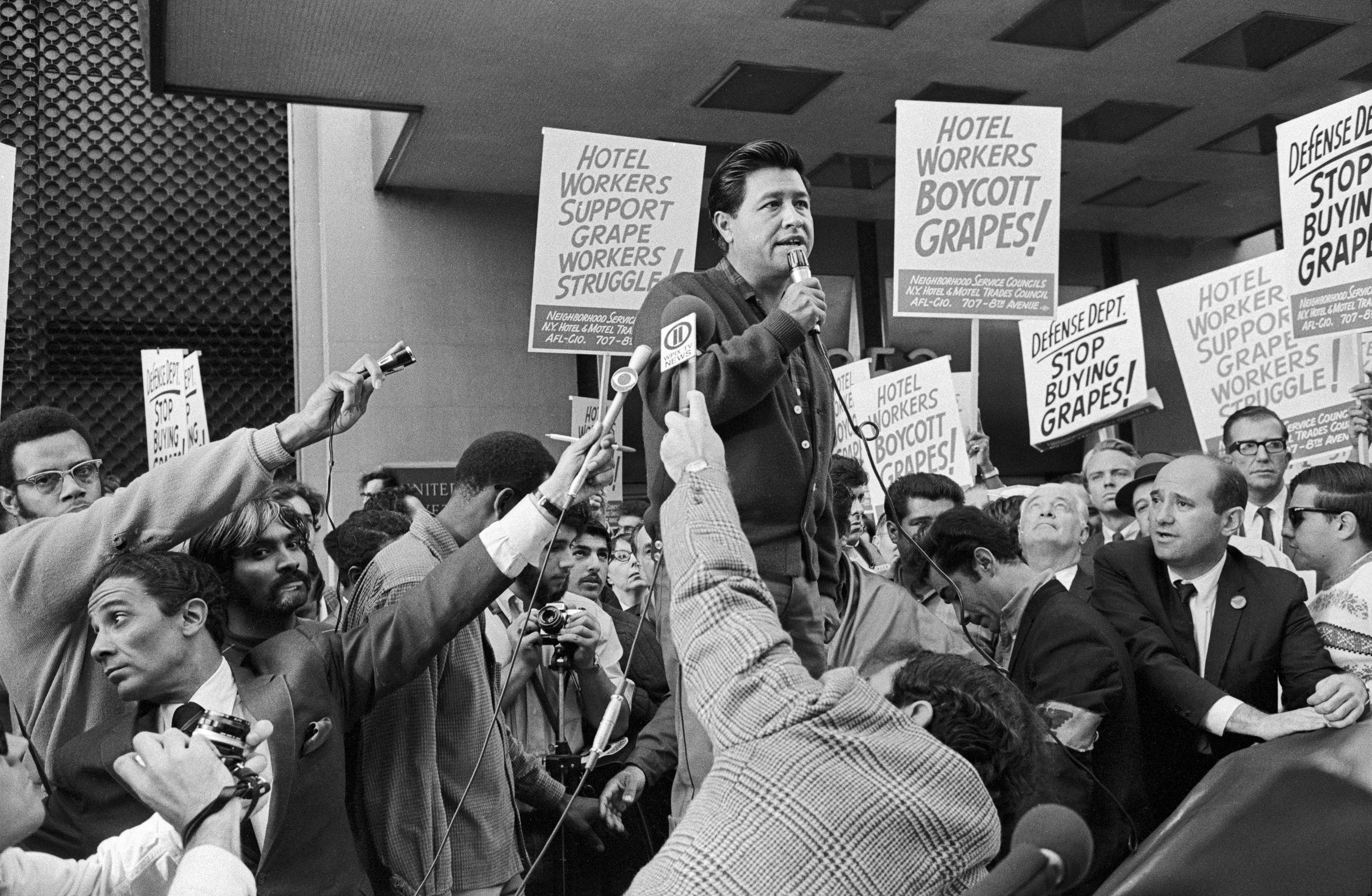
Rast said he has met Huerta on multiple occasions, including while he led the Park Service’s Cesar Chavez Special Resource Study from 2010 to 2012. He worked closely with the government organization on the study, which eventually led then-President Barack Obama to create the Cesar Chavez National Monument.
The study consisted of interviews and research surrounding Chavez and the feasibility of designating sites significant to him and the farm labor movement.
He added he was close friends with Richard Chavez, Cesar Chavez’s brother, who died of complications from knee surgery and was in a relationship with Huerta up until his death in 2011. Rast shared he was with Richard Chavez and Huerta the day before his surgery.
“In 2011, I was doing the formal, recorded oral history interview with (Huerta) for the National Park Service. She knew that I was close with Richard, and he was coming into town for surgery, a knee operation the following morning. And as we wrapped up our interview, she asked if I wanted to join the two of them for lunch,” Rast said.
“So I shared their last meal, and, you know, I’ve gotten a sense that every time I saw her, that’s something that we’ve kind of shared,” he said.
Rast said despite decades of research, he never heard accusations of sexual abuse surrounding Chavez, although he did hear rumors of infidelity toward his wife, Helen Chavez.
The revelations make him question whether biographers and historians would’ve ever uncovered the truth.
“I’m sure many of us are asking, ‘Should we have known? How could we have gotten to this truth?’ ” he said.
Rast said the investigation will potentially cause a redirection for farmworkers and more focus on Huerta and other women working in the fields who fought for farmworker rights.
“I think we are in a position to be reminded that women farmworkers and women immigrants face injustices in addition to those injustices faced by men,” Rast said.
“If we again think about these women that came forward, maybe there’s a way to think about how historical interpretation moving forward focuses even more on women with understanding and appreciation for the importance of their experiences,” he said.
Rast said this will require a reconsideration of how people have understood Chavez’s story and making a distinction between the labor leader and the farmworker movement as a whole.
“He was a leader, but there are many other leaders. And so while I’m very confident that his legacy will be revised, my deep hope is that the legacies of the movement will not be,” Rast said. “There’s so many things that countless people contributed to the decadeslong fight for justice for farmworkers that Dolores Huerta and so many others fought for.”
Rast said this newfound information will reroute a project he’s been working on for the past two years, which revisits the history of the Forty Acres, the original headquarters of the United Farm Workers in Delano, California.
Chavez conducted several fasts at the location, and it was where grape growers signed the first UFW contract, in 1970, ending a five-year strike.
“Part of my ambition was to, as a lot of scholars have done, try to decenter Chavez and tell the stories of other people,” he said. “So my aspiration is to tell the story of Richard, but I have to rethink that.”