
Last hope lost: Spokane Valley Performing Arts Center responds to city after bond proposal is denied
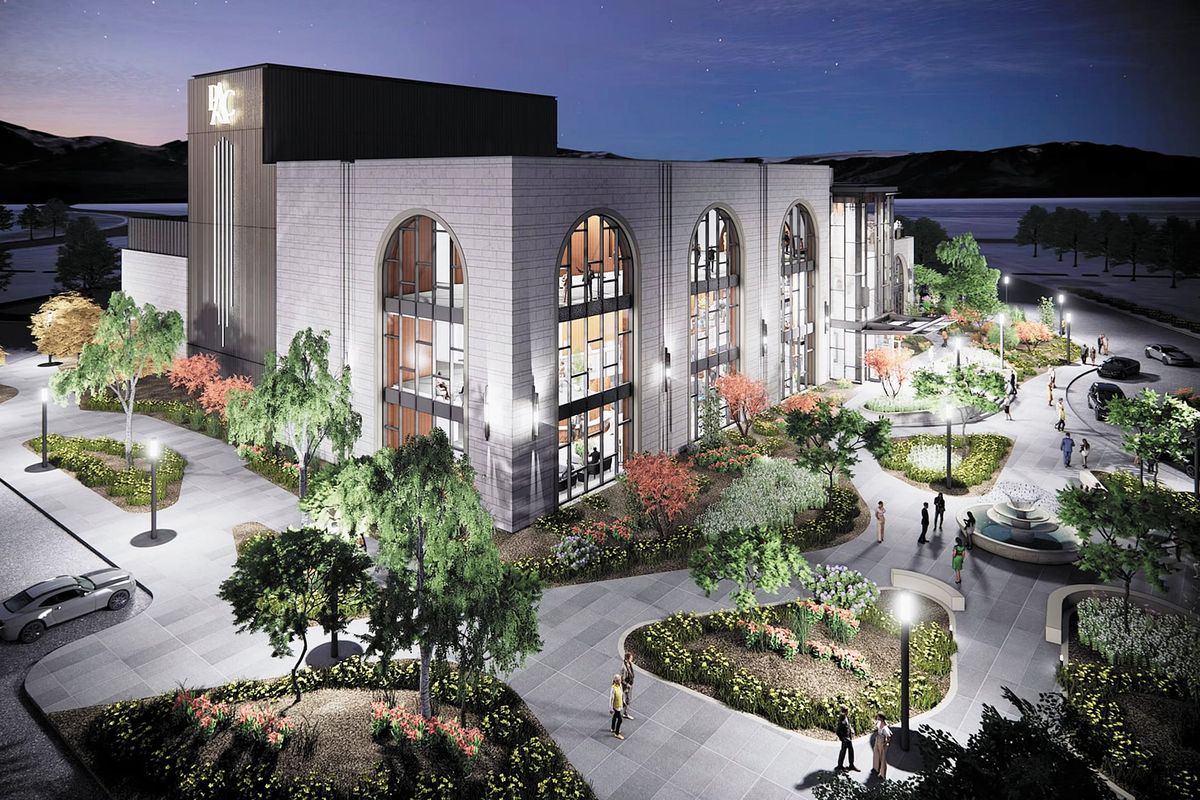
The “last hope” for the Spokane Valley Performing Arts Center was a $28 million dollar bond that the Spokane Valley City Council declined to pursue during a meeting on Tuesday.
In a letter released to the community, Yvonne Johnson, the center’s executive artistic director, blamed the council’s decision on City Manager John Hohman’s recommendation to have the city conduct its own due diligence before considering the center’s $28 million funding proposal.
“The bond is the last hope to complete the performing arts center for our region and to give the award-winning Spokane Valley Summer Theatre a home before it is lost forever,” she wrote Thursday.
The council’s 6-1 vote against funding its own financial investigation into the center, which would have cost $96,000, effectively shot down the performing arts center’s bond request.
“This is a project that has failed. They’ve lost their bank funding, project donations have dried up completely or they’re conditional,” Spokane Valley Mayor Laura Padden said. “They can’t get loans so they’re looking for the city to be their bank and use our money when no one else will.”
According to Johnson, the bond proposal was the center’s last resource, but the center could be built if enough money is donated through Semble, an investment platform. Barclays Bank may consider funding the center if $10 million is raised through donors and investors, Johnson wrote.
The center has so far raised $18.3 million for the project and spent $14 million on construction, Johnson wrote. Several million dollars came from local and state government, such as $2 million in commerce grants from the state of Washington.
“Miracles happen and the (performing arts center) can be saved if donors or investors come forward,” Johnson wrote.
In the release, Johnson wrote that Hohman “broke protocol” and torpedoed the center’s bond request, and in doing so revealed a lack of integrity.
Hohman said he was watching out for the city’s finances.
“I am being disparaged for trying to protect the city from a risky financial decision and that’s too bad,” Hohman said.
Though Hohman asked the council for a vote that was not on the advanced agenda, Hohman did so during the city manager comments portion of the council meeting, during which he explained to the council that the city needed to properly vet the documents and finances of the center before determining whether or not the council should move forward with a bond. Hohman and several council members expressed concerns about the accuracy of the documents provided by the center, calling the descriptions of revenues and expenses “optimistic.”
“We don’t have that kind of technical or financial expertise on the staff, so that’s why I recommended we hire consultants to look over the feasibility study they turned in,” Hohman said. “… It’s my responsibility to ensure sound financial decisions are made by the city council.”
Padden also wanted to remind backers of the performing arts center that the city has already given the theater project $780,000 and supported it in other ways.
“We supported them and gave them money and right now they are in breach of contract,” Padden said. “If I gave you money to do something and you don’t do it, you have to pay me back.”
The Spokane Valley Performing Arts Center sent its request of the city of Spokane Valley on Feb. 27. It sought help to fund its stalled construction initiative by having the city issue $28 million in bonds that would be paid back through revenues collected by the center.
In the release, Johnson wrote that the city council had previously voted to allow a formal presentation on the bond proposal back in January. However, Hohman said the council felt that they had already heard enough about the proposal since dozens of representatives from the center had spoken at several city council meetings between January and March.
Padden said that the council vote was not to allow for a formal presentation, but to authorize Hohman to investigate the financials of the center and later present his findings and recommendations to the council on the proposal.
“That vote was not a promise that they would have a formal presentation,” Padden said. “…And as far as being heard, they have been heard probably more than any other group we’ve had before us.”
On one occasion in January, theater representatives spent more than 40 minutes of public comment time at a council meeting.
According to records obtained by The Spokesman-Review, Hohman wrote two emails to Johnson in February clarifying that the formal presentation would be scheduled and conducted by city staff after the city reviewed the proposal and feasibility study because Johnson seemed to think it meant a presentation was guaranteed. Johnson ignored Hohman’s corrections and continued to email him about the formal presentation, despite being told several times that it was not on the calendar.
Johnson also wrote that Hohman alone creates the advanced agenda for council meetings, which is inaccurate, Hohman said. He said he works with Padden, deputy mayor Tim Hattenburg and the city clerk each week to create the advanced agenda.
Christina Lynch, president of the theater’s nonprofit board, could not be reached for comment for this article.