
Why Skagit Valley tulips and UW cherry blossoms are blooming early
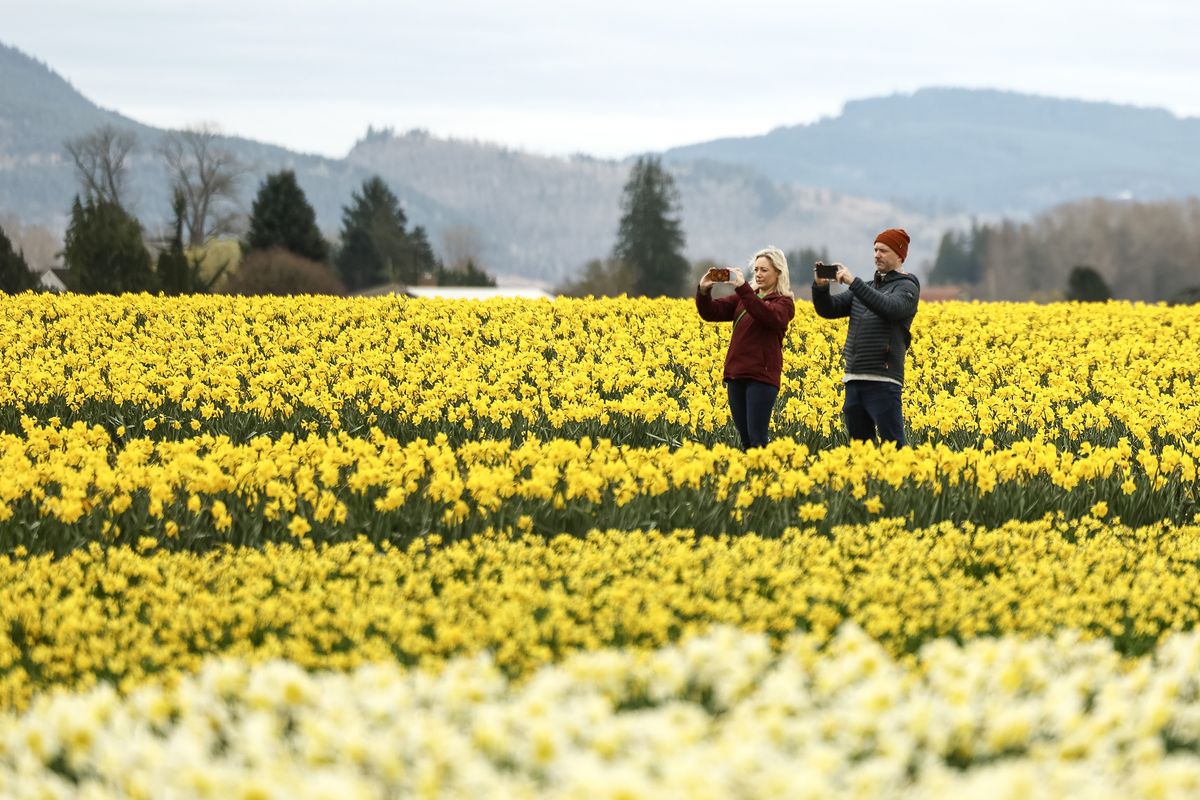
SEATTLE – You might know the proverb “April showers bring May flowers,” but have you ever heard that warm dry winters bring spring flowers quicker?
Probably not, because the new saying has not been approved by the mythical proverb-officiants, but it is a reality nonetheless.
Months of warm temperatures and a lack of rain mean early blooms for tulips and cherry blossoms in Western Washington, according to experts.
Blooms are moving targets, impacted by weather each year. But this spring, the two will align. Cherry blossoms at the University of Washington campus are expected to peak, and tulips in Skagit Valley are set to begin blooming in earnest this weekend.
So pack up the car and grab your camera, you’ve got weekend plans.
The Skagit Valley Tulip Festival plans a month of tulip-related events in Mount Vernon – the “Netherlands of the Northwest” – beginning April 1. But this year, growers at the festival’s four tulip gardens expect a historically early bloom starting as early as Saturday, said executive director Nicole Roozen.
Last year, the festival saw a more traditional bloom at the beginning of April, and a bloom in 2024 did not even start until the second week of April, Roozen said. Each bloom is expected to last about a month.
This year’s warm winter has signaled to the plants that it is time to bloom early, Roozen said.
Think back to your school days learning about photosynthesis. Warmer temperatures, typical of spring, signal to the plant where it is at in its cycle.
This Western Washington winter was the eighth warmest since the National Weather Service began its records in 1945, said meteorologists Anna Lindeman and Logan Howard. December was the third warmest on record.
While December was wetter than normal with nearly 8.5 inches of rain compared to its average of just less than 6 inches, January and February were quite dry. January only got 4.25 inches compared to an average of more than 5.5, while February got just shy of 3 inches compared to an average of 4, Lindeman and Howard said.
Spring is warming and thawing earlier, said Climate Central, a nonprofit group of independent climate scientists. The first leaves of spring are emerging earlier across the nation.
Warmer springs and subsequent early leaf emergence can worsen seasonal allergies, disrupt ecological events and could put valuable crops at risk of damage, Climate Central said.
University of Washington researchers predict the Quad’s 29 Yoshino cherry trees will reach peak bloom on Friday, when about 70% of the puffy pink blossoms have opened. Visitors can get a preview of the bloom status on the university’s live video feeds.
The average onset of peak bloom is March 23, the university said, but bloom times have shifted two days earlier each decade since the 1960s, according to a study published in the New Phytologist Foundation.
To control the time when they flower, plants sense light conditions with their leaves and temperature with their buds, UW professor of biology Takato Imaizumi explained in a Q&A posted online.
But things have not always been wet and dry this winter. Western Washington saw a windstorm, cold weather and even snow last week. While daffodils at the Skagit Valley Tulip Festival shrugged off the weather, Roozen said the bout of cold could actually prolong the bloom.
“If we get cooler periods, they will last longer,” Roozen said. The tulips’ processes will “stall” even if they’re already in bloom.
Pro tip: If you have cut tulips, you can put them outside or in the garage overnight and the cool temperatures will make the flower last longer.
On the flip side, a bout of warmer weather could make the flowers grow faster and the bloom won’t last quite as long, Roozen said.
Either way, with some respite from heavy rain in the forecast, this weekend is a good time to get out there and smell the flowers.