
Why are we going back to the moon? NASA Artemis campaign targets Mars
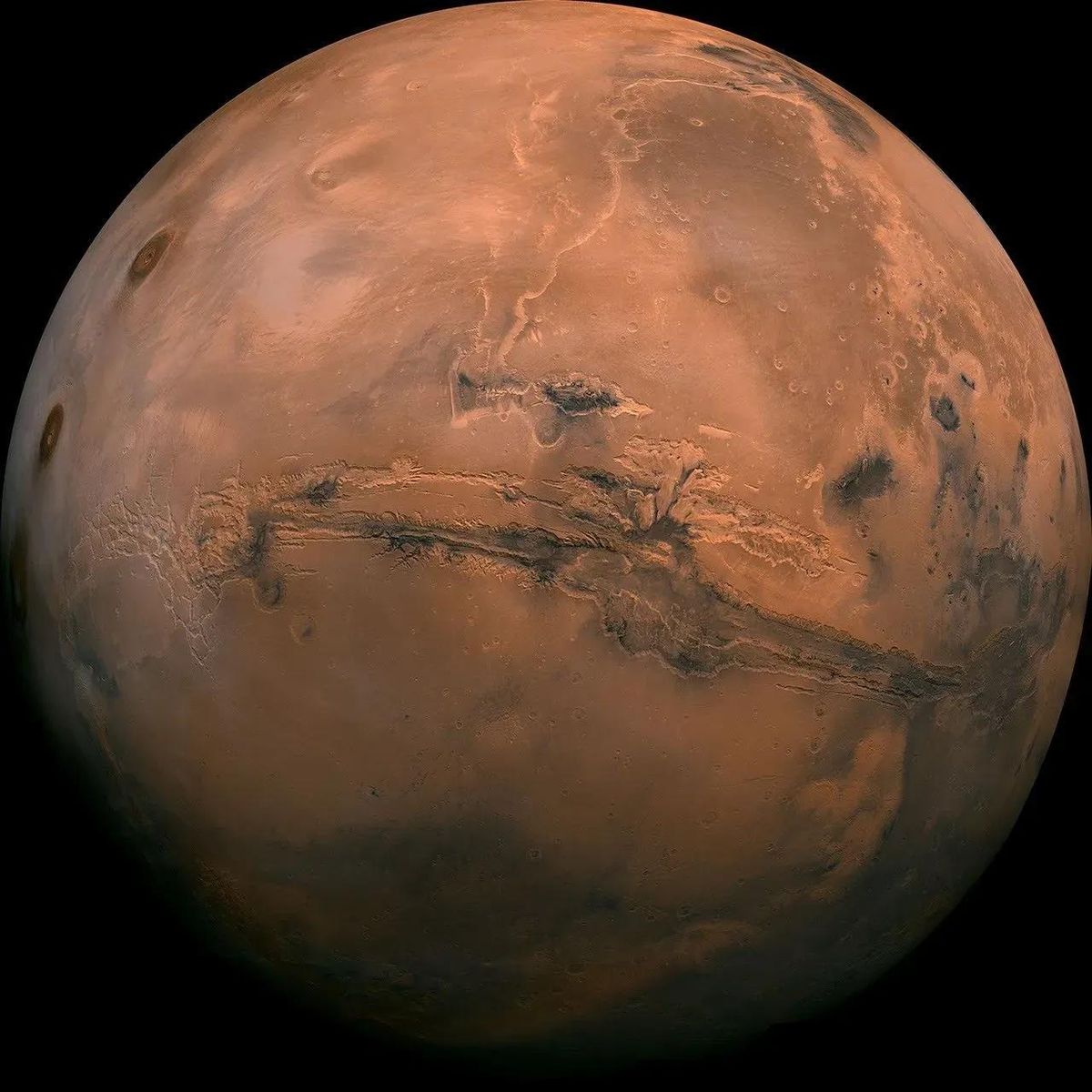
For decades, science fiction writers from Andy Weir to Ray Bradbury have vividly imagined what it would be like if humans were to step foot on the surface of Mars.
Perhaps most famously, it was Bradbury’s “Martian Chronicles” that painted a web of interconnected stories of interplanetary travel to Earth’s cosmic neighbor. First released nearly 75 years ago, the novel was published long before humans even ventured into space – let alone all the way to the moon.
But now, humanity is on the brink of making travel to Mars not just a fantastical trope of science fiction, but a reality. And it could happen not within a matter of decades, but potentially within a matter of years.
NASA is on the verge of sending humans back to the moon for the first time since the Apollo program ended in 1972, beginning with the impending launch of a mission known as Artemis II.
Why?
Not only is Earth’s celestial neighbor a pristine time capsule ripe for study – preserved almost unaltered throughout the course of billions of years – but the moon is viewed as a stepping stone for human exploration deeper into the cosmos.
One of the prime objectives of NASA’s Artemis program is to determine how humans can survive and thrive on the lunar surface. And if they can make it there, well, NASA posits they can make it on Mars, too.
Ahead of a potential April 1 launch of the Artemis II mission from the Kennedy Space Center in Florida, here’s what to know about NASA’s moon-to-Mars vision.
NASA’s Artemis program to return humans to moon
Under its Artemis campaign, NASA is aiming to return astronauts to the surface of the moon for the first time since the Apollo missions came to an end in 1972.
Established under President Donald Trump’s first term, the Artemis program made its debut in November 2022 with the Artemis I mission, which sent an uncrewed Orion capsule around the moon.
Artemis II to set stage for 2028 moon landing
Now, NASA is on the cusp of its first human lunar mission in more than 50 years.
As a 10-day moon-circling mission, Artemis II primarily serves as a test flight, with the astronauts confirming systems and hardware work as intended ahead of a future landing. The four crew members – NASA astronauts Reid Wiseman, Victor Glover and Christina Koch, as well as the Canadian Space Agency’s Jeremy Hansen – will ride in the Orion capsule, hitching a ride to orbit atop the towering Space Launch System rocket.
In 2027, another crew of Artemis III astronauts is due to ride Orion to Earth orbit to test docking capabilities with one or both of the commercial lunar landers being developed by Elon Musk’s SpaceX and Jeff Bezos’ Blue Origin.
Those two upcoming missions will set the stage for a lunar landing planned for 2028 under Artemis IV.
Why does NASA want to return to moon? What to know about moon base
But this time, those next astronauts who step foot on the moon’s surface won’t simply plant the stars and stripes before heading back to Earth.
NASA is looking to establish a permanent foothold on the lunar south pole, using a series of crewed and uncrewed missions in the years ahead to build a moon base. Under NASA’s mission outline, Artemis IV will kick off a series of moon landings – up to two a year – as the space agency aims to transport the infrastructure needed to build a lunar settlement.
The settlement would be located somewhere near the moon’s south pole, further away than any Apollo crew landed where valuable resources like water ice could sustain a human presence.
NASA eyes crewed missions to Mars
From there, NASA is eyeing humanity’s next great leap: the first crewed missions to Mars.
Robotic spacecraft, including rovers like Perseverance and Curiosity, and a fleet of Mars orbiters have spent years scouring the surface of the red planet for a variety of purposes. Their objectives have ranged from simply studying the geology of our closest planetary neighbor, to searching for signs of ancient past life.
Those uncrewed missions have also all laid the groundwork for NASA to understand just how and where a surface mission with astronauts may be viable.
Space Reactor-1 to be 1st nuclear-powers vehicle to travel to Mars
And now, NASA leaders also recently announced a new Mars mission targeted for by the end of 2028 that would be the first to use a fission nuclear-powered spacecraft. The venture could be a pivotal test of a technology that could also be a power source for surface operations, a vital capability on Mars where dust storms are known to block the sun for weeks at a time.
After reaching Mars in 2030, the three helicopters the spacecraft would deploy would follow in the footsteps of the retired Ingenuity aircraft by surveying for potential human landing sites and using radar to identify sources of underground water.
Why does NASA want to send astronauts to Mars?
Mars may now be a barren, dusty landscape, but evidence suggests it may once have harbored life in some form.
For that reason, scientists regard the red planet as one of the best places in our solar system for humanity to look for signs that we at least at one point were not alone, according to NASA. That information will in turn reveal more information about Earth’s own place in the universe and how our vibrant planet came to be.