
Cool Critters: The pigeon - a friend and war hero
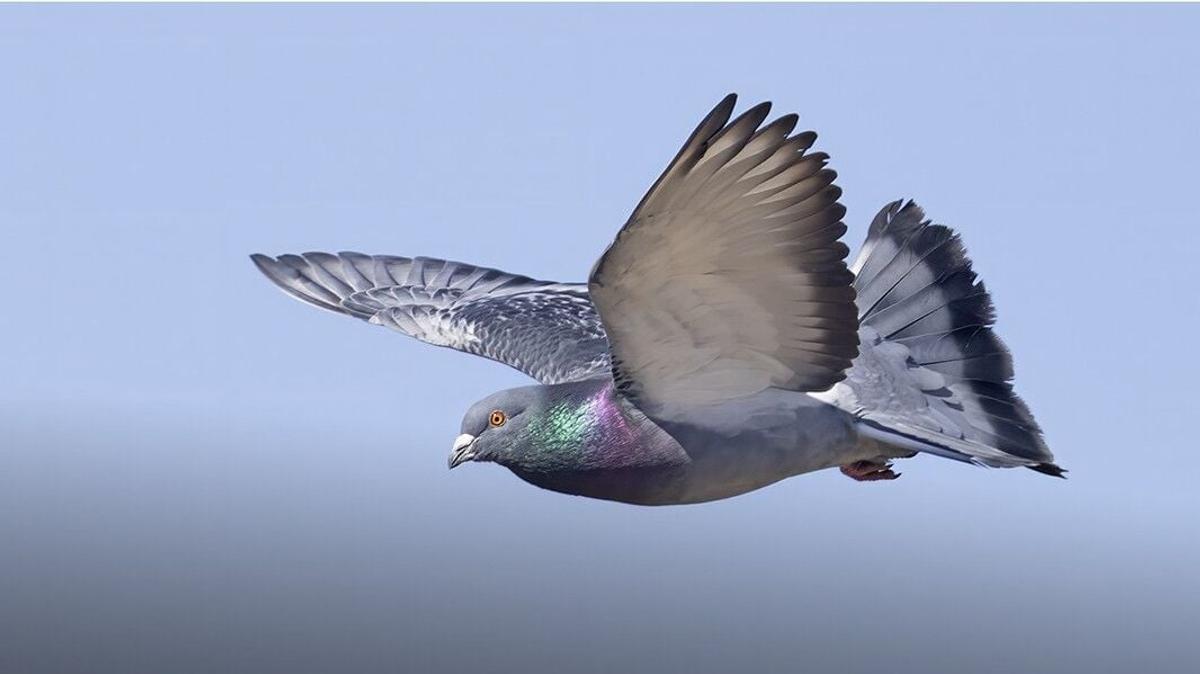
As our nation prepares to commemorate America’s war dead on Memorial Day, let’s salute a feathered war hero that strutted and cooed.
The pigeon.
Domesticated and coddled more than 5,000 years ago as a source of food and fertilizer, the bird is now so ensconced in urban settings that we barely notice them. Sidewalks, city squares, underpasses, rooftops, street lamps – look, it’s a pigeon! Ho-hum.
Although there are more than 350 species worldwide, the rock pigeon, or Columba livia, is one of the most widely distributed birds in North America and the one you’re most likely to see in the Inland Northwest. Pecking at crumbs, pooping on cement and loitering in parks, these winged creatures can seem boring and sometimes annoying.
But they are brainy, resilient birds with a heroic history.
For thousands of years, the carrier pigeon – a breed of rock pigeon – was used for transmitting long-distance communications. In ancient Rome, commanders fitted the birds with lightweight, handwritten messages to relay battle information across the empire. And the Greeks deployed them to announce the winners of the Olympic Games from city to city, according to the historical research platform Wysinfo.
Then, as humans spread around the globe, so did pigeons. European colonists brought them to North America in the early 1600s. A few centuries later, the U.S. military turned them into soldiers.
Recognizing the birds’ astute navigation skills and remarkable endurance, the armed forces used them to deliver vital messages during both World Wars, said Colin Jerolmack, environmental sociologist at New York University and author of the book “The Global Pigeon,” published in 2013.
“Pigeons have been credited with saving the lives of hundreds or even thousands of soldiers and they have been given war medals and otherwise memorialized on plaques and posters,” Jerolmack said in an interview.
Among the most famous is Cher Ami, a World War I carrier pigeon who flew 25 miles through gunfire with a life-saving message folded inside a leather pouch attached to its leg. The pigeon’s mission helped save nearly 200 American soldiers stranded behind enemy lines, Jerolmack explained, “even though he had been shot through the chest and blinded in one eye.” (Cher Ami’s taxidermied body is on display at the Smithsonian’s National Museum of American History.)
G.I. Joe is another famous winged messenger. Weighing less than a pound, the pigeon is credited with “saving the lives of 1,000 allied troops at Covi Vecchia, Italy,” according to the website of the U.S. Army. How could a single, weaponless bird accomplish such a feat? By flying “20 miles in as many minutes carrying an order to cancel the scheduled bombing of the city,” the Army explained. (G.I. Joe’s body is on display at the Army Heritage and Education Center in Pennsylvania.)
To protect pigeon warriors from being shot by enemy snipers, it wasn’t unusual for Allied military forces to dye them black to resemble crows, according to historical accounts.
Clearly, people and pigeons had long been partners. Nonetheless, by the mid-20th century, the typically gray-bodied bird with green and purple iridescence on its neck was regarded as “a useless bird,” Jerolmack said.
“We no longer need them for messages,” he explained. Nor did we need their feces for fertilizer or their meat for protein when chicken was easier and cheaper to mass farm, he added.
“As the pigeons’ usefulness declined, so did humans’ fondness of them,” Jerolmack stated.
To make matters worse, in the mid-1960s, a New York City parks commissioner erroneously described pigeons as disease-carrying “rats with wings” and the term stuck.
Basically, pigeons were framed, said Jerolmack. “It crystallized the pigeon’s association with disease and abetted their downfall.”
But little by little, pigeons may be regaining their good-guy image.
TikTok videos featuring rescue pigeons who become cherished pets with names like Pidgey, Waffles and Stanley Coo-brick “seem to be very popular,” Jerolmack observed.
And just last June, New Yorkers threw the first-ever Pigeon Fest, which included art workshops, panel discussions and a Pigeon Impersonation Pageant. Then, in November, PBS Nature released “The Pigeon Hustle,” a documentary heralding the birds as “the epitome of street smart: social, intelligent, agile, and tough.”
A circuitous historical flight, indeed.