
Canola gaining favor among region farmers

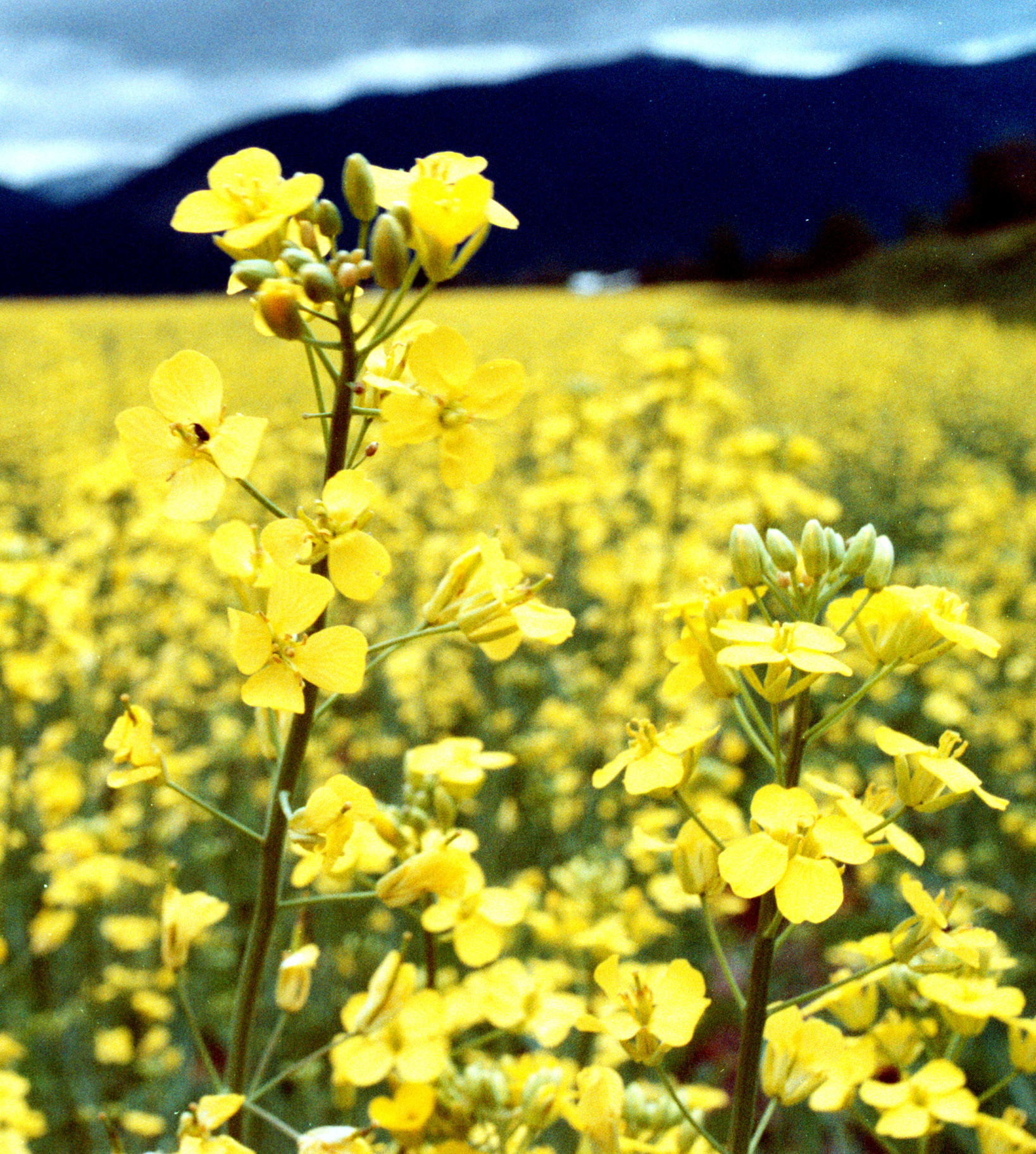
RITZVILLE, Wash. – One of the prettiest crops in the Columbia Basin could become one of its fastest growing, thanks to good prices and a new processing plant.
Curtis Hennings near Ritzville started growing canola in the early ’80s as a rotation crop, though now it is his main focus.
“Four out of five years, it’s my best money crop,” he said. “That’s why I stick with it pretty heavily.”
Hennings, 56, grew up on a farm and began his own dryland wheat operation in 1978. Today, he grows 450 to 500 acres of canola each year.
Canola plants, which are related to mustard, Brussels sprouts and turnips, stand 3 to 5 feet tall. Its pods hold the seeds that are crushed for the oil, which then is used for cooking and biodiesel.
In the ’60s, Canadian scientists developed canola from rapeseed. The canola name comes from “Canadian oil, low acid.”
While the Canadian prairie provinces of Alberta, Saskatchewan and Manitoba are by far the world’s largest growers of canola, the United States has become a serious player in recent decades.
North Dakota is growing 1.3 million acres this year, followed by Oklahoma with 150,000 acres. Minnesota, Montana and Idaho also grow large amounts of canola, followed by Washington, which increased its canola acreage this year to 17,000 acres from 10,500 last year, said Dale Thorenson of the U.S. Canola Association in Washington, D.C.
It has grown in popularity in recent decades because it’s considered more nutritionally balanced than other oils. The U.S. Canola Association said it is lower in saturated fat than any other culinary oil, higher in monounsaturated fat, high in omega-3 and free of transfat and cholesterol.
Terry Morgan, president of the Washington Canola Commission, grows 100 to 300 acres a year, rotating it with barley.
Similar to wheat, there are winter and spring canola crops. Winter canola is planted from late July to early August and is harvested in June or July, while spring canola is planted in April and is harvested in late August or early September.
Morgan typically grows spring canola because his farm near Rosalia in Whitman County gets enough moisture to produce 1,500 to 1,600 pounds per acre. Winter canola, meanwhile, often will bring in twice that.
A processing plant in Odessa in Lincoln County crushes and converts Washington canola into biodiesel. Hennings and Morgan said a new processing plant is being built in Warden in Grant County, which reportedly will produce food-grade oil.
“Both are aggressively trying to get acres,” Hennings said. “And they’re paying well.”
Nationally, canola farmers got about 26 cents per pound last year, but Hennings said the going rate in Washington right now is 30 cents a pound.
Hennings hopes the Warden plant will continue to spur the growth of Washington canola. He said the next-closest processor is in Lethbridge, Alberta, so having another facility in the Columbia Basin should spark greater interest.
Morgan said another byproduct is meal from the crushed seeds. It contains 30 percent protein, which is lower than soy, and he uses it as a feed supplement for his pigs.
Morgan also grows mustard, which looks similar to canola from a distance. Both are fields of golden flowers.
“They are pretty crops to look at,” he said.