
White House connects climate change, health
Agencies to partner with tech, schools to show public threat
WASHINGTON – The Obama administration on Tuesday unveiled a long list of actions ranging from corporate and academic partnerships to community programs to highlight the health impacts of climate change.
Tech giants such as Google and Microsoft will conduct disease research, universities will train the next generation of health experts and cities such as Durham, N.C., and Kansas City, Kan., will monitor local air quality.
All of these efforts and others are part of a multipronged approach to better educate people on the threat of climate change and how it could affect their quality of life.
The effort stretches across multiple government agencies such as the Centers for Disease Control and Prevention, the National Institutes of Health, the Environmental Protection Agency and NASA.
President Barack Obama on Monday declared this week National Public Health Week, with activities focused on the public health dangers of climate change.
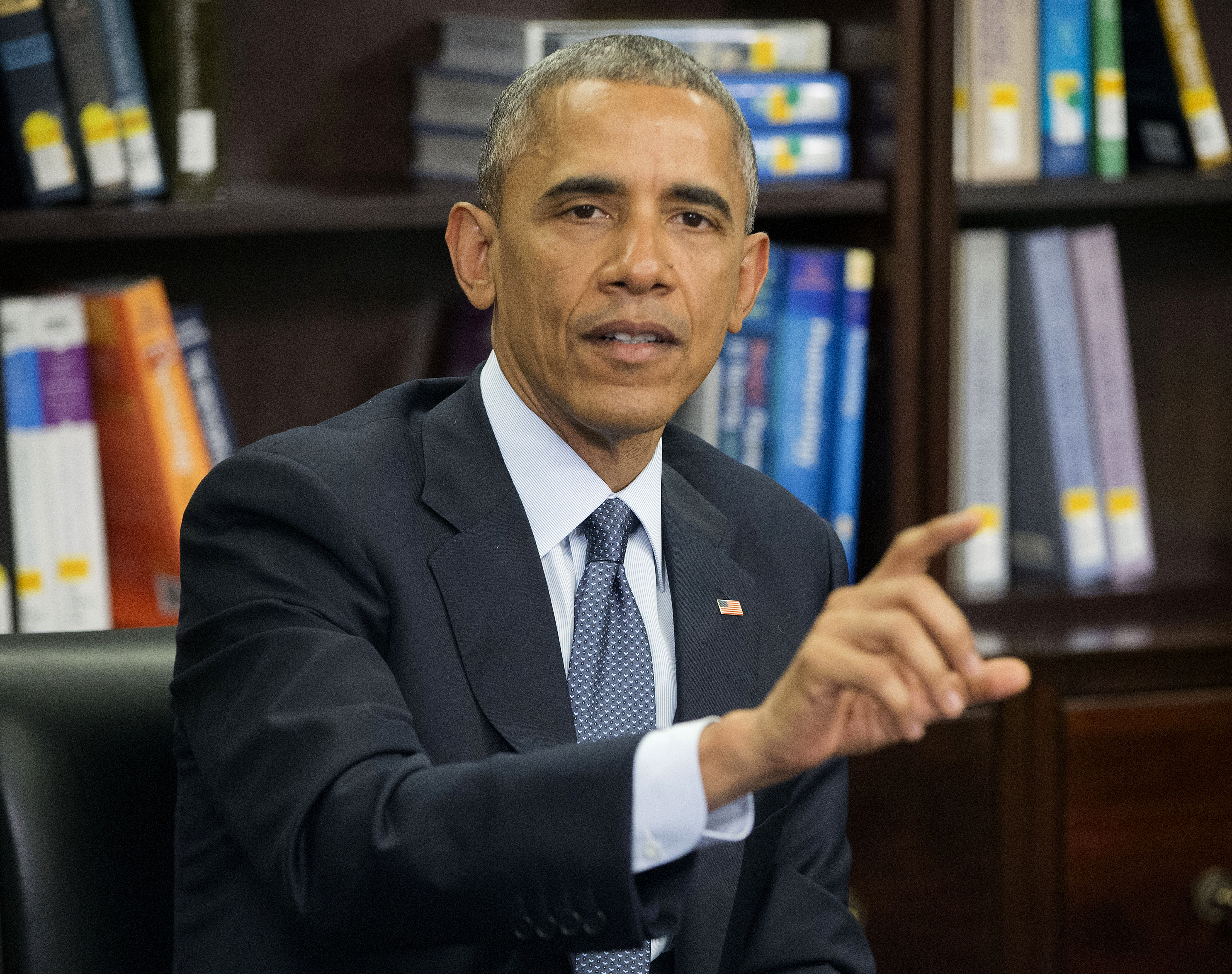
“We all need to do our part,” Obama said at a Howard University School of Medicine roundtable discussion with experts on the health effects of climate change. “We’ve got a lot more work to do if we’re going to deal with this problem in an effective way and make sure that our families and our kids are safe.”
The administration hopes that the acceptance of climate change will rise and that the public will connect with the issue in a way that brings a change to daily life, White House senior adviser Brian Deese said in a phone call with reporters.
“The most salient arguments around climate change are associated with the health impacts and are ones that meet people where they are, and that requires making an argument around how climate is affecting local communities and individuals,” he said.
A White House fact sheet noted that while the public generally thinks of climate change as a trigger for droughts, severe storms and wildfires, less talked about are the health problems that can result. It said these particularly occur in low-income communities where many people, for instance, don’t have the advantage of air-conditioning and other amenities to cope with challenges resulting in heat-related deaths, Deese said.
Also, the percentage of Americans with asthma has more than doubled in the past three decades, according to a White House report.
Through the announced partnerships and research, Deese said, the government can “empower more Americans with the information and tools that they need to help take action to address this threat.”
In the latest administration climate change initiative, Microsoft will use technology to better understand the environment as part of a data collection effort, said Ethan Jackson, a researcher with Microsoft Research who was also on the White House call.
Scientists also will be able to use the Google Earth Engine, with technical assistance from Google staff, to study diseases such as malaria and to visualize global fires and oil and gas flares. This information will be used to create early warnings for diseases and a public disease-risk map.
Locally, “Village Green” park bench stations will be in cities across the U.S., including Durham, N.C., and Kansas City, Kan. This project uses solar and wind power to measure the local air quality and increase a community’s awareness of global warming impacts. Other participants will be Washington, Philadelphia; Chicago; Oklahoma City and Hartford, Conn.
Universities also will help inform the public on climate change with commitments from medical, nursing and public health school deans across the country to train students on addressing the health impacts of climate change.
“The sooner and more aggressively we act, the more we know we can do to reduce these impacts of climate change and to protect the health of our communities,” Deese said.