
Muslim American gets U.S. apology, settlement
Ex-UI running back endured ‘hardship’
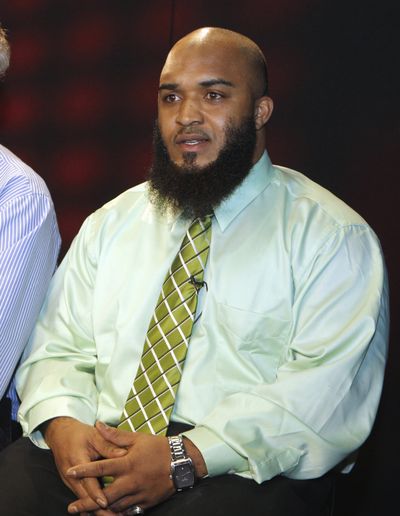
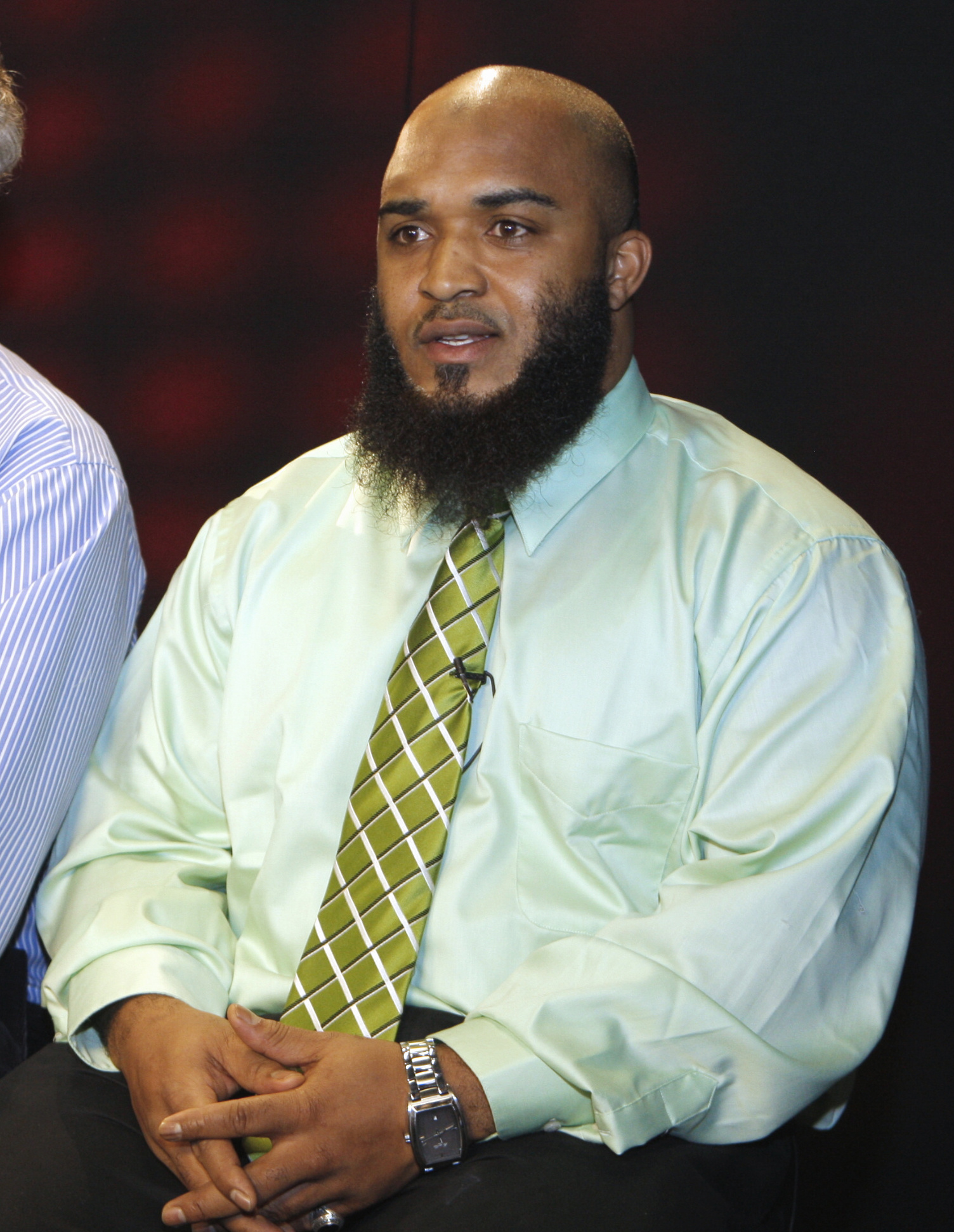
WASHINGTON – Abdullah al-Kidd approached the Dulles International Airport ticket counter in March 2003 expecting to catch a flight to Saudi Arabia to study Arabic and Islamic law.
Instead, federal agents slapped handcuffs on the Kansas-born former University of Idaho running back.
He spent the next 16 days in three jails without criminal charges on a warrant as a potential witness in a terrorism-related case. He was shackled, strip-searched and confined in a cell.
The government’s case eventually fell apart, but not before the husband and father had lost his family and livelihood.
More than a decade later, the U.S. government has presented al-Kidd with something rarely seen in the U.S. war against terrorism: an apology.
“The government acknowledges that your arrest and detention as a witness was a difficult experience for you and regrets any hardship or disruption to your life that may have resulted from your arrest and detention,” Wendy J. Olson, the U.S. attorney in Idaho, wrote al-Kidd on Jan. 15.
Al-Kidd was given $415,000 to settle 10 years of litigation and compensate him for what he described as his “16 terrifying days” caught up in the backlash against Muslims after the Sept. 11, 2001, attacks.
The apology was seen as a somewhat begrudging one.
“As part of the United States’ settlement with you,” the government’s Jan. 15 letter states, “please accept this letter as official confirmation that you were arrested in 2003 solely because you were considered a material witness in an upcoming criminal trial of another individual, and not because you were suspected of any criminal wrongdoing.”
In an interview, Olson referred to the letter as more of an “acknowledgment” than an apology. “We acknowledged there was a hardship,” Olson said. “We maintain also that there was no wrongdoing on the government’s part.”
Al-Kidd, who was born Lavoni T. Kidd to a Christian family in Wichita, Kansas, moved to Saudi Arabia seven years ago to get away from what he called the post-9/11 “culture” in the U.S.
Al-Kidd’s father, a retired California corrections officer, said the ordeal changed his son, who converted to Islam and changed his name to Abdullah while in college in the mid-1990s.
“He was really kind of wound pretty tight,” Cecil Kidd, of San Bernardino, California, said about his son’s behavior after the arrest. “He was paranoid. Always thought someone was following him, and probably they were. He was jumpy at noises, always looking out windows. He was just out there all alone, and he was really afraid.”
In the months after the Sept. 11 attacks, more than 200 Muslim Americans and immigrants were arrested for alleged ties to terrorism or visa fraud. Separately, 70 others, such as al-Kidd, were detained on material witness warrants.
Al-Kidd was arrested to testify against Sami Omar al-Hussayen, a Saudi immigrant in Idaho. Al-Hussayen allegedly was associated with financial transactions and websites linked to “radical Islamic ideologues who advocated terrorism,” according to government documents.
Al-Kidd was never called to testify in al-Hussayen’s June 2004 trial on charges of visa fraud and other offenses. Al-Hussayen was acquitted and later deported.
But for more than a year as he waited to testify, al-Kidd had to surrender his passport, limit his travel to four states, allow regular home searches and report monthly to probation officers in Nevada and Idaho.
Those terms, he said, cost him his marriage.
“It put a lot of stress between us, a lot of constraints on us. It led eventually to our demise. … Once a month they came in and searched the home. It was just a really toxic environment,” al-Kidd said.
After the al-Hussayen trial, al-Kidd sued the government, including top officials such as then-FBI Director Robert S. Mueller III and former U.S. Attorney General John Ashcroft. Al-Kidd’s lawyers challenged the government’s post-Sept. 11 policy of using the federal material witness statute to detain suspects.
“There was overreach by the government, and more judicial oversight would have been beneficial,” said al-Kidd’s lawyer, Lee Gelernt of the American Civil Liberties Union.
Al-Kidd’s payout included $107,500 from the Hudson Specialty Insurance Co. on behalf of FBI Special Agent Michael Gneckow, the lead investigator in Idaho.
Gneckow was criticized by the courts for rushing to arrest al-Kidd, wrongly claiming to the judge who issued the arrest warrant that al-Kidd had purchased a one-way ticket to Saudi Arabia, and not mentioning that al-Kidd was a U.S. citizen.
However, a review by the Justice Department’s inspector general found in September the use of material witness warrants in al-Kidd’s case was proper.