
Marine who died in crash was mother’s ‘superhero’
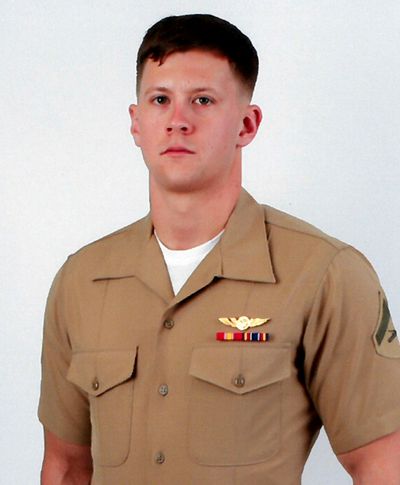
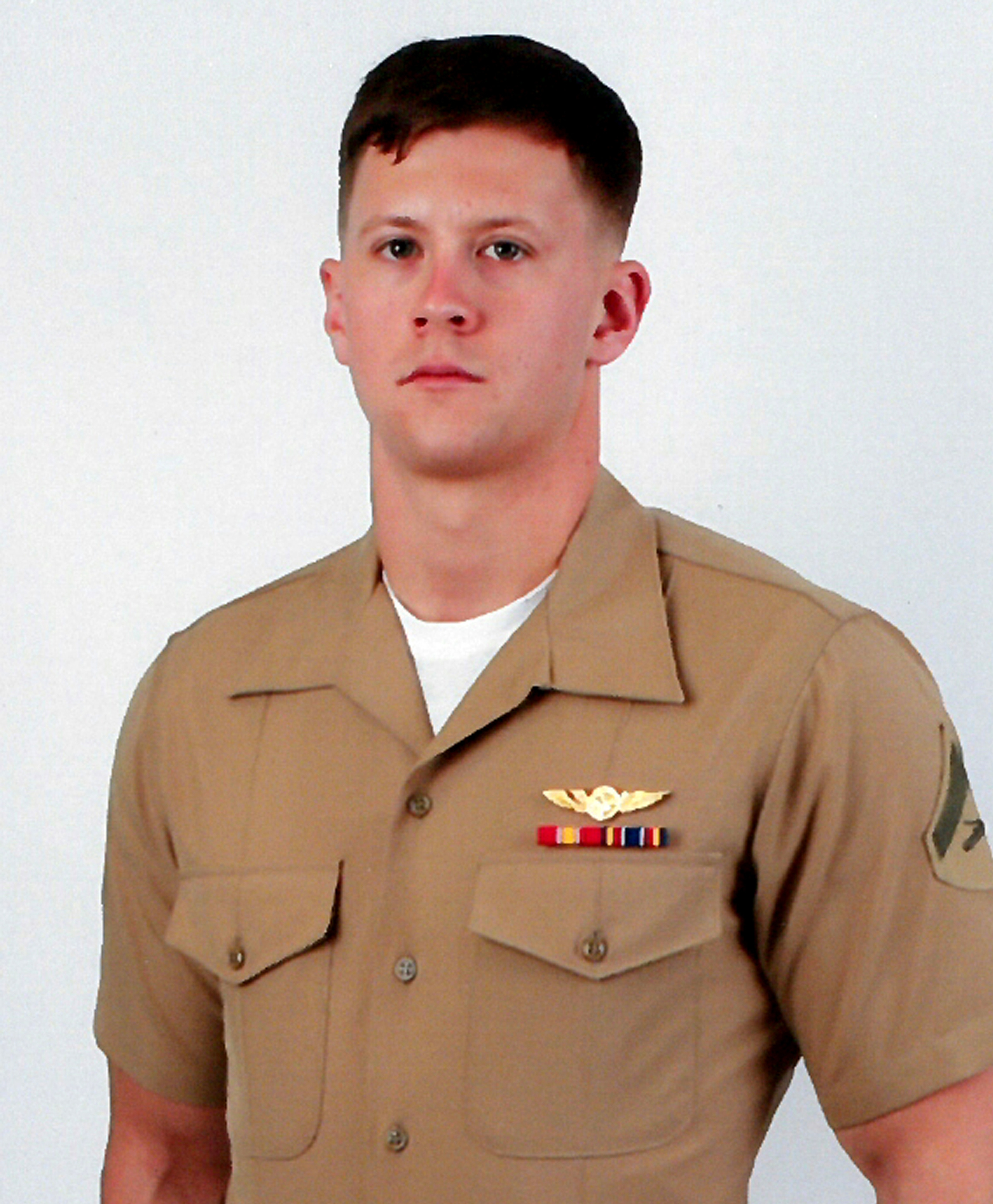
The mother of a Marine killed Sunday when a military aircraft crashed in Hawaii says her son joined the Marine Corps because he wanted to “do something bigger and better.”
Michele Barron, of Spokane Valley, said Joshua Barron loved to fly, loved his job and was proud of what he did.
The Marine Corps said the 24-year-old lance corporal died of injuries sustained when an MV-22 Osprey went down at a military base outside Honolulu.
Barron’s mom called him her “superhero.” She said her family is heartbroken by his loss but that they’ve received an outpouring of love.
She said her son enjoyed spending time in the outdoors and with his family. He joined the Marines because “he just wanted to do something more with his life.”
He attended University High School and Spokane Community College.
The crash, during a training exercise, has renewed safety concerns about the Marine Corps’ new airplane-and-helicopter hybrid. But the Marines say the MV-22 Osprey has proved safe despite high-profile accidents early in its operation.
The aircraft went down with 21 Marines and a Navy corpsman on board. One member of the crew was critically injured and three other Marines were still hospitalized in stable condition on Monday.
Col. Vance L. Cryer, commanding officer of the 15th Marine Expeditionary Unit, said Barron was one of the nation’s best.
“Our heartfelt condolences go out to his family and the families of all the Marines involved in Sunday’s crash,” Cryer said in a release. “We appreciate the thoughts, prayers and support we have received as we continue to care for the injured and mourn our fallen Marine.”
Barron was stationed at Marine Corps Air Station Miramar, California, before deploying with the 15th Marine Expeditionary Unit.
The Osprey that crashed had taken off from the USS Essex, a Navy ship 100 miles offshore. It was flying to Oahu to drop off infantry Marines for training on land, said Capt. Brian Block, a spokesman for the 15th Marine Expeditionary Unit.
The crash didn’t stop the unit’s exercises, Block said. The Marines also don’t plan to ground their fleet of Ospreys.
“We’re continuing to train in order to make sure we remain sharp and ready for whatever comes up during deployment,” he said.
The Osprey is built by Boeing Co. and Bell, a unit of Textron Inc., and the program was nearly scrapped after a history of mechanical failures and two test crashes that killed 23 Marines in 2000.
Those crashes led the Marine Corps to work to train pilots and eliminate sources of risk, said Loren Thompson, an analyst at the Lexington Institute, a think tank based in Virginia.
The aircraft also has features that make it safer than normal helicopters, like rotors that automatically collapse on landing to reduce the dangers of a hard landing, Thompson said.
The Osprey has deployed to Iraq and Afghanistan since its introduction to the fleet. The Marine Corps has been using it in the Himalayas this month to help with earthquake disaster relief in Nepal.
For every 100,000 flight hours, the Osprey has had 3.2 mishaps involving loss of life or damage exceeding $2 million, Marine spokesman Capt. Ty Balzer said in an email. That compares with a rate of 2.98 per 100,000 flight hours for the CH-46 Sea Knight helicopters the Ospreys are replacing.
Balzer said the difference is small considering the large number of flight hours involved.
The Osprey had the lowest serious-mishap rate of all Marine rotorcraft in the first 200,000 flight hours of its existence, he said. The MV-22 has now been in the air for a total of 223,000 flight hours, Balzer said.