
Then and Now: Railroad viaduct through downtown Spokane
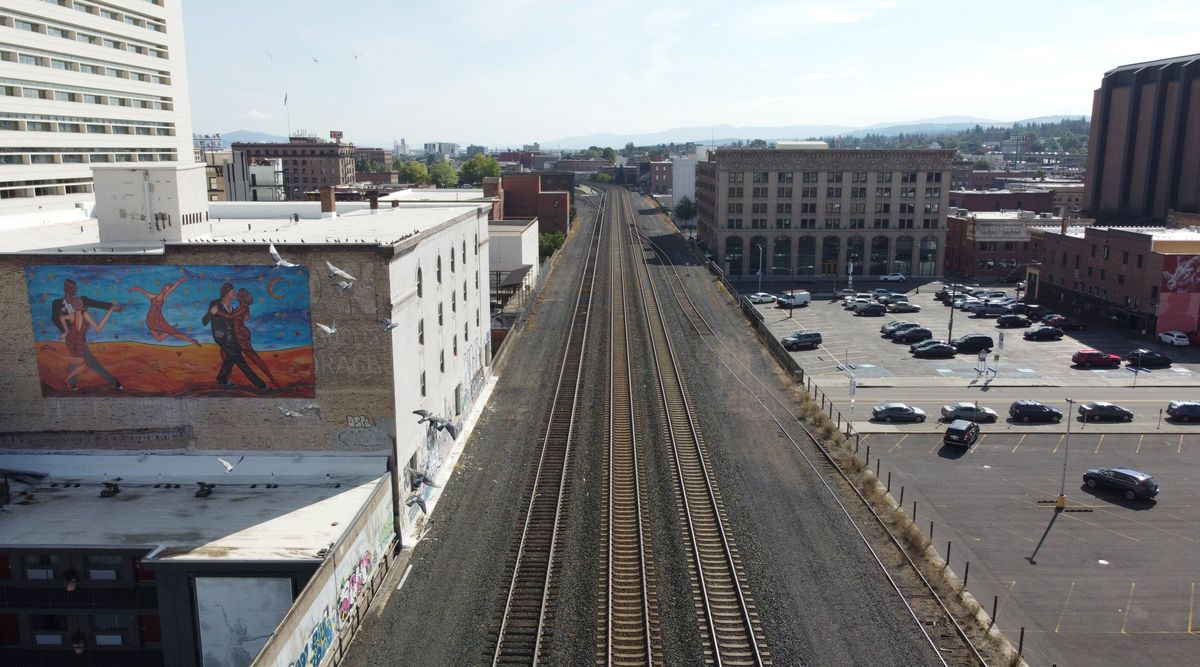
Spokane was a city cut in half by its river, complicating the work of the town’s first settlers. But a few bridges relieved that problem.
Starting in 1882, the city was once again bifurcated by the cross-country train route of the Northern Pacific Railway, which would connect Minneapolis to Seattle and Portland on the coast. The eventual addition of other east-west railroads - including the Great Northern Railway and the Chicago, Milwaukee and St. Paul and Pacific Railroad, commonly known as the Milwaukee Road, plus a few others – made Spokane a major train hub of the Western states, fueling its boom years from the 1890s to 1915.
After that initial flurry of rail expansion, a new conflict arose with the automobile. Frequent east-west trains, sometimes parked for hours and sometimes speeding through town, blocked traffic or caused dangerous collisions with automobiles, streetcars and horse-drawn conveyances, making city travel a headache.
To the north side of the Spokane River, the Great Northern Railway built its 1902 station on Havermale Island and elevated the westbound tracks over Monroe Street. The coming Milwaukee Road’s Union Depot was under construction in 1912 and placed its tracks on a steel trestle along Front Street, now Spokane Falls Boulevard.
In 1912, city authorities told the railroads to separate the train tracks from road grade crossings or the city would hold up approval of new tracks, mergers or changes to rights of way. A new ordinance mandated that overpasses, underpasses or elevated tracks be used. The Northern Pacific begrudgingly agreed and started a massive building project.
The Northern Pacific’s track corridor between First and Second Avenues, which were alongside the appropriately named Railroad Avenue, were raised on an earthen and concrete embankment while the tunnels underneath were lowered by excavating the roadway to provide clearance for trucks and large vehicles. Today, the Stevens Street underpass is still 11 feet, 6 inches and occasionally catches tall truck operators who don’t note the reduced height, compared with streets such as Madison, Adams and Jefferson that have underpass clearances of more than 14 feet.
The massive effort cost the railroads millions of dollars, but cars were finally separated from rail traffic around 1915. The merger of the Great Northern, the Northern Pacific and some smaller partners consolidated most of Spokane’s rail traffic to a single corridor through town in 1970, followed by the removal of other downtown tracks to clear the way for Expo ’74 and the creation of Riverfront Park.