
She can’t stop the Paramount merger. But she is speaking out anyway.
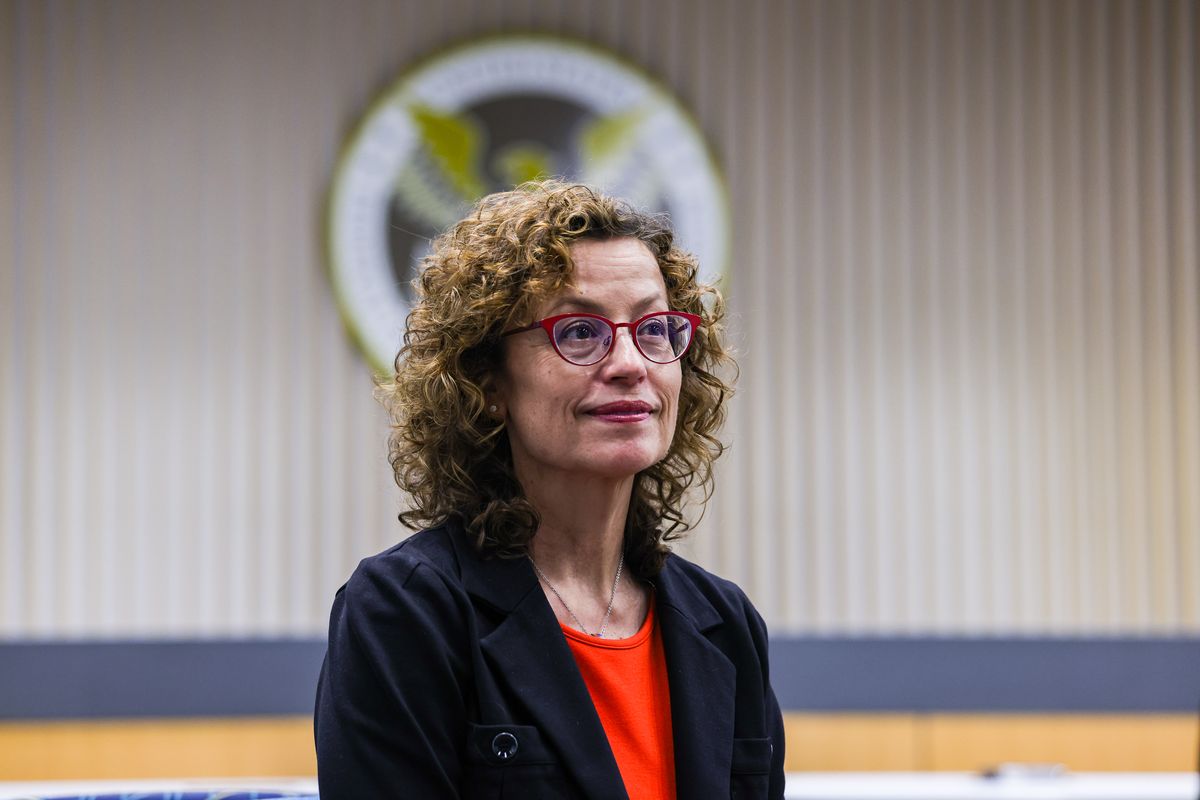
As the lone member of the Federal Communications Commission who was appointed by a Democratic president, Anna M. Gomez knows she has little official influence over the impending merger of Skydance Media and CBS parent company Paramount. It may even get approved without a commission vote, possibly as soon as this week.
But she is using her bully pulpit to express concerns about the merger and some of the concessions Skydance has made to win the approval of the FCC and its chair, Brendan Carr, an appointee of President Donald Trump who has vowed to take action against what he says is bias in media.
The merger review comes less than a month after Paramount agreed to pay $16 million to settle a lawsuit brought by Trump over the network’s editing of a campaign interview with then-Vice President Kamala Harris, which his lawyers argued was manipulated to make her look better.
On Tuesday, as part of the review process, Skydance committed to undergo “a comprehensive review of CBS” after the completion of the transaction and to create an ombudsman role for at least two years to handle complaints of bias at the network. The company also pledged to eliminate diversity, equity, and inclusion (DEI) initiatives, an action Carr has said is a prerequisite for any merger approval.
After a public meeting Thursday, Gomez called the FCC’s handling of the merger review “unprecedented” and said undue pressure had been put on the merging companies to appease the Trump administration. She called Skydance “cowardly” for agreeing to adopt “never-before-seen controls over newsroom decisions and editorial content” that she said violate the First Amendment.
“Turns out it is quite easy to sell out your principles for pure profit,” she said. A spokesperson for Skydance did not respond to a request for comment.
A self-professed introvert, Gomez, 58, has emerged as one of the loudest voices opposing the Trump administration’s actions toward the media.
While she said it’s “draining” to speak out publicly, the normally reserved lawyer said she feels obligated to use her position to call out the way that Carr has run the committee, even as she maintains a “very good” working relationship with him and largely refrains from criticizing him by name.
“I have to shine a light on what I see as abuses of our regulatory authority in order to chill the freedom of the press,” she said in an interview Tuesday at the FCC’s headquarters in Washington.
This month, she called out Paramount for choosing to settle the lawsuit Trump filed this past fall, which many legal experts said the CBS parent easily could have won. Gomez called the settlement a “payout” to help boost the odds of the FCC approving its $8 billion merger.
In recent months, Gomez has held events across the country as part of what she called a “First Amendment Tour.”
“She is not a confrontational person, but she has recognized that at this moment she has something that is necessary, and that is an alternative voice, and she’s been aggressively doing that, and I just think it’s fabulous,” said Tom Wheeler, who served as chairman of the FCC during Barack Obama’s second term as president.
Because the merger involves handing over CBS’s broadcast licenses, it must get the approval of the FCC, which normally has five members but currently has only three, the other two of whom are Republicans. Carr can decide to leave the ultimate decision to an agency bureau tasked with reviewing media industry transactions, avoiding a commission vote altogether, though Wheeler said that “major deals” such as this have generally received a vote.
Asked Thursday about the timing of the merger review, Carr said he didn’t have an update, but he said he appreciated the commitments made by Skydance.
Despite her pleas for the merger to be approved in a public process by the full commission, Gomez said she is concerned that it will be approved with “backroom deals.”
“It’s very difficult for me to watch while this commission extracts these types of concessions, which I consider to be against the public interest, and also essentially engages in censorship and the chilling of the freedom of the press through these types of threats,” she said.
Still, Gomez takes pain to maintain a cordial relationship with Carr.
“One thing about me is I am very direct and very transparent, so he knows my concerns,” she said. “He also understands that I need to speak out. So it has not affected our relationship.” A spokesperson for Carr did not respond to a request for comment about their relationship.
Daniel Suhr, the president of the Center for American Rights, sees Gomez as on the wrong side of history. His Chicago-based nonprofit has lodged several complaints of news distortion against broadcast networks, including one related to the “60 Minutes” interview at the heart of Trump’s now-settled lawsuit.
“Chairman Carr is reinvigorating long-standing principles of FCC policy to protect consumers and restore public trust in the news, and we should applaud him for it,” he said. “Commissioner Gomez can dissent to her heart’s content, but ultimately we will look back on this as a transformative chairmanship that restored the basics of broadcasting in the public interest.”
After a long career in telecommunications policy and law that included earlier work at the FCC, the Commerce Department and white-shoe law firm Wiley Rein LLP, Gomez retired in 2022. But a few months later she got a call to come back to work for the Biden administration as a senior adviser for international information and communications at the State Department. In 2023, Biden nominated her to join the FCC, an opportunity she said she could not pass up. “It was an easy yes,” she said.
Gomez spent her childhood in Colombia, where her father’s side of the family was from. “While there, I watched while repressive regimes throughout South America were attempting to control people and corporations, sometimes with disastrous consequences,” she said.
She sees historical parallels today. “I’m very sensitive to what our democracy has done for this country, and why this country is so great because of the freedoms afforded by our Constitution. And so that really drives me in what I do.”
Trump has already fired commissioners at independent agencies such as the Federal Trade Commission and the Consumer Product Safety Commission. Gomez could face the same fate, cutting short a tenure that is set to last until at least July 2026. “I check my email every day to see if I’m coming into work that day,” she said, surmising that she might be kept on because the commission needs three commissioners to be able to vote.
“I cannot explain why I am still in this position at this point,” she said, “but obviously it’s not going to stop me from speaking out.”