
Hundreds gather in Coeur d’Alene for vigil for Minneapolis woman killed by ICE
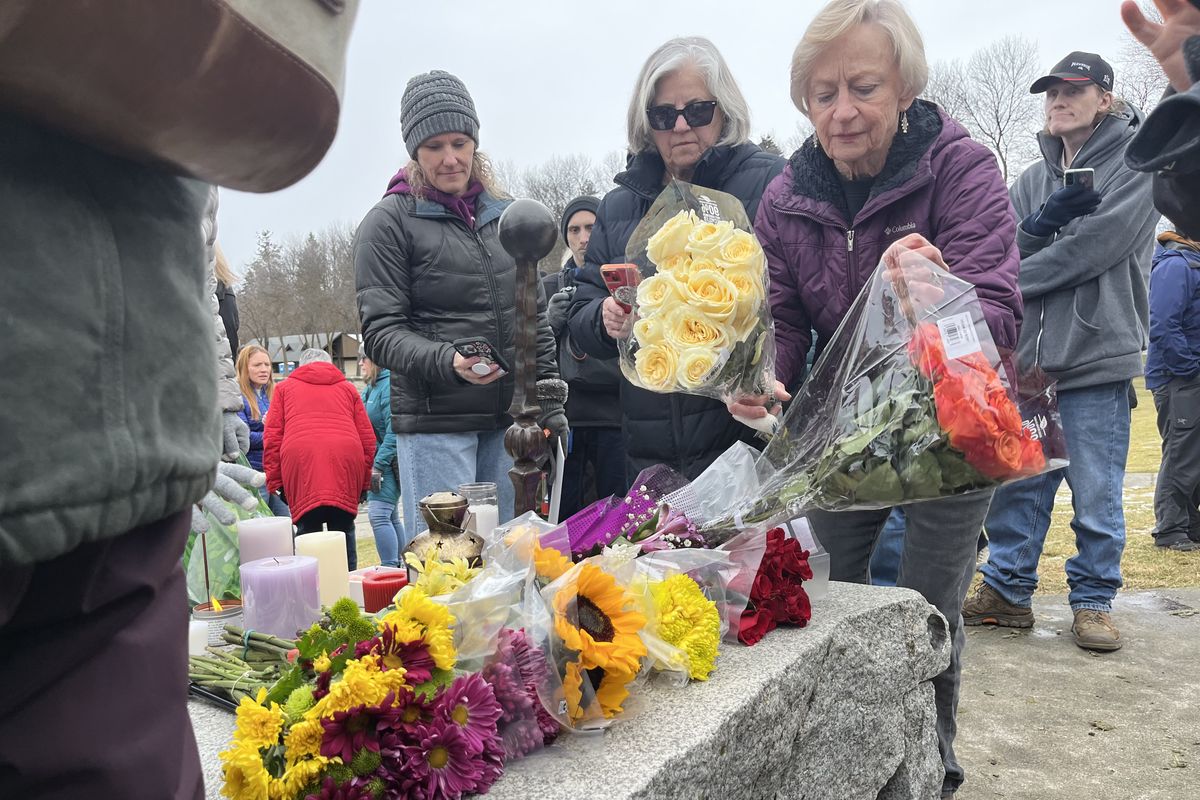
Some 1,400 miles separate Independence Point on the banks of Lake Coeur d’Alene and the Minneapolis street where an Immigrations and Customs Enforcement agent shot and killed a woman Wednesday .
Despite the distance, hundreds gathered Sunday at Independence Point to pay respects and grieve for the woman, Renee Good, and others who have died in ICE custody.
“There have been so many miscarriages of justice, but this one just struck people. This one was so ridiculous; it was so violent and so unnecessary,” attendee Jan Fay, 74, said. “It’s like, we’ve all either been or known somebody like her.”
Freshly formed North Idaho Indivisible organized the vigil in Coeur d’Alene; attendees brought candles, flowers and signs to memorialize Good, a 37-year-old mother of three, and poet. Several speakers read poems in her memory. The solemn event was meant to “demand change in remembrance” for Good and others who have died in ICE custody.
“I feel it’s very important to have a voice here in North Idaho, because we are a minority force here,” said Kristy Perretta, an organizer of the vigil. “After Renee Good’s death, which was super tragic, we wanted to have our voices heard, but we didn’t want to actually have a protest, so we wanted to do a remembrance.”
In 2025, 32 people died in ICE detention. It was the agency’s deadliest year since 2004, the Guardian reported. A day after Good’s killing, a Border Patrol agent in Portland shot two people, Luis David Nino-Moncada and Yorlenys Betzabeth Zambrano-Contreras, both later identified as Venezuelan nationals who appear to have connections with Venezuelan gang Tren de Aragua, Portland police said.
“Here in North Idaho, we have not experienced much of what we’re seeing in other parts of the country, but that does not give us the right or the permission to sit back and accept what’s happening,” Perretta told the hundreds huddled together around a memorial for Good. “We are still the United States, and we need to act like the United States with justice and liberty for all.”
The message resonated with attendee Ray Tekverk, still reeling from seeing photographs of the bullet hole through Good’s windshield and bloodied airbags after her death.
“I was just thinking of the 6-year-old,” Tekverk, 74, said of Good’s youngest child. “How are they going to explain that mom’s not coming home?”
For Tekverk, action is essential in the face of perceived injustice, like Good’s killing or the arrests and deportations of immigrants around the country. It’s a lesson he remembers vividly from his teenage years, when his World War II veteran father took him to France in 1969 to revisit some of the formative settings from his service. After visiting the golden sands of Omaha Beach where his father stormed Normandy, Tekverk’s dad showed him the gates of the Dachau Concentration Camp. Tekverk’s dad was one of the American soldiers who liberated the tens of thousands imprisoned there. He wanted his son to see for himself what he’d witnessed when he opened the gates, and not let anyone forget it.
“He also said something else I don’t usually mention,” Tekverk said. “He said, ‘All those people,’ and he pointed towards Munich in the distance over rolling fields. He said, ‘They knew, because you could smell it.’ ”
Now well beyond his teenage years, Tekverk’s dad’s message compels him to speak out for others.
“Whatever we can do, we’re gonna try to do to keep us from going that way,” Tekverk said.