
U.S. expects a physical challenge
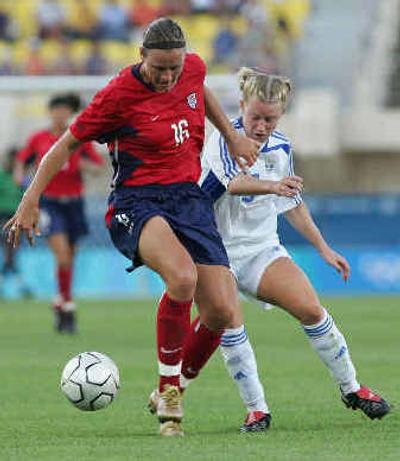
ATHENS — Rene Simoes won’t let it go.
If anything, the coach of Brazil’s Olympic women’s soccer team seems intent on adding petrol to the fire.
Still peeved about his team’s 2-0 loss to the United States in an early round match 12 days ago, he continues to tell Brazilian reporters that the Americans are dirty players. He said they go after bodies first, the ball second.
So one has to wonder what’s going to happen when the teams meet again today in the gold-medal match? The game is sure to be physical, and there’s nothing wrong with that, but will it cross the line?
The last thing you want to see is the soccer pitch turn into a boxing ring. The last thing you want to hear are the words, “Let’s get ready to rumble!”
“I think we need to be on our toes and protect ourselves against late hits and stuff,” said Abby Wambach, who has been a physical force and prolific scorer for the Americans throughout the year.
“You’ve got to expect it’s going to be a hard-fought game, and that’s OK, just as long as it’s a fairly fought game.”.
The last time these teams met, there were 28 fouls called and four yellow cards issued. Brazil’s Kelly broke a collarbone, and Simoes said five of his players were injured, including two who required hospitalization.
He singled out Wambach, who suffered a three-inch gash on her abdomen, along with some bruises and a ripped jersey from all the clutching and grabbing.
The U.S. holds a 17-1-2 advantage against the Brazilians, with their only loss coming seven years ago. But the South Americans have made progress. They lost 1-0 to the U.S. in the semifinals of the Sydney Olympics four years ago and thoroughly outplayed the Americans during the first half of their most recent match.
To their credit, it doesn’t appear the Brazilian players have adopted their coach’s motivational ploy. They talk as if they have great respect for the Americans. They would love to take a page from them and attempt to establish women’s soccer in their country the way the Americans have in theirs. They believe a gold medal would help them popularize the game among Brazilian females and it would help them begin to crawl out of the enormous shadow cast by their men’s national team, which has won a record five World Cups.