
Adaptability the key to Coca Cola 600
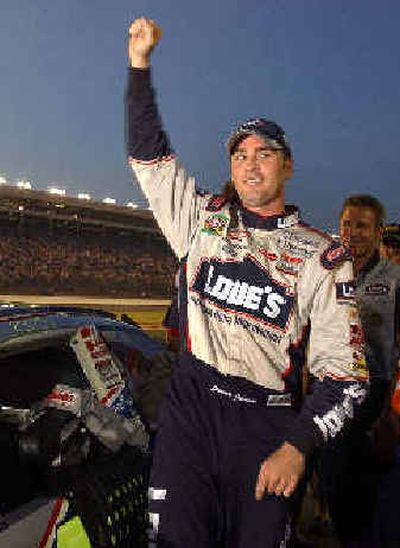
CONCORD, N.C. – Lowe’s Motor Speedway, the immovable object, will bake in the afternoon sun today as tens of thousands of race fans file into the facility for tonight’s Coca-Cola 600 NASCAR Nextel Cup race.
By 5:40 p.m. EDT, race time, the track’s asphalt surface will be something of an unknown quantity for the irresistible forces – the race cars – that must be powered through the turns for 400 laps in NASCAR’s longest race.
Figuring out the changes in that surface over a day-to-night race, and dealing with the imperfections of a track that probably needs some repair or renovation, will be keys in taking home the biggest slice of a $6.1 million purse.
The race will start in afternoon light but end deep into the evening, exposing drivers, teams and cars to a smorgasbord of temperatures and making it nearly impossible to have a perfect car throughout the long run.
“We have some good notes and have a pretty good idea of what adjustments we need at what time and as the sun is going down,” said pole winner Jimmie Johnson, last year’s 600 winner and this year’s favorite. “But you can only build so much adjustability in the car and still have it be fast at the beginning of the race.
“So, at some point, you’re going to have to take a risk on a pit stop and put spring rubbers in or take them out and make some major changes. Throughout the evening, everybody is going to have a slow spot in the race – even the winner will.
“Hopefully, we’re on top of things and can use our notes and apply them to the 600 because it’s one of the most physical races to stay on top of and be good from start to finish.”
Occasional bumps in the track – particularly in the low groove in turns three and four – also play into the program.
“It’s getting bumpier back there,” said driver Greg Biffle. “Maybe the track is settling a little bit. But I’ve noticed it upsets the car a little more getting into that corner. But it’s kind of neat with the race track having bumps or dips or whatever else because it makes each race track have its own characteristics.
“It does change the way you drive it a little bit. You have to be a little more cautious over those bumps back there.”
Johnson, Ryan Newman and Jeff Gordon had the best grip on the preferred line around the track in qualifying, taking the first three starting spots (and breaking the track speed record) for this year’s marathon. Being fast for two laps and showing strength across 400 laps obviously are two different things, however, and the best line around the speedway is likely to change several times during the race.
The fact that cars are using softer tires this season will add another factor because more rubber will be deposited on the speedway during the course of the event.
“The track is so heat-sensitive that if you start in the middle of the day and work through until the middle of the night, the track changes quite a bit,” said Robbie Reiser, crew chief for Matt Kenseth. “With the rubber buildup that we’re seeing off the tires this year, the track changes even more, so you have to build some type of adjustment into the car. It’ll probably be right at times, but it won’t be right all night long.”
Dale Earnhardt Jr., who leads the series points, had the top car in both of Saturday morning’s practice sessions.
Rookie Brendan Gaughan, who qualified seventh, crashed his primary car during practice and will race in a backup. He will start from the rear of the field.