
New dome forms in volcano
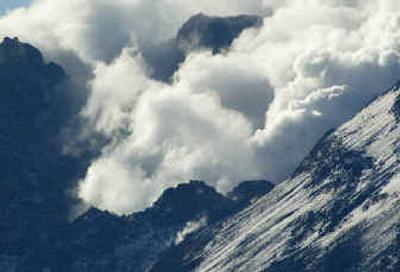
Magma that has been rising inside Mount St. Helens finally pushed its way to the surface late Monday and formed a new lava dome just behind the existing one in the volcano’s crater, after weeks of earthquakes and steam eruptions.
The quakes subsided Tuesday as the new lava emerged and cooled in the open air, suggesting molten rock from deep inside the Earth had found the path of least resistance by going around the old dome, said hydrologist Jon Major with the U.S. Geological Survey’s Cascades Volcano Observatory in Vancouver, Wash.
Unlike the dramatic rivers of red-hot lava from Hawaii’s volcano, St. Helens’ extrusion of new rock was subtle and difficult to see from outside the crater. A lazy plume of steam rose slowly from the mountain for much of Tuesday, and word of the eruption came at a USGS news conference.
The last dome-building activity at St. Helens began in the months after its deadly May 1980 eruption and lasted six years. Layers of emerging rock gradually formed a rocky dome nearly 1,000 feet tall at the center of the crater floor. The top of the new dome, which scientists noticed bulging up on Sept. 30, is almost level with the old one just to the north.
The mountain had been shaking since Sept. 23, with periods of sharp jolts – up to magnitude 3.3 – occurring as often as four times a minute at the height of seismic activity.
“The inference was that those were breaking a pathway” through rock, Major said.
On Tuesday, quakes of magnitude 1 or less were occurring every 5 to 10 minutes – “what they call emergent-style quakes,” he said.
Steam eruptions started last week as the magma drew closer to the surface. Three vent holes that had broken through the old dome wall since Oct. 1 had merged into one by Tuesday, Major said.
“The most intense steaming and activity is coming out of where this little lava fin has emerged” from the vent on the northwest side of the new dome – peeking out from behind the old dome toward the open north side of the crater.
Explosive eruptions are still possible and often follow lava extrusion, said USGS volcanologist John Pallister.
The pinkish-gray fin of rock is 60 to 90 feet high and 150 to 180 feet long – about the size of a six-story apartment building, Pallister said.
Scientists saw jets of dark steam and ash rise about 30 feet and then fell back into the crater in the form of hot rock and ash, said Tina Neal of the USGS. Winds Tuesday were from the northwest, and would direct any ash to the sparsely populated southeast.
The emerging magma is rough at first, Major said – like the crusty end of toothpaste from a tube that has been left open. In time, it may flow more smoothly.
“In the 1980s, lava would punch its way through the dome and then get to the surface and ooze and spread, like a pancake draped over the lava dome,” he said. The dome developed its rocky, craggy appearance as the lava cooled and became more brittle, and as fresh flows broke through to the surface.
The 1980 eruption was more devastating than scientists had imagined possible. A quake shook loose the mountain’s bulging north face, basically uncorking the rising magma so it blasted sideways, taking off the top third of the mountain in an enormous landslide and driving the hot debris across miles of forests, killing 57 people and paralyzing much of the region with gritty ash.
The landslide “was like taking the lid off a pressure-cooker,” Major said.
That eruption was “barely a five” on the eight-level Volcanic Explosive Index, Major said.
At this point, scientists believe there is a 10 percent chance of a level four or larger eruption at the 8,364-foot mountain, he said.
The area immediately around the mountain remained closed. The alert level remains at “volcano advisory,” a middle level, but scientists have said an eruption could occur with very little warning.
St. Helens’ flanks have not budged during the recent activity and magma is flowing fairly easily to the surface, Major said, so any explosive eruption would like go straight up, blowing ash and steam tens of thousands of feet high. That could cause concern for aircraft and cars in the area, but nothing like 1980’s lateral blast.
Also, portions of the glacier growing since the 1990s behind the old dome could melt and combine with rain and snow to cause mud flows or lahars. Those would likely back up behind a man-made sediment dam west of the mountain, miles from populated areas, Major said.
Concerned about the approach of winter, scientists had asked for technology to provide “bad-weather” capability, Pallister said.
Advanced Ceramics Research volunteered use of a drone aircraft carrying instruments that can monitor the volcano at night or even during an eruption. The Tucson, Ariz.-based company was awaiting Federal Aviation Administration clearance for use of the 22-pound drone.
ACR will be responsible for flight operations and planning, and USGS will analyze the data “in real time,” Pallister said.