
Comments on poleyard sought
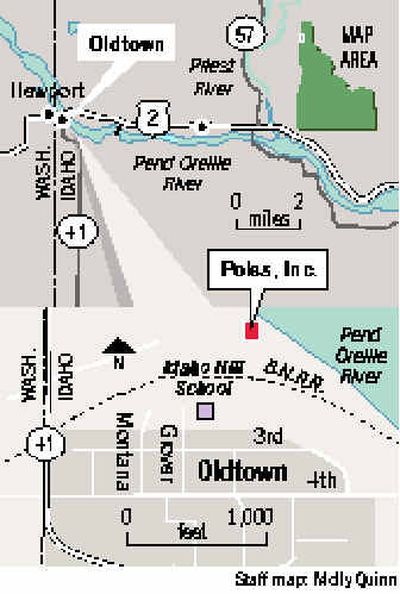
OLDTOWN, Idaho – The state of Idaho is poised to approve a cleanup plan for a contaminated poleyard here. Comments are being gathered and a public hearing is planned Wednesday night.
A group of local residents who have been pushing for the cleanup for more than four years are furious.
The work has already been largely completed, they say, and it was done with a nod and a wink from the state. Yet the public was left out of the process and put at risk by the cleanup work, they say.
“They misrepresented this to the public,” said Betty Gardner, who previously volunteered at Oldtown’s Idaho Hill Elementary School, where noxious fumes from the poleyard caused headaches and sickness. “They’re saying you can comment on this, but there’s nowhere in the public notice saying this work was already done. I just am blown away.”
Officials with the Idaho Department of Environmental Quality say they were merely trying to speed up the process by allowing Poles Inc. to go forward last summer with soil removal at the 15-acre site. Scraping away contaminated soil is a major part of cleaning the site, but additional work could still be required by state regulators, including a long-term monitoring and storage plan for the pile of removed soil, said Robert Bullock, hazardous waste permit manager for DEQ. The state made this fact clear to Poles, Bullock said.
“One of the concerns we heard loud and clear is that, ‘Hey, nothing’s happening. Why isn’t there any cleanup going on?’ ” Bullock said. “We thought the idea of letting them move forward would placate that concern that nothing was getting done.”
DEQ officials paid random visits to the site while soil removal was taking place, Bullock said. “This process is time-consuming. That’s one of the reasons we’ve allowed Poles to proceed. They proceeded in doing this work at their own risk, knowing that if additional or different work needed to be done, they were on the hook.”
Poles Inc. owner Reid Tinling declined to comment when reached at his home Thursday in Scottsdale, Ariz.
For 60 years, the business soaked peeled logs in large, heated tanks of oil and pentachlorophenol. The treatment created utility poles that were resistant to bugs and rot. A leaking tank allowed the chemicals to drip into the soil, possibly down to the groundwater, according to state reports. Pentachlorophenol is banned in more than two dozen countries and is listed by the United States government as a probable cause of cancer.
State and federal officials began investigating problems at the site more than four years ago, prompted by complaints from neighbors and teachers at the nearby elementary school.
Although chemical preservatives have not been used at the facility since 2002, Joe Zeason said he moved his daughter to a different school out of fear that she and other Idaho Hill students were still being exposed to toxic chemicals and dust, roiled by heavy machinery at the site. The poleyard is located a few hundred feet from the school.
“I don’t think the operation was that bad – I’m not too much of one of these earth-friendly types – but you can’t have it in a school zone. That’s insane. That’s Third World,” said Zeason, a carpenter with a professed love for treated wood. “We’ve got certain laws in this country that propel us beyond a Third World country. That means protecting our kids. I’m a stickler on that one.”
Cleanup work at the site began in June, just a month after the company was told by the state that its cleanup proposal plan was lacking basic information. Zeason and other critics say they were angered and surprised to see the work proceed before it was formally approved by the state and without a chance for public comment.
“You can’t go in there and start blowing soil all over the place,” Zeason said.
Gardner agreed, “I wanted the cleanup, don’t get me wrong, but I wanted it done right. They did this cleanup without advising the community it was going to happen. They did this cleanup without advising the workers of the health risks.”
Pentachlorophenol-steeped soil is now resting under a concrete cap at the site. On Dec. 10, the Idaho Department of Environmental Quality released its proposed cleanup plan for the facility. Commenting on the plan, the chief of Idaho’s Bureau of Community and Environmental Health expressed concerns in a Jan. 18 memo to the DEQ.
“There is no mention of measures to protect the health and safety of the workers or people in the community during cleanup,” Elke Shaw-Tulloch wrote. “Depending on wind speed and direction, there may be a potential for contaminants being released into the air when the cleanup is performed. Therefore, you may consider adding a plan to notify citizens of the work being done at the site.”
Bullock, with the DEQ, said the public still has a chance to influence additional remediation and monitoring work at the site. He also added that Poles Inc. was doing nothing wrong by proceeding with the cleanup prior to formal approval.
“There’s nothing to preclude a property owner from cleaning up their own site,” Bullock said.
Gardner has asked the U.S. Environmental Protection Agency to intervene. The agency is looking into the case, but no determinations have been made, said Mark Masarik, public liaison for EPA’s region 10.