
The truth, refined
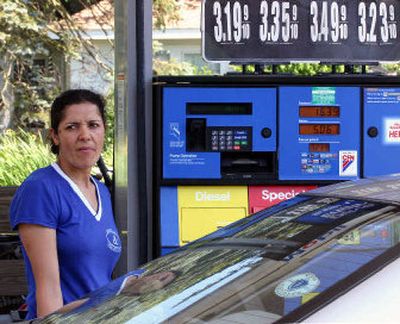
While U.S. oil companies blame the global oil market for high gasoline prices, a close analysis of pricing suggests it’s not so simple: The run-up at the pump also comes from domestic refining, which is largely controlled by Big Oil.
In consultation with several economists, The Associated Press examined pricing trends since 1999, which was the starting bell for the modern era of pricier gasoline. It found evidence that:
“The portion of gas prices tied to refining has ballooned all on its own, apart from oil.
“The suspicion of frustrated drivers is correct: After upward spikes, the price of gasoline drops back more slowly than the price of oil — and someone pockets the difference.
The country’s average price for self-serve regular gas climbed to a record high at just over $3 a gallon in July, according to the Lundberg Survey research firm. The petroleum industry knows that many drivers are steamed about both its record prices and profits.
In a recent television commercial by the industry’s American Petroleum Institute, a driver wonders “why world demand for crude oil determines what I pay at the pump.” The industry wants Americans to know that the price of gas tracks the price of its chief ingredient, crude oil. Why? Oil prices are set on a world market, often beyond direct control of American petroleum companies.
The group has a point. Crude oil does account for just under half the price of gasoline, the government says. And oil prices are subject partly to supply decisions of foreign oil powers and stiff demand in Europe and Asia.
However, many Americans remain dubious, even contemptuous, of industry claims.
“It’s a bunch of bull. It’s just to cover their behinds,” said Fernando Reas, of Hartford, Conn., who was saving on gas this summer by vacationing nearer home at a trailer park at Falmouth, Mass., on Cape Cod.
Consumers like Reas are right, at least, to suspect there’s more to the story.
A big chunk of gas prices — almost a fifth — pays refiners who make gasoline from oil, and America’s refineries have been hiking their prices, too.
Charges of refineries can be detected in what’s known as their “margin” — the difference between what they pay for crude oil and what they collect for the gas they refine. Service station costs and taxes add to the final retail price of gas.
In a competitive market, when raw material gets more expensive, margins typically shrink, economists say. Not so in the oil business these days. Refiners have somehow managed to fatten their margins through years of rising oil costs.
Since 1999, their average margin has jumped by 85 percent, reaching 43 cents for June, according to AP’s analysis of daily data from the New York Mercantile Exchange. That margin increased by just 20 percent in the seven preceding years.
Rayola Dougher, who oversees market issues for the American Petroleum Institute, says today’s margins are helping refiners bounce back from leaner times of the 1990s. “They’re still as a sector struggling, but certainly the last few years have been looking good,” she acknowledges.
Refining groups say they are doing their best to bolster supplies, which would ease price pressure. The industry has announced plans to expand domestic refining capacity by at least 8 percent in the next several years.
In fairness, the margin rise hasn’t been all gravy for refiners. Refining costs have escalated from environmental mandates, such as special gas blends mandated in particular places. Wild price fluctuations have added risk — and thus financing cost — to business projects. Last summer’s hurricanes also temporarily took out some operations.
But refining margins also reflect profit. Some economists and consumer advocates suspect that refiners have intentionally bottled up supply to buoy prices, margins and ultimately profits.
A 2002 congressional study found some evidence it happens, but that doesn’t necessarily mean refiners huddled in a back room somewhere, hatching conspiracies. They don’t need to. They can each simply decide to crimp output or hoard supply. Such margin goosing is a permissible bid “to maximize their profits,” federal trade investigators said in a 2001 report.
“It’s simple economics,” says Severin Borenstein, director of the University of California Energy Institute. “They understand that putting more supply on the market drives the price down.”
Bob Slaughter, president of the National Petrochemical and Refiners Association, blames high gas prices on high oil prices “which are frankly out of our control” — not decisions by refiners to hold back on gas. But he also says, “There is no law that says you can make people in an industry invest and expand capacity.”
Why wouldn’t other refiners simply ramp up their own output and claim a bigger slice of unmet demand?
That has become harder to do, as big refiners have built up market muscle through mergers. The top five now control more than half of U.S. refining capacity, and the top 10 account for three-quarters, according to an AP review of federal data. Most are petroleum powerhouses like ConocoPhillips Co., Exxon Mobil Corp. and BP PLC, which influence prices with operations across the supply chain, from drilling to pumping gas into cars.