Cheesy ending

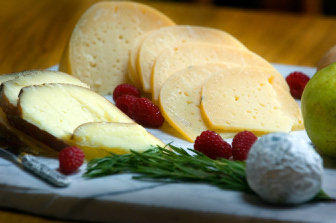
Walk into most American restaurants and near the top of the appetizer menu you’ll find the cheese plate, a tantalizing assortment of cheese served with fruit and bread. But at more restaurants, including a few in Spokane, the cheese course is moving to the back end of the meal.
The post-dinner cheese course is a longstanding European tradition. The 18th century French foodie Jean Anthelme Brillat-Savarin once wrote, “Dessert without cheese is a one-eyed beauty.” Clotilde Dusoulier puts it this way – in a 2005 article for NPR.org, the food writer who created the Chocolate and Zucchini blog (chocolateandzucchini.com) calls the after-dinner cheese course “the purest way to savor and celebrate milk’s gifts to the table.”
At least two Spokane restaurants, Latah Bistro and Luna, offer a cheese plate on their dessert menus. Latah Bistro Chef David Blaine said that offering a cheese course on the dessert menu (it’s listed as an appetizer, too) helps patrons extend their evening.
“Many people came to our restaurant to spend time with their friends and the cheese plate makes for a nice shared finale to a meal as friends talk and enjoy their wine,” he said.
A cheese course can be a good and healthful option for dessert, said Kim Morin, owner of Saunders Cheese Market in downtown Spokane.
“The health benefits of cheese are great. With the different vitamins you get from cheese, it’s better than having a cheesecake,” she said. “Rather than order a sugared dessert, better to order a cheese plate.”
Because the Latah Bistro staff doesn’t know what wine the patrons will drink with their cheese, they keep the cheese plate simple, with an eye toward broad appeal.
“Humboldt Fog goat’s milk cheese may not work for everyone so we would put it with Morbier, a French cow’s milk that is milder,” Blaine said. “For the same reason, we offer a variety of accompaniments such as nuts, olives, slightly tart apples, ripe pears or dark grapes.”
At Luna, it’s not uncommon for the cheese to be served with fresh Montana honeycomb. “They seem to love the sharper cheeses, like pecorino or Parmesan, with a little bit of honey,” said Dave Radford, Luna’s daytime sous chef. “It’s a really flavorful pairing.”
Radford says he’s seen the popularity of the cheese course grow.
“I think it’s taken awhile for people to warm up to it, but it’s definitely coming up,” he said. “Honestly, it seems to be when we first put it on the menu, we sold more of it in the winter time. But now, in the summer, when you pair it with fresh stuff, it’s really taking off.”
Morin said there is plenty of evidence that the American palate is expanding and people are exposing their taste buds to more exotic flavors, cheese included.
“We’re picking up more and experiencing other flavors,” she said. “Look at the Food Network. People watch ‘Iron Chef’ and watch Bobby Flay. Even things like the Travel Channel. There are different shows about people traveling and different hotels and restaurants they might experience.
“I think Bluefish and Moxie are exposing (local) people to different flavors, as are Latah Bistro and Luna and the Coeur d’Alene Resort. They’re adding different flavors, which make our palates more experienced. You don’t have to go abroad any more to taste great food.”
She cites statistics from the American Cheese Society and the Wisconsin Milk Marketing Board indicating that Spokane residents ate more cheese in 2005 than the previous year. The average American eats 31 pounds of cheese a year. In Spokane, it’s 32 pounds a year. Spokanites even eat more cheese than their brethren in Seattle. More tellingly, she added, the amount of processed cheese consumed decreased while the rates for natural cheese increased, she said.
“Like organic is growing, natural cheese is just following right along,” she said.
Luna has offered the cheese plate for a couple of years now, Radford said. At Latah Bistro, it’s been around since the restaurant opened in 2005, Blaine said, but it will go on hiatus, based on the availability of the staff’s favorite cheese.
“Even when the cheese plate isn’t on the menu we keep enough cheeses around to put something together when needed,” he said.
When your favorite restaurant doesn’t have a cheese course on the menu, fear not. You can always put one together at home. The rules are few and the options many.
How many cheeses you offer depends on the size of your party and what else you’re serving, Morin said. For a party of four, she suggests offering three cheeses.
“The bigger the party, the more cheese I like to put out there as far as flavors,” she said.
For an after-dinner plate, she suggests serving 2.5 ounces of cheese per person, organized in a “flight” that ranges from mild to more intense flavors. The cheese should be at room temperature before serving, to bring out its full flavor. After that, the options are endless.
“A good beginner’s cheese plate is the French. French cheese I find to be the most mild,” Morin said. “We have found here in town just talking with other people and doing various cheese plates, the French has been the most safe. The Spanish has been the most fun and the American has been the most ‘experienced’ as far as moving beyond the boundaries. Someone who has a more established palate will have a good time with the American cheeses.”
A classic combination is one cow’s milk cheese, one sheep’s milk cheese and one goat’s milk cheese. A French plate that Morin puts together might look like this: Pont L’Eveque, a soft cow’s milk cheese; Saint Pierre, a soft-to-hard (depending on age) goat’s milk cheese; Tomme de Savoir, a semi-firm cow’s milk cheese; and a Vacherin, a soft cow’s milk cheese.
She also does a “Vertical Northwest” plate, featuring regional cheeses. A few of her favorites include Sally Jackson’s chestnut-wrapped sheep’s milk cheese, Quillisascut cheese and Point Reyes blue.
Whatever you decide to make at home, Blaine urges simplicity.
“You can complicate the process of choosing cheese for a cheese plate,” he said. “With different regions, different animal milk, different molds, the variables are overwhelming, especially if you are trying to pair with a specific wine. Luckily any shop selling good cheese or good wine will have people that can help.”
When Blaine puts together a plate, he likes to have a “safe bet that will appeal to a large number of people, a more refined favorite and one that will surprise people.”
Among his choices: a mild Quillisascut ash tome, the salty and pungent Saint Nectaire and an aged California gouda from Winchester Creamery, which, he adds, is “nothing like the familiar red-waxed grocery-store variety.”
One cheese that likely will be familiar to many consumers is brie, a soft-ripened cow’s milk cheese that is readily available in grocery stores. When building a cheese course around brie, shop for the best-quality cheese you can find. Beyond that, Blaine offers some other advice.
“Many people like to pair sweet items with brie, such as fruit like figs or grapes, but I think that brie needs something more so I like roasted garlic, jalapeño jelly, smoked paprika, or my new addiction, peppadews (pickled sweet peppers),” he said. “Using a spicy herb bread like Fontana Bread also works, but I always prefer crustier varieties of bread.”
Other accessories for your cheese plate can be as varied as your individual tastes, Morin said.
“On an ideal cheese plate, I’d offer three to five cheeses – I like the odd number,” she said. “I am more of a cracker person but some people are bread people. I try not to make the plate too heavy. The cheese is the focus, so if you’re going to do bread or crackers, I’d serve them on the side. Then include your fruit. I always do a pear. I love pears with cheese. Another great thing is some nuts, caramelized. Caramelized walnuts, sometimes the cashews, and almonds are really nice.”
Traditionally, cheese courses are served on wooden cutting boards, tiles or specialty plates made of marble. A standard wood cutting board, or some other rimless dish, is perfect for serving cheese, Morin said.
As for all those fancy cheese tools that could clog your gadget drawer, Morin has a simpler way – just two tools do the job.
“I do encourage people to buy a nice cheese knife, the ones with the big holes. It’s a great utensil,” she said. “Then there’s the old standard that my mother still has in her drawer – the wire cutter. It’s great.”
Blaine points out that big wedges add height to a plate and make for a good start. Decorate the platter with things from your garden – fresh grape leaves, chive blossoms, thyme flowers or nasturtium flowers.
Most people would serve the cheese portions on individual plates, but Morin goes for a more “family style” arrangement.
“Depending on how well you know (your guests), I prefer the cheese plate to be in the middle of the table, with no appetizer plates,” she said. “The whole idea is to share and come together and experience together, as opposed to taking and removing and being by yourself.”
While deciding what wine to serve with cheese is a complex question, Morin suggests that you can’t go wrong with a good Washington Riesling. And she offers on final piece of advice before you dive in.
“You’ll want to smell (the cheese) before you eat it, then taste it and actually push it up against your palate and taste the cheese,” she said. “The first bite you savor it, then you take another bite with your beverage. The first bite should be alone and the second bite include your beverage to see how they enhance each other.”
So where to buy the cheese? A shop such as Saunders Cheese Market, 210 S. Washington St., will offer high-end gourmet cheese that has never seen the inside of a plastic, vacuum-sealed wrapper. The store will open Aug. 18. Some of the better-stocked local grocery stores such as Safeway, Huckleberry’s, Super 1 and Yoke’s will offer options beyond Tillamook sharp cheddar and Athenos feta. If you’re traveling to Walla Walla, Morin recommends a recently opened shop, Cheese Louise. Otherwise, there are online options for buying cheese such as igourmet.com or deananddeluca.com.
In “The All-American Cheese and Wine Book,” author Laura Werlin sings the praises of serving cheese with nuts. Here are a few simple nut recipes to get you started. In all these recipes, any leftovers can be frozen for up to three months. Cheese recommendations are included.
Candied Walnuts
1/4 cup powdered sugar
1/8 teaspoon cayenne pepper
1/8 teaspoon salt
Water
4 ounces walnut halves (don’t use pieces)
Preheat the oven to 350 degrees.
In a medium bowl, mix together the sugar, cayenne and salt.
Bring a small saucepan of water to a boil. Add the walnuts and blanch them for 3 minutes. Drain well. Immediately roll the walnuts in the sugar mixture until thoroughly covered. The sugar will melt slightly. Transfer the walnuts to a baking sheet or pan and bake, stirring occasionally, until they are a deep, golden brown, about 10 minutes. Watch carefully because the sugar can burn easily. Let cool completely before serving.
Serve with fresh or aged goat cheese, blue cheese or gruyere.
Yield: 1 cup
Approximate nutrition per 1-ounce serving: 165 calories, 14 grams fat (1.4 grams saturated, 72 percent fat calories), 3 grams protein, 9 grams carbohydrate, no cholesterol, no dietary fiber, 1 gram dietary fiber, 60 milligrams sodium.
Spicy Pecans
2 teaspoons canola oil
1/4 teaspoon kosher salt
1/4 teaspoon ground cumin
1/8 teaspoon ground coriander
3 pepper mill twists of black pepper
3/4 cups pecan halves
Preheat oven to 325 degrees.
In a small bowl, whisk together all of the ingredients except the pecans. When blended, add the pecans to the bowl and coat well. (It won’t look like much coating, but don’t worry. It is enough.)
Spread the pecans out on a small baking sheet and bake until they start to release a nutty aroma and begin to turn a light brown color, about 8 minutes. Remove from the oven and let cool completely before serving.
Serve with dry Jack cheese or aged sheep’s milk cheese.
Yield: 3/4 cup
Approximate nutrition per 1-ounce serving: 164 calories, 17 grams fat (1.5 grams saturated, 89 percent fat calories), 2 grams protein, 2.8 grams carbohydrate, no cholesterol, 1 gram dietary fiber, 73 milligrams sodium.
Caraway Almonds
1 cup whole almonds
Water
1 egg white
1/2 teaspoon coarse salt
1/2 teaspoon caraway seeds, crushed
Preheat oven to 300 degrees.
To blanch the almonds, add the nuts to a small pan and add water to cover by about 1 inch. Bring to a boil. Boil for 1 minute and drain the almonds. As soon as the almonds are cool enough to handle, slip them out of their skins by holding them at one end and squeezing. They should come right out.
In a small bowl, whisk the egg white until it begins to get foamy. Add the salt and caraway and whisk until they are incorporated. Add the almonds and stir to coat. Spread the almonds on a baking sheet and roast, stirring frequently, for 15 to 20 minutes, or until the almonds are golden brown. Some of them will stick together, but that is fine. Remove from the oven and cool completely before serving.
Serve with cheddar, Gouda or Havarti cheese.
Yield: 1 cup
Approximate nutrition per 1-ounce serving: 145 calories, 12 grams fat (1 gram saturated, 72 percent fat calories), 5.5 grams protein, 5 grams carbohydrate, no cholesterol, no dietary fiber, 106 milligrams sodium.
Spanish Almonds
1 cup whole almonds, blanched
1 tablespoon grapeseed, light olive or canola oil
1 teaspoon coarse salt
Preheat oven to 300 degrees.
To blanch the almonds, add the nuts to a small pan and add water to cover by about 1 inch. Bring to a boil. Boil for 1 minute and drain the almonds. As soon as the almonds are cool enough to handle, slip them out of their skins by holding them at one end and squeezing. They should come right out.
Combine blanched almonds, oil and salt in a small bowl and toss to coat. Spread the nuts on a baking sheet and roast for 15 to 20 minutes, or until they are a deep, golden brown. Remove from the oven and let cool completely before serving.
Serve with an aged cheese and a glass of sherry, or with olives and a fresh goat cheese.
Yield: 1 cup
Approximate nutrition per 1-ounce serving: 198 calories, 17 grams fat (less than 1 gram saturated, 77 percent fat calories) 6 grams protein, 5 grams carbohydrate, no cholesterol, 3.7 grams dietary fiber, 232 milligrams sodium.
Compotes also are natural partners for cheese. Here are two from Werlin’s book:
Kumquat-Peppercorn Compote
1 cup water
1/4 cup sugar
1/4 pound kumquats, cut crosswise into 1/8-inch thick slices and seeded
2 teaspoons whole peppercorns
1 star anise
Preheat oven to 450 degrees.
In a medium heavy-bottom pot, bring water and sugar to boil. Continue cooking until the mixture is reduced by half, about 5 minutes. Turn the heat to medium-low and add the remaining ingredients. Cook, stirring occasionally, until the kumquats are soft, 5 to 6 minutes.
Serve with toasted slices of hearty Italian-style bread and aged sheep’s milk cheese.
Yield: 1/2 cup
Approximate nutrition per 1-ounce serving: 46 calories, no fat, no protein 12 grams carbohydrate, no cholesterol, 1.5 grams dietary fiber, 3 milligrams sodium.
Dried Fruit Compote
1 3/4 cups water
1 cup sugar
3/4 cups sweet white wine
1/3 cup fresh lemon juice (from 1 large lemon)
6 strips lemon peel, each 1 inch long and 1/4-inch wide
1 (8-ounce) package dried Black Mission figs
1 (6-ounce) package dried apricots
1 cup dried tart cherries (about 4 1/2 ounces)
In a medium-sized saucepan, combine all the ingredients except the cherries. Bring to a simmer over medium-high heat until the sugar is dissolved. Reduce the heat to medium and simmer for 5 minutes. Add the cherries and continue simmering, stirring occasionally, until the fruit is tender and the juices are reduced to a medium-thick syrup, 15 to 20 minutes. Let cool to room temperature.
Compote can be made two days in advance and refrigerated. Bring to room temperature before serving.
To serve, spoon the compote over wedges of brie, Camembert or other soft-ripened cheese.
Yield: About 4 cups
Approximate nutrition per 4-ounce serving: 195 calories, less than 1 gram fat (1 percent fat calories), 1.4 grams protein, 47 grams carbohydrate, no cholesterol, 3 grams dietary fiber, 5 milligrams sodium.