
Online volunteers able to help from home

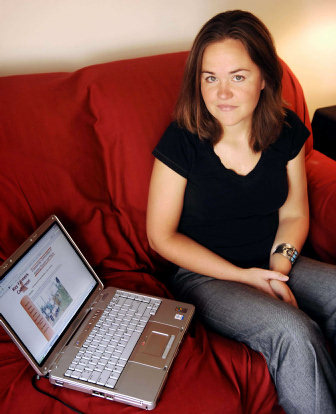
NEW YORK – When it comes to volunteering, Caitrin Murphy finds satisfaction in spending 10 months helping Tijuana orphans or a Saturday building low-income homes outside Washington, D.C.
But onsite projects aren’t always feasible, so Murphy instead turned to the Internet and, with two co-workers, remotely created a Web site for an organization that helps farmers in the West African country of Cameroon.
“It’s an adequate alternative,” Murphy said. “I would prefer a hands-on, physical experience at the site. At the same time … by doing a project virtually we could affect the lives of people we would never think of meeting.”
Online volunteering is growing as Internet access improves worldwide, particularly among African and Latin American organizations needing assistance.
VolunteerMatch, a San Francisco group that helps volunteers learn about onsite and online projects, said 14 percent of its volunteer opportunities last year were virtual, compared with 1 percent in 1998.
Instead of building homes, volunteers like Murphy can build Web sites.
Or translate documents. Or prepare training manuals. Or mentor teens.
All from a computer hundreds or thousands of miles away.
“If I could send a volunteer to Chile to teach an organization how to build a Web site, that will be 10 times better than having us build it for them, but it’s a hundred times more expensive,” said Charles Brennick, whose Seattle-based InterConnection group links volunteer Web designers with development groups abroad.
Online volunteering isn’t practical for everything. You still need to be somewhere to serve soup to the homeless or coach a Little League team. But over the Internet, you can order the food or reserve the ball field.
Online volunteering isn’t right for everyone, either.
“It takes real time, not virtual time,” said Jayne Cravens, an independent consultant for nonprofit organizations. “It takes commitment. It takes persistence.”
It’s a good option for those needing flexibility – be it a disability, work schedule or budget that rules out travel.
Sandrine Cortet, 36, sought to put her French skills to work when she and her husband moved from Paris to Edison, N.J. But they had only one car, and a train to volunteer opportunities in New York would have been expensive.
So she translates documents from home, most recently for a refugee group’s newsletter.
Sara Siebert, 23, wanted opportunities to improve her skills in graphics design. Lacking funds to travel, she built Web sites for groups in Kenya and Belize from Montreal; InterConnection hosts the sites in Seattle.
Volunteers and the organizations they help generally communicate by e-mail or instant messaging, rarely by telephone.
Phil Westman, program officer with Siebert’s group in Belize, said he doesn’t even know where his other Web design volunteer lives.
Francisco Filho, research assistant with the United Nations Development Program’s International Poverty Center in Brasilia, Brazil, acknowledges he was skeptical initially about online volunteering.
“I was afraid we could not get the expected results,” he said. “It was kind of a new thing for us. It was a big and good surprise.”