
Frequent success
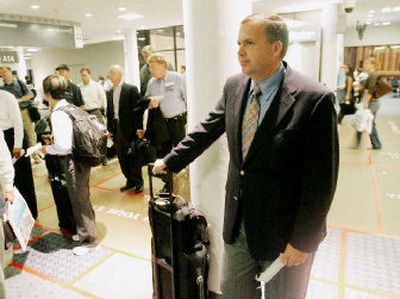
ATLANTA – Mark V. Erickson is the kind of flier who airlines love. Every Monday, he leaves for New York or California for his job as a master chef for the Culinary Institute of America. He returns to Atlanta on Friday night and does it all again two days later.
The 48-year-old man from Marietta, Ga., is one of Delta Air Lines Inc.’s most prized customers – a super-elite frequent flier who travels 200,000 miles a year. He looks for perks such as first-class upgrades or being able to board first instead of getting free airplane tickets
“At my stage, miles don’t really mean a lot to me – the last thing I want to do is travel,” he said. “For us, it’s a bus ride; it’s just a bus that has wings instead of wheels, and it’s a long one.”
The first frequent flier program began in 1981 with American Airlines’ AAdvantage as a way to keep profitable business travelers flying the same airline. Other major airlines, such as Delta, quickly followed.
Twenty-five years later, travelers and industry experts say the programs have flown far off course from their original purpose. Yet it’s doubtful the airlines will ever change from their present direction because the programs – a $4 billion industry – have turned into huge revenue producers on their own. They have even been listed by airlines as assets in bankruptcy and merger and acquisitions negotiations. Airlines have created a big business out of selling frequent flier miles to outside companies that in turn use miles to woo their own customers.
“In the 1990s, the programs probably changed from less of a loyalty program – that’s what it was all about – more into a rewards program that now the masses of people that just don’t fly 20 times a year have the ability to earn free tickets,” said Jeff Robertson, managing director of Delta’s SkyMiles program.
Frequent flier programs have grown – to the tune of nearly 430 million members worldwide, said Randy Petersen, editor of Inside Flyer magazine. More than 14.2 trillion frequent flier miles are still in circulation worldwide, for an average of 33,035 per program member – typically enough for one free domestic round-trip ticket in the United States.
“Every single frequent flier program in North America is profitable. It’s the best thing that ever happened to airlines,” he said. “There’s no doubt that without those programs, maybe two or three airlines wouldn’t be around today.”
The proliferation of frequent flier program members has caused frequent travelers to complain that the programs now are flooding the skies with travelers who never left the ground for their free tickets but earned miles through credit card purchases or eating at certain restaurants.
“I would go back to the earlier days, go back to rewarding for their core business but not the behavior on the side businesses. I think it’s a big mistake,” said Leon Schiffman, a professor of marketing for St. John’s University in Queens, N.Y. “They’re losing sight of the origin and why it was done – customer loyalty.”
Frequent fliers say the perks aren’t the same as in the past.
“What the airlines did was put so many seats in first class, when somebody puts their seat back you have the same problems you did in coach,” said Todd Good, 46, who flies 200,000 miles each year for his real-estate auction business in Newport Beach, Calif. He uses his miles for emergencies, instead of paying for a full-price domestic ticket, or he donates them to charities.
But it now costs Good 50,000 frequent flier miles to get a domestic ticket anytime he wants, as opposed to the previous cost of 25,000 miles, a level now reserved for a limited number of “saver” seats.
“From a business standpoint, they’re losing money and they have to do what they have to do to stay in business,” said Good. “On the other hand, the miles I have from years ago that I’m trying to use today don’t have the same weight.”
Delta’s Robertson said airlines haven’t communicated well the value behind the evolution of the frequent flier program’s airline partnerships, which allow the airlines to reward loyalty in different ways.
When American started its program, it looked to the S&H Green Stamps loyalty program as a blueprint. That program allowed grocery shoppers to collect green stamps for purchases that later could be traded in for prizes ranging from toasters to mopeds.
Today’s frequent-flier programs look more like the S&H Green Stamps program than the airlines’ original loyalty programs. Today, frequent flier miles can be cashed in for not only airplane tickets but other awards, including hotel and car rentals and even, in some cases, S&H-like prizes from electronics to home gadgets.
United, American and Delta each rake in an estimated $1 billion a year from the partnerships with credit cards, restaurants and other companies that pay cash to purchase frequent flier miles. The companies then give them to their customers, Robertson said.
“They have changed quite a bit, a transformation from ‘frequent flier’ to ‘frequent buyer,’ ” Petersen said of the programs.