
Health crisis forces German doctors abroad
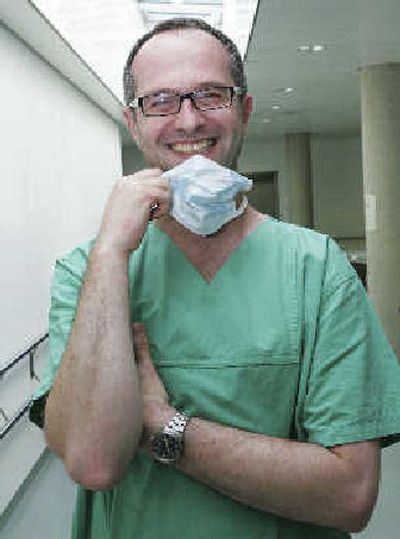
DUESSELDORF, Germany — Anesthesiologist Christian Favoccia had no trouble deciding to ditch his job at the university hospital in Duesseldorf for a new one at a clinic in Amsterdam.
By leaving home, the 36-year-old specialist will make almost three times as much money, work shorter hours and have better chances at promotion.
“At this point I honestly can’t tell you if I will ever come back to Germany,” Favoccia said. “I am skeptical that they’ll be able to offer me the same kind of incentives any time soon.”
Germany’s well-trained but frustrated young doctors are leaving the country for higher pay in ever greater numbers, leaving some hospitals struggling to fill positions.
More than 12,500 German doctors are working abroad already, and 2,300 left the country in 2005 alone, according to the doctors’ association, the Marburger Bund. The Netherlands, Britain, United States, Australia, Switzerland and the Scandinavian countries are among the top destinations.
“There are more than 5,000 jobs available at hospitals due to the number of people who have left,” said Michael Helmkamp, a spokesman for the Marburger Bund.
Favoccia, who got his medical degree from the University of Bochum before moving on to the University Hospital Duesseldorf 5 1/2 years ago, is already taking Dutch classes together with a colleague who is also planning to move to Amsterdam. He said he did not mind starting a new life in the Netherlands even though he would miss his friends at home.
“My father came to Germany as an immigrant from Italy in the 1960s and built up a new life here. I guess I can do the same in Holland,” said Favoccia, who is single.
A spokeswoman for the German Health Ministry said only some regions of the country are struggling with a shortage of doctors; cities like Berlin are facing a surplus.
“These general assumptions by the Marburger Bund are not always true,” said spokeswoman Ina Klaus. “And besides that, the government is contributing millions of euros for clinics to improve the working conditions of doctors.”
At the University Hospital in Duesseldorf, dozens of doctors have left for better jobs abroad, said Favoccia. The situation is particularly dramatic at the anesthesia department where 17 out of 80 doctors have quit their jobs within the last year.
Low salaries are one of the main reasons. Favoccia is making $2,900 a month after taxes in Duesseldorf, but at the University Hospital in Amsterdam he will earn $8,150 after deductions and work fewer hours.
Young clinic doctors never made a lot of money in Germany but knew that later in their career their tough beginnings at the hospital would pay off, said Favoccia. That was before changes to the government health insurance program aimed at limiting health costs and restricting what doctors can charge.
There are very few private clinics in Germany, so most young doctors start their careers at university hospitals, state-run or municipal clinics.
Discontent among doctors has been building up for some time. For the last three months, some 12,000 clinic doctors staged strikes against their work conditions, forcing state-run and university clinics to provide only emergency care. An agreement was reached recently that provides clinic doctors with a pay raise of up to 20 percent based on their seniority and position, three additional days for continuing education training and a reversal of cuts to their year-end bonus.
The health crisis is far from over though, as state-run and university clinics were getting back to regular work hours, doctors at more than 700 city-run hospitals across Germany were threatening to also strike for higher salaries.
One doctor who has left says it may be a long time before she returns.
“I thought I’d only stay for a year but now I am so happy with my job that I am not even thinking of moving back anytime soon, at least not as long as the situation in Germany is so disastrous,” said Nina Lennhof, 30, a psychiatrist who quit her job in Berlin three years ago for a position at St. Thomas’ Hospital in London.
“And they really like German doctors here. We’re used to working hard and not expecting much in return.”