Grain campaign
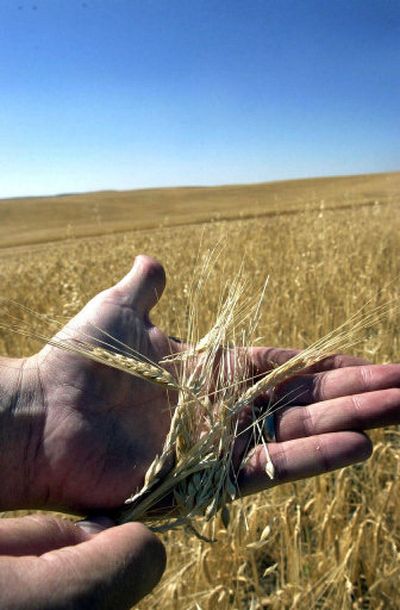
After years of trying to whet a national appetite for barley, the federal government has just handed advocates of the neglected small grain a delicious marketing tool: Barley is good for your heart.
But is it good?
Best known as a key beer ingredient, and unflatteringly grown as livestock feed, barley has plenty of work to do before it’s widely served.
Marketers say that’s fine. Barley may never be the side dish of choice despite its nutty flavor, light texture and easy preparation.
Rather, they hope this latest “heart-healthy” food is adopted by the makers of easy-to-prepare boxed foods, who if they use barley, can tout their products to shoppers looking for a blend of healthy and simple.
“This is where the promise lies,” says Mary Sullivan of the Spokane-based National Barley Foods Council. Right now, people eat just 2 percent of all the barley grown in the United States. The rest is bottled as beer or destined for feedlots.
Many of us enjoy a deep bowl of beef and barley soup during the winter months. Yet there’s so much more.
Those willing to buy regular barley and try some new recipes can find it in grocery stores, even buy it in bulk at places such as Fred Meyer, Huckleberry’s and other natural food markets.
At Herbal Essence Cafe in downtown Spokane, barley makes a regular appearance in the pilaf.
Lightly toasted it adds a warm, subtle nut flavor to the dish prepared with wild rice and fresh herbs.
“People do like barley,” says Chef William Webster. “If you’re going to try it, be sure to sauté it.”
He’s not so sure that a health label will put barley in the culinary forefront. That’s because side dishes are reliable staples – think mashed potatoes, white rice, couscous, bread and noodles.
Too bad, for if barley is sautéed in olive oil rather than butter (as the following recipes suggest), the dishes can retain big health claims – namely that it is a rich source of beta-glucan soluble fiber which combats “bad” cholesterol. This “bad” cholesterol is a contributing factor in heart disease, the leading killer of Americans.
What makes barley a bit different from other grains is that this fiber is found throughout the kernel, unlike some other grains where the fiber is only in the outer bran layer.
So even the pearl barley (where the grain is tumbled until the bran is removed) most people are familiar with is loaded with fiber.
Barley can even be refined into flakes, flour or meal and retain its health billing.
“It’s not what people think of baking with, but give it a try,” says Sullivan.
Barley flour adds that same hint of nut flavor to baked goods. The National Barley Foods Council recommends using barley flour in combination with all-purpose or whole-wheat flour. You can substitute about one-quarter the amount of flour with barley flour in most yeast breads. For quick breads, muffins, bars and cookies try substituting barley flour for half the total amount used.
The addition can boost the fiber in baked goods. One half cup barley flour contains 7 grams total dietary fiber, compared to white all-purpose flour which contains 2 grams total dietary fiber.
Barley flakes or rolled barley is another way to work barley into your diet. It is made from barley kernels that have been steam-rolled and dried. Barley flakes can be cooked like oatmeal for a hot breakfast cereal. Or, they can replace an ingredient such as oatmeal in breads, muffins and cookies, the National Barley Foods Council says.
Baked Chicken with Apples and Barley
Recipe courtesy of the National Barley Foods Council
1 tablespoon olive oil
1/2 cup chopped onion
1/2 cup chopped red bell pepper
1/2 cup chopped green bell pepper
1 clove garlic, finely chopped
1 medium tart green apple, chopped
1-2 tablespoons curry powder
1 cup pearl barley
21/2 cups chicken broth
4 boneless, skinless chicken breasts
1/2 teaspoon garlic salt
3 tablespoons orange marmalade or apricot jam
Heat oil in large skillet; sauté onion, bell peppers and garlic 5 minutes, stirring occasionally. Add chopped apple and curry powder; sauté 4 minutes longer. Stir in barley and chicken broth; bring to boil. Reduce heat and simmer 15 minutes. Pour barley mixture into large baking dish or casserole. Arrange chicken breasts over barley and season with garlic salt. Cover and bake in 375 degree oven for 45 minutes. Remove cover; brush chicken with marmalade. Continue to bake, uncovered, 15 minutes longer. Remove from oven and let stand 5 minutes before serving.
Yield: 4 servings
Approximate nutrition per serving: 431 calories, 8 grams fat (17 percent fat calories), 34 grams protein, 59 grams carbohydrate, 68 milligrams cholesterol, 9 grams dietary fiber, 850 milligrams sodium.
Mushroom Barley Soup
From “The Culinary Institute of America Book of Soups” ($17.95, Lebhar-Friedman Books)
Fresh white mushrooms are used in the version of a traditional winter soup, but feel free to bolster the flavor by incorporating your favorite fresh or dried wild mushrooms. A splash of sherry added at the last moment brings this humble dish up to a whole new level. This soup will mellow and deepen in flavor if it is prepared a day ahead. It will also thicken slightly; to adjust the consistency, add a little water or broth and reheat.
1 tablespoon vegetable oil
1 onion, finely diced (about 1 1/4 cups)
1 carrot, finely diced (about 1/3 cup)
1 celery stalk, finely diced (about 1/2 cup)
1 parsnip, finely diced (about 1/3 cup, optional)
3 cups sliced white mushrooms, (about 10 ounces)
2 quarts chicken broth
3/4 cup pearl barley
1/2 teaspoon salt, or to taste
1/2 teaspoon finely ground black pepper, or to taste
1 tablespoon chopped parsley
2 tablespoons dry sherry or sherry wine vinegar, optional
Heat the oil in a soup pot over medium heat. Add the onion and cook, stirring frequently, until golden brown, about 10 minutes.
Add the carrot, celery, parsnip, if using, and mushrooms. Stir well to combine with the onion. Cover and cook over low heat, for 3-4 minutes. Remove the cover and add the broth and barley. Bring to a simmer and cook until the barley is tender about 30 minutes.
Season with salt and pepper. Stir in the parsley. Stir in the sherry or vinegar, if using, just before serving. Serve in heated bowls.
Yield: 8 servings
Approximate nutrition per serving: 138 calories, 3.6 grams fat (less than 1 gram saturated, 23 percent fat calories), 6 grams protein, 21 grams carbohydrate, 4 milligrams cholesterol, 4 grams dietary fiber, 265 milligrams sodium.
Barley Risotto with Roasted Asparagus
Recipe courtesy of the National Barley Foods Council
1 pound asparagus, tough ends removed
4 teaspoons olive oil, divided
4 shallots, sliced
11/4 cups pearl barley
1 tablespoon fresh thyme leaves or 1 teaspoon dried thyme leaves
5 cups prepared fat-free chicken broth
1 cup dry white wine
1/4 cup shredded Reggiano-Parmigiano cheese
1/4 cup toasted walnuts, finely chopped
Garnish: Finely chopped red bell pepper, fresh thyme sprigs and lemon slices, optional
Place asparagus on cookie sheet and sprinkle with 1 teaspoon oil, rolling spears to coat. Roast in 400-degree oven for 8 minutes; set aside. In medium heavy pan, heat remaining 3 teaspoons oil over medium-high heat. Add shallots, barley and thyme; cook and stir for 3 minutes. Add broth, 3/4 cup at a time, cooking and stirring until just absorbed. Continue adding all broth. Add wine, stirring and cooking until absorbed (process will take about 25 minutes). Stir in cheese and walnuts. Divide asparagus among 4 plates. Top with barley risotto and garnish as desired.
Yield: 4 servings
Approximate nutrition per serving: 450 calories, 11 grams fat (22 percent fat calories), 21 grams protein, 60 grams carbohydrate, 4 milligrams cholesterol, 13 grams dietary fiber, 314 milligrams sodium.
Orange Persian Barley
Recipe courtesy of the National Barley Foods Council
1 cup pearl barley
3 cups water
1/2 cup chopped pitted dates
1/2 cup chopped dried apricots
3 tablespoons orange marmalade
3/4 teaspoon ground cumin
1/2 teaspoon salt
1/2 teaspoon ground black pepper
1/2 cup slivered and toasted almonds
Place barley and water in medium saucepan; bring to boil. Reduce heat to low, cover and cook 45 minutes or until barley is tender and liquid is absorbed. Set aside. Spray large skillet with nonstick cooking spray; add dates, apricots and marmalade. Cook over medium heat, stirring, for 3 minutes. Blend in cumin, salt and pepper. Simmer 2 minutes longer. Stir in cooked barley and almonds. Reduce heat to medium-low and cook until warmed through.
Yield: 4 servings
Approximate nutrition per serving: 436 calories, 10 grams fat (21 percent fat calories), 10 grams protein, 82 grams carbohydrate, no cholesterol, 13 grams dietary fiber, 306 milligrams sodium.
Barley Cranberry Scones
Recipe courtesy of the National Barley Foods Council
For the scones:
1 cup barley flour
1 cup all-purpose wheat flour
1/4 cup granulated sugar
1 tablespoon baking powder
1/2 teaspoon salt
1/2 cup dried cranberries (may substitute currants, raisins or dried cherries)
1 cup nonfat milk
1/4 cup butter, melted
1 large egg, beaten
1 teaspoon grated fresh lemon peel
For the Lemon Glaze:
1/2 cup confectioners sugar, sifted
1 teaspoon grated fresh lemon peel
1 tablespoon fresh lemon juice
In large bowl, mix together flours, sugar, baking powder and salt. Stir in cranberries. Mix in milk, butter, egg and grated lemon peel. Spray a baking sheet with nonstick cooking spray. Drop batter by spoonfuls onto baking sheet, creating 12 equal portions. Bake at 375 degrees for 15 to 17 minutes or until lightly browned. Cool scones slightly. Combine Lemon Glaze ingredients; stir until smooth. Use pastry brush to glaze tops of cooled scones.
Yield: 12 scones
Approximate nutrition per scone: 178 calories, 5 grams fat (25 percent fat calories), 4 grams protein, 31 grams carbohydrate, 28 milligrams cholesterol, 2 grams dietary fiber, 276 milligrams sodium.