Pressure cooker
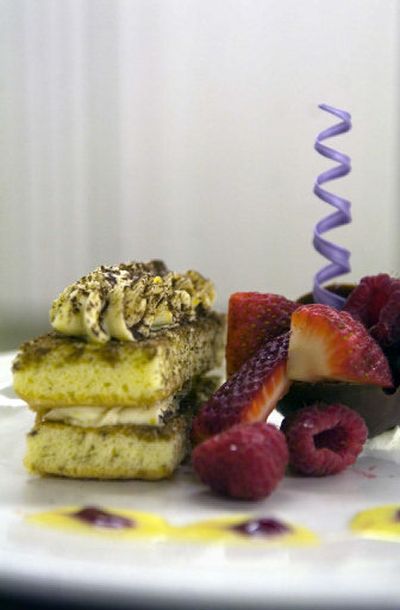
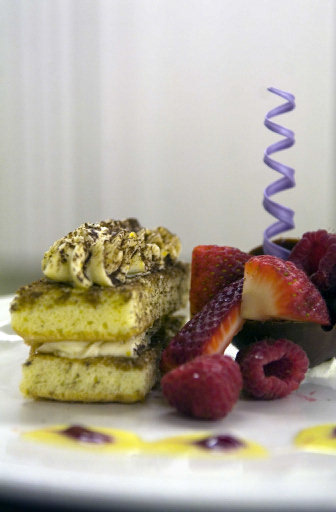
Former correctional officer Karena Burns has traded in her Maglite, badge and handcuffs for the chef’s knife with which she’ll be carving out a new career.
The 31-year-old spent eight years keeping prisoners and juvenile delinquents in line before deciding two years ago to try something new. Since then, she’s been slicing and dicing her way through the rigorous Inland Northwest Culinary Academy at Spokane Community College.
She’s among a dozen members of the academy’s spring class of 2006. Born in Germany, she grew up in Spokane.
Last week, she faced her final and most demanding culinary assignment: Single-handedly create and cook a five-course meal for 28 salivating family members, friends and master chefs/teachers at Orlando’s Restaurant, a teaching kitchen and fine dining area attached to the academy.
The sophisticated meal is known as a presidential luncheon. To graduate, everyone in the program must successfully create and cook one – while maintaining a cumulative 2.0 grade-point average and performing at least 250 paid internship hours at a restaurant, café or commercial kitchen.
For their final projects, students are allowed five full days of preparations in the academy’s kitchen, all culminating in the Friday luncheons, which are sprinkled throughout the academic year.
Student chefs may work from 6:30 a.m. until 3 p.m. weekdays. The day of the big dinner, they get two peers to help on the kitchen’s hot food line.
In the dining room, a handful of attentive third-quarter students tackle the front of the house, decorating and setting tables and serving guests. They’re graded on their performances, too.
Presidentials can be daunting tests. Instructors say they require students to demonstrate all the skills it takes to make it in today’s competitive culinary industry.
Here’s a day-by-day peek at what Burns did for her finale:
Monday, May 15
Early in the morning, Burns taped rough sketches she’s made of every course and how it should appear to a kitchen wall. Below them, she tacked up neatly-typed, daily to-do lists.
A few weeks earlier Chef Douglas Fisher, one of three faculty members who teach Academy upperclassmen, OK’d Burns’ menu, which had to come in at no more than $15.50 per person. Students usually spend up to 50 hours finalizing menus, shopping lists and cost sheets.
Today, Burns flipped through a three-ring binder in which she’d compiled all her recipes. “The key to it is being really organized and I’m not that organized, so this has been a challenge for me,” she said.
Even though it was early, there’d already been a last-minute change to Day One’s game plan.
“The cucumbers didn’t come in so I can’t make my cucumber mint sorbet today,” she says, slightly furrowing her brow. “I’ll have to do that later. You gotta just learn how to go with the flow.”
She pivoted around and peered into a four-gallon stock pot atop the burner of a hulking, commercial gas-range. Inside, bubbling water bathed beef and veal bones.
“This will simmer for eight hours and is the basis of my lamb sauce. I’ll work on it more tomorrow,” she said, giving it a quick stir.
She’s excited to finally be preparing the meal she’s been focusing on ever since she enrolled in the program in fall of 2004, she said.
Overall, she said she felt energized and confident, although she admitted she’s been mulling over an ironic little nightmare she had the previous evening.
“I dreamed I was in the kitchen and I kept burning things,” Burns said, tilting her chef’s hat back and belting out her characteristic laugh. “I know that’s not going to happen, but sometimes I wish I had a different last name.”
With a clang, she plopped a big frying pan onto the stove and poured fragrant chopped onions and crisp, sliced carrots and celery into sizzling butter for the beginnings of vegetable mirepoix.
“I’ll sauté the vegetables until they caramelize, add red wine and then deglaze with a tomato product. I’m going to do that three times to make it very rich,” she said.
By the day’s end, she’d also whipped up most of the components for her dessert, including a sponge for lady fingers, sweet raspberry and custard sauces and mascarpone cheese filling.
Tuesday, May 16
Burns spent the lion’s share of the morning carving lamb chops. Using a process known as “Frenching the bones,” she trimmed off excess fat, exposing each rack’s graceful ribs.
In the afternoon, she set a special non-stick work surface below a hot, orange heat lamp to melt specially-processed pellets of sugar. Lozenge-size yellow, red and blue pellets softened into a gooey lavender lump.
She twirled strands of the stuff around a wooden dowel rod, waved it in front of a fan and slipped the cooled creations – sweet, candy curling ribbons – onto a cookie sheet. They’ll adorn her desserts.
Right after, she dipped clean lemon-size balloons, filled with compressed air, half-way down into creamy, tempered chocolate, which she immediately cooled so she could later remove the balloon molds. The remaining shells would become flavorful tulip-shaped dessert filled with berries and whipped cream.
She also made chicken stock; soaked soup beans; blended the lamb pomegranate sauce; and roasted eggplant, yellow and zucchini squash and stacked them in molds to make towers of marinated veggies she’d garnish with fried basil leaves.
Wednesday, May 17
Students usually hit a wall on Wednesdays, Burns said, but she believed she’d escaped the scary phenomenon.
Today she made tomato vinaigrette, cooked beans and pasta for minestrone soup, melted parmesan cheese into triangular chips that will grace the soup, made pesto and portioned out the sorbet.
Thursday, May 18
Excited and eager to get cracking, Burns said she showed up even before the produce delivery man. She mixed the minestrone soup; seared the lamb chops; made gnocchi, cleaned, blanched and chilled asparagus; washed frisée lettuce and made the sponge for her focaccia.
Friday, May 19
Running on adrenaline, Burns shaped and baked loaves of focaccia bread and assembled tiramisu. Then she fired up stoves and ovens to roast the lamb, poach gnocchi, sauté asparagus and warm meat sauce
By 11:15 a.m., she’d assembled a beautiful “show plate” of each course, displayed on purple linens for the servers to see. They huddled two-deep, snapped digital pictures and gushed over the artistic fare while Burns described the foods to them.
Her creations drew hoots, hollers and a hearty round of applause from the other chefs-to-be.
At noon, Burns and her assistants shuttled up and down a kitchen assembly-line, dishing up and garnishing each plate with utmost precision. Servers whisked each course out to the “oohs” and “aahs” from the dining room crowd.
After dessert, a smiling, ruddy-faced Burns, her sparkling blue eyes misty with emotion, popped into the dining room. The room erupted in applause as she stood smiling in her new a lavender chef’s coat, a nod to the meal’s color scheme, and a sparkling halo other students had slipped over her chef’s hat.
She had aimed for an “A” and proudly announced her meal had hit the mark at 3.9. Growing up, her cooking experience was limited to “whoopie pies,” creme-filled chocolate sandwich cookie she and her sister would bake and eat while her parents were away, she said.
Burns has been interning as a line cook at Beacon Hills Events, a banquet and special events venue, and moves into a job as a full-time sous chef there after she graduates mid-June.
She joked that she could burn water before the intensive training she got at the Academy.
“This program is just amazing. You get a sense of all aspects of the culinary industry. And this turned out even better than I thought it would be,” she said with a big smile.
Here’s a recipe from Burns’ meal:
Minestrone soup
Recipe from Chef Peter Tobin of the Inland Northwest Culinary Academy
2 ounces bacon
1/4 pound onions, diced
1/4 pound carrots, diced
1/4 pound celery, diced
1/4 pound green pepper, diced
1/4 pound cabbage chiffonade
2 garlic cloves, mashed
1/2 gallon chicken stock
4 fresh tomatoes, diced, or 2 cups canned diced tomatoes
1/2 cup cooked white beans
1/2 cup cooked elbow macaroni
1 tablespoon sweet basil
1/2 tablespoon marjoram
1/4 tablespoon toasted fennel seed
Salt and black pepper, to taste
Parmesan cheese, to garnish
Render bacon in soup pot over medium heat. Do not brown. Add onion, carrots, celery, peppers and cabbage and sweat till tender.
Add garlic and cook until aromatic. Add tomato and stock. Bring to simmer.
Add basil, marjoram, and fennel and simmer until full flavored; about 1 hour.
Just before serving, add beans and pasta. Garnish to order with a sprinkle of parmesan cheese
Yield: 1/2 gallon
Approximate nutrition per serving: