
Castro says worst of illness behind him
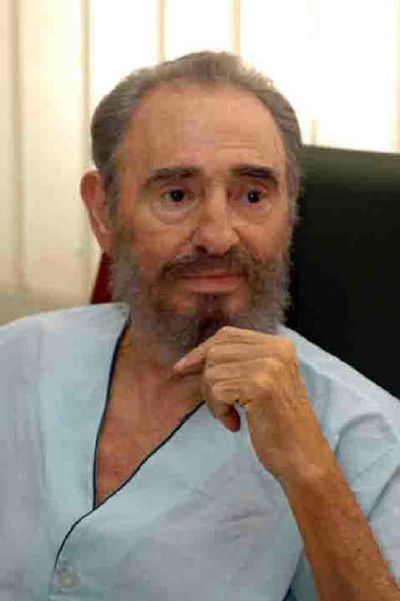

MIAMI – Cuban leader Fidel Castro says the worst of his health crisis is behind him, although he lost 41 pounds in the 34 days since he got sick and still faces a “prolonged” recovery.
“It can be affirmed that the most critical moment has been left behind,” Castro said in a statement published in Tuesday’s issue of the Cuban Communist Party newspaper, Granma. “Today, I recover at a satisfactory pace.”
Saying he recently had his last surgical stitch removed, Castro added that he would be welcoming “distinguished visitors” in the coming days – an apparent reference to next week’s Non Aligned Movement summit in Havana.
It was the third statement Castro released since July 31, when he temporarily ceded power to his brother Raul, saying he suffered an intestinal illness that caused sustained bleeding. The state of his health has been reserved as a state secret, fueling rumors that he suffers from a variety of diseases, including cancer.
Castro’s message, and the accompanying photographs published by Granma, did little to dispel the mystery over his ailment and his chances of a full recovery.
“Since 1956 or ‘57, he’s been good at using the media to send messages,” Baruch College Latin American studies professor Ted Henken said. “He has reiterated the message coming out this past month: ‘This is still serious. We’re out of the woods, but don’t expect me to be walking around in my fatigues any time soon. Other people are running the show now, but I’m still here as the grandfather of the revolution.’ “
The photos showed a slimmer Castro in two sets of blue pajamas reading and writing. Only one shows a full-length image, showing him wearing slippers and reading while he sits on a rocking chair.
In one photo, Castro holds up what appears to be a proof of the book “One Hundred Hours With Fidel,” written by French leftist intellectual Ignacio Ramonet. Castro promises the book will be published soon. However, the book was launched five months ago in Spain and came under criticism when some of the passages from the alleged interviews turned out to be identical to Castro speeches.
“He didn’t look good,” Castro biographer Georgie Anne Geyer said from Washington, D.C. “In the past he’s had this hearty look about him. This time, he looked like an old man. It’s a little surprising to me. My own knowledge of him is that … he would never ever admit he’s sick, weak, or not coming back.”
Jeffrey Raskin, the University of Miami’s interim chief of gastroenterology, speculated that the ongoing secrecy surrounding Castro’s health suggests Castro may have cancer.
“The fact that they’re continuing to be vague this late into it means more than likely it’s not a benign condition, that he does, in fact, have a tumor,” Raskin said.
Cancer of the pancreas, stomach or colon are all possibilities. Other conditions that could have prompted intestinal bleeding and surgery – such as a bleeding ulcer or diverticular disease – would likely have been resolved by now, Raskin said.
The Brazilian newspaper Folha de Sao Paulo reported Sunday that sources in the ruling Workers Party with a direct line to the Cuban government say a part of Castro’s intestines was removed because of a cancer that had not metastasized.
“It’s startling to see this man noticeably thinner,” Henken said. “His eyes have hollowed out. He’s in pajamas. But the rhetoric is the same: ‘We’re keeping up the struggle.’ “