
IMF reforms get mixed reception
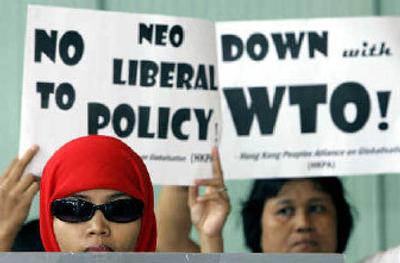
SINGAPORE — Nearly a decade ago, the International Monetary Fund drew rebukes for prescribing drastic reforms during the Asian economic crisis that erupted in 1997. Today, the IMF is again battling controversy, with some saying its efforts to give more say to emerging economies are not enough.
On Tuesday, IMF members applauded landmark reforms giving a bigger voice to China and three other major emerging economies. But India and some other countries questioned whether the move will do enough to bolster the IMF’s credibility.
IMF chief Rodrigo de Rato welcomed the passage of reforms, but warned that members face daunting challenges in keeping the world economy on track.
“The global growth cycle may be turning,” de Rato said, pointing to high oil prices, massive imbalances in trade and investment and the threat of renewed protectionism amid stalled world trade talks.
World Bank President Paul Wolfowitz chided wealthy countries to follow through on promised aid to Africa, the one region he said has been “conspicuously left behind.”
Economists agree that the global economy is far less vulnerable than a decade ago, when currency fluctuations exacerbated shoddy banking practices in Asia, leading to IMF bailouts in Thailand, South Korea and Indonesia.
IMF prescriptions such as raising interest rates, privatization and cutting subsidies on gasoline and other basic goods were designed to help the economies recover, but critics said the measures were too harsh and made things worse.
Since then, Asian economies have rebounded strongly, and China and India have surged into the forefront of global growth. Now, the Washington-based IMF and World Bank face pressure to make their institutions more of a mirror of the fast-paced changes in the global economy.
The IMF reforms passed Monday by the 184 member nations increase the voting shares of China, South Korea, Turkey and Mexico. But other nations have to wait at least two years to see their voting shares in the IMF adjusted under the two-step reform plan — too long for some countries.
India, Brazil, Argentina and other Latin American nations voted against the plan, saying they also were underrepresented at the institution. They argued that the entire power structure should be overhauled in one move.