
Gas retailers are fuming too
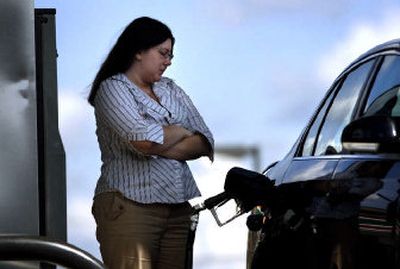
Don Larkin was shot at with a paintball gun and called a “gouger” as he raised the gas prices the reader board sign at his Spokane Valley Chevron last spring.
But what some motorists don’t realize, Larkin said, is that small retailers are struggling to get by in the face of low margins, high credit card processing fees and increased competition.
“They don’t get the point that oil companies are posting three, four and five billion in quarterly profits, but it isn’t happening on the retail level,” said Larkin, whose Spokane Valley store at 1010 N. Sullivan Road was started by his father, Jim Larkin, several decades ago.
The Spokesman-Review recently obtained a copy of OPIS, an insider petroleum industry report that shows what retailers pay for wholesale gas produced by Chevron, Shell, ExxonMobil and other big companies on any given day. The price information contained in the report confirms that most retailers only mark up their regular unleaded gasoline by a dime or so a gallon.
Local retailers say they’re not to blame for the rising gas prices that are once again hitting the $3 a gallon mark in Spokane. Although it might seem unlikely that gas station operators would feel pain instead of gain as prices at the pump climb, operators say when wholesale prices rise it creates a domino effect that can actually hurt business.
“Most people don’t understand that. They think that the higher the price goes, the more money we make when it’s actually the exact opposite,” said Jim Redmon, who owns 13 Divine’s Auto Centers with his wife, Laura Redmon.
Station operators say that because of competition from other convenience stores, and discounters like Costco, they’re lucky to earn 10 cents per gallon of regular unleaded gasoline sold. The 10 cents, they say, isn’t even net profit; it goes to pay wages and operating expenses.
At the same time, oil companies have posted some of their largest profits. ExxonMobil Corp.’s net income was $39.5 billion for 2006, according to Hoover’s, a company that researches businesses. Chevron Corp. made $17.1 billion that same year.
Retailers say as wholesale gas prices increase, inventory costs go up. When the prices are passed along to consumers, they drive less.
To pay for the more expensive fill-ups, customers use credit cards more often, which sucks away about seven of the average 10 cents per gallon income. Plus, the cost increase, which they say is basically a pass-along, puts them at a higher rate for the state’s business and occupation tax, which is based on total sales.
When credit cards are used more frequently, station operators might not make enough money to cover overhead, Redmon said.
The OPIS report shows wholesale gas prices that relate to specific markets. Those prices can fluctuate by a few cents daily, creating the need for retailers to regularly raise and lower their prices.
“Gas went up eight cents yesterday. I was paying $2.96 for gasoline today and this morning when I got here it was still (priced) at $2.99.9,” Larkin said.
One dealer, who has been in the convenience store business for more than 10 years and owns a Shell station, was willing to provide information about his costs, but asked to remain anonymous.
On Monday, the OPIS report said it cost $2.34 for stations to buy a gallon of regular unleaded Shell gasoline from a local distributor.
From there, another 1.5 cents are added for delivery, state and federal taxes of 52.5 cents a gallon are tacked on along with about 2 cents per gallon for hazardous oil fees, the owner’s breakdown showed.
The cost into the pump was $2.90 while the cost charged at his Shell station was $2.96. His entire convenience store business makes a 2 to 3 percent net profit, he said.
The OPIS report also explains, in part, why people in Seattle are currently paying more for gas than people in Spokane: Stations on the west side of the state are paying higher wholesale prices.
On Monday, in the Seattle area, a Chevron station on Edmonds Way was selling a gallon of regular unleaded for $3.29. According to OPIS, the wholesale price was $2.47.10 that day. A Shell station on U.S. Highway 99 had unleaded at $3.25 a gallon, while OPIS said the wholesale price was $2.48.
Scott Thompson, of Thompson’s Chevron on Third Avenue and Monroe Street, said that in addition to paying more for loads of gasoline, it now costs $20 more to have a tank of fuel delivered.
But middle-men, who deliver the gas, say they aren’t getting rich either. Divine’s distributes gas to four other retailers, Redmon said. The company charges a delivery fee per tank of gas and tacks on a half-cent to two cents per gallon to the price charged by the oil companies.
Jan Penney doesn’t blame local retailers for the high gas prices. But the administrative services coordinator for West Central Community Center has seen the impact the increases have on the low-income families served by Head Start and other programs offered through the center.
As prices increase, people who are at — or barely above — minimum wage are forced to make tough choices.
“Every time the price of gas goes up they have to reshuffle and rethink everything,” Penney said.
“I hate seeing the petroleum companies reporting records profits when everyone else is just squeaking by.”