Papaya salad has sweet and spicy flavors
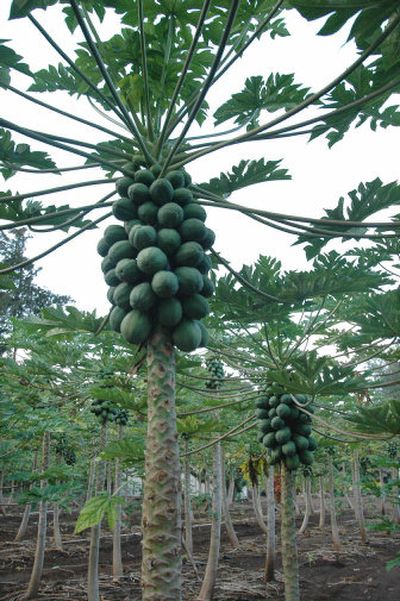
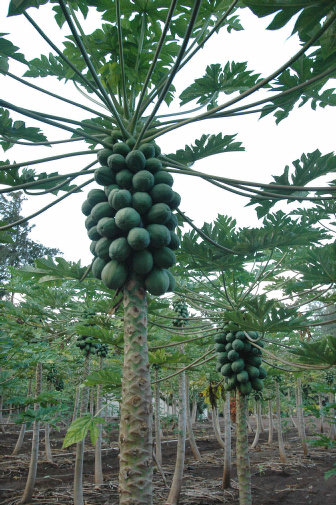
Papaya offspring originally leapt from Central America to become world citizens in nearly every tropical port of call. Where they settled, hybrids were eventually developed to match the local climate.
While Hawaii’s cultivars grow in other places, to me they seldom match the robust flavor or color of those you find in the islands.
Look for: An elongated bulbous fruit 5 to 7 inches long and weighing 10 to 24 ounces. As the fruit ripens, the smooth skin becomes sticky, while the color changes from azure green to yellow or orange. You can distinguish the two main Hawaiian varieties by their necks, which may narrow slightly to a firm cap.
Papayas are picked mature but still quite green. After shipping, they’re ripened in warm, humid air and ethylene gas, in the same manner as bananas. Alas, papayas properly “conditioned” in this way approximate, but can’t duplicate, what you’d taste in Hawaii.
The skin of a good papaya shows a clear transition from green to yellow or orange, beginning at the blossom end and brightening over a period of a couple days toward the cap, which nearly always remains slightly green. If a papaya’s color is more than 50 percent green, the fruit may not reach its best flavor. Unripe papaya is used in some Asian recipes (such as som tum, a popular Thai salad), but to me the flavor is like a woody cucumber.
When shopping, hold the papaya in your palm, not just your fingertips, so you can feel the texture and give of the skin; it’s thicker than a pear but thinner than a mango. The fruit can be quite soft and still be edible.
Opaque spots develop as the fruit ripens, and while a few are OK, avoid papayas with spots bigger than a half-inch. Ten years or so ago the problem would have been worse, but now we have hybrids that can resist the virus that causes this spoilage. These hybrids are controversial because many folks feel the cure is worse than the disease. Typically, organic growers use other means to fight the problem.
Of the two main Hawaiian varieties, the yellow-fleshed, or Kapoho, papaya tends to be heftier and bulbous; generally the larger-size fruit (more than 5 inches long) is of better quality. The flesh is yellow-orange and musky sweet and is often enhanced with a squeeze of fresh lime juice.
The Solo papaya – and other red-fleshed cultivars such as Sunrise, Sunset and Strawberry – are smaller and more slender than the yellow-fleshed papaya, with a less-rounded blossom end. These varieties are sweet, yet refreshing enough not to require lime juice.
When: Available most of the year, but December to May is a great time for excellent quality fruit.
To store: I like to crumple paper towels to make a pillow for my papaya, which I place on the counter out of the sun. This helps prevent a flat spot and moisture from forming. Rotate the fruit a half turn every day until you want to serve it. If you buy it at about 50 percent of full color, the product should have about three to four days’ shelf life left. The more intense the yellow or orange color, and the softer it feels, the sooner you’ll need to eat it.
Basic preparation: Slice a ripe papaya in half lengthwise with a nonserrated knife (a serrated blade can drag seeds through the flesh). The seeds are crunchy and have a slight peppery quality; spoon them out of the flesh and refrigerate them in a glass jar; they’ll keep a couple of days. Peel the flesh from the skin with a knife or vegetable peeler. One pound of fruit yields about 1 1/2 cups coarsely chopped flesh and about 4 teaspoons seeds.
Papaya Fruit Salad
1 1/2 cups coarsely chopped ripe papaya
3 to 4 teaspoons papaya seeds
1/2 cup (or more) coarsely chopped mango (an 8-ounce mango yields 1/2 to 3/4 cups flesh)
Juice (about 2 tablespoons) plus grated zest of 1 small (2-ounce) lime
1/2 cup seeded and chopped poblano chili or green bell pepper
1/2 cup seeded and chopped red bell pepper
1/4 bunch (about 20 sprigs) cilantro, stemmed and coarsely chopped
Bibb or butter lettuce leaves
1/2 cup nonfat vanilla yogurt (optional)
In a nonreactive bowl, add the chopped papaya, seeds and the mango. Toss in lime zest and juice and mix gently to coat fruit with juice. Add the poblano, red bell pepper and cilantro; mix just enough to distribute cilantro. Serve immediately in a cup of whole lettuce leaves or refrigerate up to a day in the fridge. Top with a dollop of yogurt, if desired.
Yield: 5 servings.
Approximate nutrition per serving (without yogurt): 38 calories, less than 1 gram fat (4 percent fat calories), 10 grams carbohydrate, no cholesterol, 1.7 grams dietary fiber, 3 milligrams sodium.