
Cancer claims former Yankee Bauer at 84
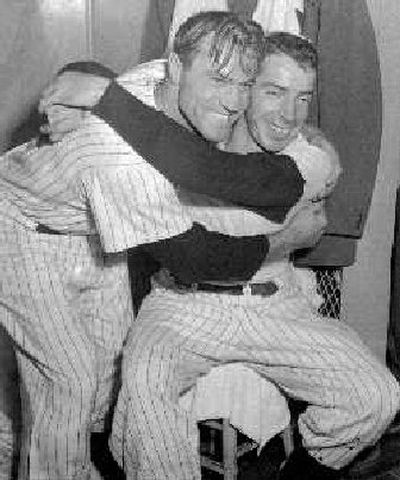
NEW YORK – Hank Bauer, the hard-nosed ex-Marine who returned to baseball after being wounded during World War II and went on to become a cornerstone of the New York Yankees dynasty of the 1950s, died Friday. He was 84.
Bauer died of cancer in Shawnee Mission, Kan., said the Baltimore Orioles. Bauer managed the 1966 Orioles to their first World Series title.
A three-time All-Star outfielder, Bauer played on Yankees teams that won nine American League pennants and seven World Series in 10 years. He set the Series record with a 17-game hitting streak, a mark that still stands.
“Hank Bauer is an emblem of a generation that helped shape the landscape of our country,” Yankees owner George Steinbrenner said in a statement. “He was a natural leader and a teammate in every sense of the word, and his contributions went well beyond the baseball field. His service to the Yankees, his country, and his family shows why I have been so privileged to call him a friend.”
Surrounded by sluggers such as Mickey Mantle and Yogi Berra, Bauer was a major ingredient in the Yankees’ success during his years in New York from 1948-59.
Bauer played his last two seasons with the Kansas City Athletics, a team he managed in 1961-62. He also managed Baltimore from 1964-68 and the Athletics again in Oakland in 1969.
Bauer was voted the Associated Press A.L. Manager of the Year in 1964 and 1966, when his Orioles swept the Los Angeles Dodgers in the World Series. It was the only time he reached the Series as a manager, but he was a frequent participant in the postseason with the Yankees.
Bauer’s World Series hitting streak stretched from 1956-58 when the Yankees dynasty was at its peak.
“Oh, it was a joy,” he said in a 1998 interview. “I was there 11 years and we won nine pennants. And we could have very easily won 10 in a row, because in 1954 we won more games than we ever did. We won 103.”
Cleveland won 111 that year, a rare pause in the Yankees dynasty that stretched from 1949-64.
Bauer enlisted in the Marines shortly after Pearl Harbor and saw action in a number of battles in the Pacific, including Okinawa and Guadalcanal, according to Hall of Fame archives. He earned two Bronze Stars and two Purple Hearts.
Bauer was wounded at Okinawa, hit in the left thigh by shrapnel in his 53rd day on the island.
After he was discharged, Bauer signed with the Yankees minor league affiliate at Kansas City and after two .300 seasons there, he moved to New York in 1948. A year later, Casey Stengel became the manager and Bauer moved into the lineup as the Yankees began their run.
Bauer batted .320 in his second full season and became a fixture in the Yankee outfield alongside Mantle. The outfielders became close friends, and Bauer was a pallbearer at Mantle’s funeral in 1995.
In 1959, after the Yankees finished behind the Chicago White Sox, Bauer was part of a seven-player trade with Kansas City that delivered a young Roger Maris to New York. Two years later, Maris set a season record with 61 homers, a mark that stood until 1998.
After he retired, Bauer returned home to the Kansas City area, where he scouted for the Yankees and the Royals. Later, he was a regular at Yankee annual Old-Timers’ Days, an opportunity to reunite with friends from those championship seasons.