
The glow of success
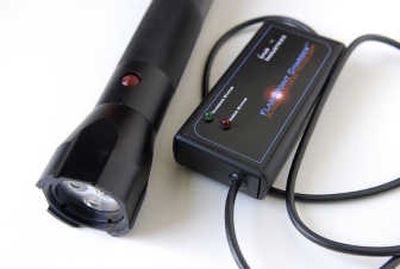
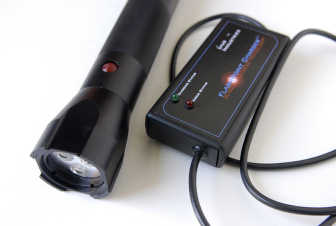
Two Moscow, Idaho, engineers think a rapidly rechargeable flashlight they’ve developed will electrify law enforcement agencies.
With a recommended retail price of $229, the flashlight, created by University of Idaho graduates David Alexander and Erik Cegnar, will cost nearly twice as much as other rechargeable, heavy-duty lights used by police officers and emergency workers.
But the Moscow-based company they helped found, Ivus Industries Inc., boasts its light will run for up to 1.5 hours after recharging for just 2 minutes. Powered by recyclable ultracapacitors instead of batteries containing toxic materials, the Ivus L-180 flashlight also sports computer circuitry allowing it to flash customizable signal patterns, company executives said.
With a sales office near Seattle, the five-person, Washington-licensed startup already has a relationship with a Northwest equipment distributor, and Ivus Industries expects to begin production locally early next year, said Alexander, 41, company CEO.
“It’s really an easy sell to the police,” Alexander said, noting that the flashlight even has beveled edges to prevent it from rolling off patrol-car hoods. “It looks cool.”
Seattle-based Blumenthal Uniform Company Inc. intends to purchase 1,500 of the lights once they’re produced and approved by Blumenthal, which is helping test the product, Alexander said.
Blumenthal received “very favorable feedback” after showing the device at a recent law enforcement conference, said Roger Heldman, a Blumenthal vice president. Current law enforcement-style flashlights require about an hour to recharge, and their batteries last only a few years, he said.
“We think they’re going to see it as just a great improvement over the flashlights that we currently sell,” he said. Blumenthal serves more than 500 agencies and has a retail shop in Spokane.
Alexander expects the lights to be manufactured in Spokane and Liberty Lake. The company plans to make 32,000 devices for about $5 million in revenues its first year, Alexander said.
Ivus Industries’ four founders have invested about $100,000 in the company, and they have raised about $115,000 more through friends and family for more prototypes, Alexander said. Those should be completed in about three months, he said.
The current model features a custom lens and mirror, three bright LEDs and a long, black tube that holds circuitry and ultracapacitors. A port allows users to customize flashing signals, such as SOS. It has charging units both for wall- and car-mounted outlets.
“It’s a smart flashlight,” said John Overby, director of client services for Spokane-based small business incubator Sirti, which has assisted the company with its business plan. “I think it’s pretty exciting.”
At just less than 1 pound, the final version should be lighter than competing models, although possibly thicker.
A type of energy-storage device, ultracapacitors generally are more expensive than batteries and can have less capacity. But they can be recharged quickly and more often before wearing out. The ultracapacitors should last for more than 1 million charges, Alexander said. The company has applied for a patent on the charging system.
But Ivus Industries employees don’t see themselves as flashlight makers. The company initially pursued ultracapacitor technology for hybrid cars, but decided to tackle flashlights. Future products could include lights for bicycles and emergency exits or power supplies for power tools, Alexander said.