St. Patrick’s picks
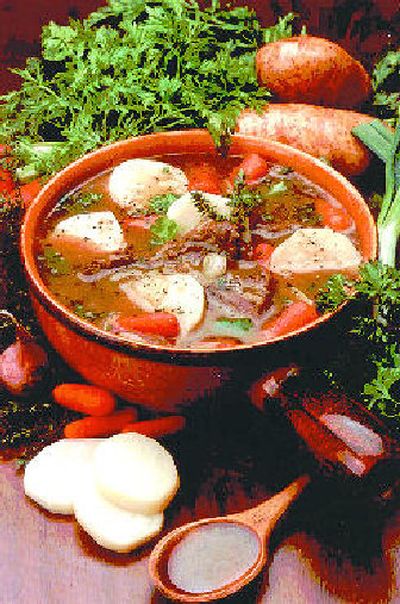
As St. Patrick’s Day nears, a foodie’s thoughts turn to typical Irish food such as corned beef and cabbage, shepherd’s pie, Irish stew, potatoes in some form or another, Guinness stout, and to drink, whiskey. (I include Guinness as a food, since many Irish consider it a meal, albeit a liquid one.)
While some dishes are shared by other cultures as well – corned beef, for instance, is also a Jewish staple – there are a few recipes that are distinctly Irish, and that were introduced to the U.S. by Irish immigrants. Colcannon is a tasty combination of potatoes, leeks, and cabbage or kale, cooked and mixed with delectably rich Irish butter and cream. (Irish cows always graze on green pastures.) Its first mention in a U.S. cookbook came in 1847, only it was called simply “Potatoes and Cabbage” according to FoodTimeline.org by Lynne Olver.
Soda bread is also authentically Irish; the only wheat that the Irish can produce in their climate is a very soft wheat, which doesn’t rise well with yeast. So in the 19th century, when bicarbonate of soda was widely available, the Irish developed a bread recipe that uses buttermilk and baking soda for leavening. It is quick to make compared to yeast breads yet goes stale quickly, so they often make it fresh for breakfast or tea.
St. Patrick’s Day is celebrated more in the U.S. than in Ireland, perhaps because there are so many people here rightfully proud of their Irish heritage.
Maureen Hurl Peterson of Spokane is certainly that: She is a founder of the Spokane-Limerick Sister City Society as well as the Friendly Sons of St. Patrick, which has organized Spokane’s annual St. Patrick’s Day parade every year since 1979. Her grandparents came from Ireland, so she is able to have dual Irish and U.S. citizenship.
“I lead tours every year to Ireland, so have eaten in many restaurants and several homes,” Peterson said. “The first time I went I was surprised at how good the food was, but the Irish take pride in everything they do, and this carries over into the kitchen.”
There were Irish in the Pacific Northwest very early on, as there were Irish crewmen on the boats that explored the Pacific Coast, and there was at least one Irishman with Lewis and Clark.
Later, Irish immigrants came to the United States in several waves, and in large numbers after the potato famine in the mid-1800s. While the Irish were discriminated against in the Eastern U.S. and lived in ghettoes in the big cities, out West, the Irish assimilated much more quickly and became successful in many professions and trades, not just in the mines and on the railroads. Many of the Irish in Spokane County in the late 1800s were farmers, but there were also several very successful Irish businessmen and politicians in Spokane, including the Costellos, who constructed the town’s major streets and sewers, according to the “Irish in Washington – The Early Years (1840s to 1890),” at HistoryLink.org.
In contrast to colorful Irish personalities, Irish cuisine used to have a reputation for being stodgy and bland. That, however, has changed in recent decades as some of Europe’s finest gourmet restaurants have sprung up in Ireland and the country’s economic success has led to a revival of artisan food products such as farmhouse cheeses.
Still, the Irish haven’t forgotten their culinary roots. Peterson confirms that the mainstay of an Irish meal is still meat, such as beef or lamb, served with at least “two kinds of potatoes and lots of vegetables.”
Whatever the Irish serve you, there will always be plenty of it, for while the Irish have known very hard times, they’ve never been known to be stingy. Kerry Lynch, another member of the Spokane-Limerick Society and wife of former Spokane Mayor Jack Geraghty, has been to many an Irish pub and is continually astounded by the generosity and hospitality they encounter.
“Truly, you just get into the pub, and soon you’re singing songs like one of the family,” Lynch said. “There is a friendliness and a warmth; it’s just part of our heritage to share.”
So whether you make colcannon or not, the most genuine St. Patrick’s Day celebration will include plenty to eat and drink, and lots of friends.
Colcannon
Adapted from World Food Ireland by Martin Hughes (Lonely Planet, 2000)
2 pounds potatoes
1/2 pound cabbage
1 cup milk or cream
2 small leeks, chopped (white parts only)
4 tablespoons melted butter
Salt and black pepper
Mace
Cook the cabbage and potatoes in separate pans of boiling water until tender, allowing 12 to 15 minutes for the spuds, slightly less for the cabbage. Drain the cabbage and chop. Drain the potatoes and mash. Put the milk or cream in a small pan with the leeks and simmer until soft. Add the leeks and milk to the mashed potatoes and mix until you’ve got a creamy consistency. Add the cabbage, salt, pepper, mace, and as much butter as your conscience will allow. Mix until everything is well blended or until you just can’t resist anymore. Drizzle with the melted butter.
Yield: 4 servings
Approximate nutrition per serving, using milk and a total of 6 tablespoons butter: 373 calories, 18 grams fat (11 grams saturated, 44 percent fat calories), 6.6 grams protein, 47 grams carbohydrate, 51 milligrams cholesterol, 5 grams dietary fiber, 372 milligrams sodium.
Irish Soda Bread
Adapted from “World Food Ireland.” Typical soda bread is round in shape with a cross that is cut into it before baking.
3 1/2 cups soft flour
1 cup buttermilk
1 teaspoon sugar
1 teaspoon salt
1 teaspoon baking soda
Heat the oven and an 8- or 9-inch cast iron skillet to 425 degrees. Stir the ingredients in a large bowl. Using a fork to blend the mix, add enough buttermilk to form a consistent, but unsticky, dough. Turn it onto a floured board and knead very lightly for just a few seconds. Pat the dough into a mound and place it into the pan. Cut a cross on the surface of the dough to ‘let the devil out.’ Bang it in the oven with a quick prayer and bake for 15 minutes. Turn the oven temperature down to 400 and bake for another 25 minutes or until golden brown.
Yield: 4 servings
Approximate nutrition per serving: 378 calories, 2 grams fat (less than .5 grams saturated, 5 percent fat calories), 12.5 grams protein, 84 grams carbohydrate, 2 milligrams cholesterol, 4 grams dietary fiber, 960 milligrams sodium.
Beef and Guinness Stew
From “The Complete Book of Irish Country Cooking,” by Darina Allen. The addition of garlic and cayenne to this dish takes it out of the realm of the strictly traditional, since the Irish don’t really use spices, but it tastes great.
2 pounds lean stewing beef
3 tablespoons oil, divided
2 tablespoons flour
Salt and freshly ground pepper and a pinch of cayenne
2 large onions, coarsely chopped
1 large clove garlic, crushed (optional)
2 tablespoons tomato puree, dissolved in 4 tablespoons water
1 1/4 cups Guinness stout beer
2 cups carrots, cut into chunks
Sprig of thyme
Parsley
Trim the meat of any fat or gristle, cut into cubes of 2 inches and toss them in a bowl with 1 tablespoon oil. Season the flour with salt, freshly ground pepper and a pinch or two of cayenne. Toss the meat in the mixture.
Heat the remaining 2 tablespoons oil in a wide frying pan over a high heat. Brown the meat on all sides. Add the onions, crushed garlic and tomato puree to the pan, cover and cook gently for about 5 minutes.
Transfer the contents of the pan to a casserole, and pour some of the Guinness into the frying pan. Bring to a boil and stir to dissolve the caramelized meat juices on the pan.
Pour onto the meat with the remaining Guinness; add the carrots and the thyme. Stir, taste, and add a little more salt if necessary.
Cover with the lid of the casserole and simmer very gently until the meat is tender – 2 to 3 hours. The stew may be cooked on top of the stove or in a low oven at 300 degrees. Taste and correct the seasoning. Scatter with lots of chopped parsley.
Yield: 6 to 8 servings
Approximate nutrition per serving, based on 6: 289 calories, 10.7 grams fat (2 grams saturated, 34 percent fat calories, 35 grams protein, 8 grams carbohydrate, 86 milligrams cholesterol, 1 gram dietary fiber, 200 milligrams sodium.