
Gasoline quietly crosses the $3-per-gallon line
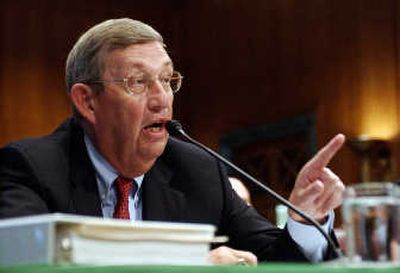
WASHINGTON – When gasoline prices first hit $3 a gallon in 2005, irate lawmakers quickly assembled top oil executives for a public grilling.
Pump prices are again above $3, yet the outcry from Congress is barely a whimper by comparison – even after this week’s warning from Federal Reserve Chairman Ben Bernanke that oil near $100 a barrel is a serious economic threat.
The change in tone since Nov. 9, 2005 – when Sen. Barbara Boxer, D-Calif., castigated oil executives for reaping multimillion-dollar bonuses while “working people struggle” – reflects an altered landscape in terms of energy economics and politics, analysts said.
•The American public is more accustomed to high prices, despite the financial pinch.
•Oil industry profits are retreating from year-ago levels as the soaring cost of crude crimps refining revenue.
•The outrage many Democrats expressed back then over high energy prices has been tempered by the fact that their party now controls Congress, making finger pointing more difficult.
•Plus, lawmakers have their hands full with a worsening housing crisis, a 4 1/2-year-old war in Iraq, and spending bills that have yet to be completed.
For the time being, only one hearing is planned on crude-oil prices, with industry and energy market experts likely to testify on recent record prices.
And yet high energy prices, fueled in part by rapid economic growth in Asia, show little sign of abating.
Oil prices have risen more than 27 percent since Labor Day, trading at $96 a barrel Friday, while gasoline prices are up 10 percent, averaging $3.08 a gallon nationwide, according to AAA and the Oil Price Information Service.
But unlike the Senate hearing two years ago that focused on record profits, oil companies are not being blamed as much by Congress this time. Exxon Mobil Corp., Chevron Corp. and others recently posted declines in quarterly earnings due to weak refining margins, the difference between what refiners pay for oil and what they’re paid for the products they make from it.
John Felmy, chief economist of the American Petroleum Institute, said even after Hurricane Katrina ignited fuel prices back in 2005 there was still a “real lack of understanding” about how global oil markets operate, fueling undeserved suspicion and anger toward the major oil companies his trade group represents. Today, Felmy said, lawmakers and consumers have a better grasp of how the price of crude and gasoline are linked.
Because the public recognizes rising prices are not directly controlled by Congress, or oil companies, and therefore lack any “obvious political fix,” there’s less pressure on lawmakers to hold hearings, said Douglas Holtz-Eakin, a senior fellow at the Peterson Institute for International Economics.
Another factor is that Democrats, who had blamed the policies of a GOP-led Congress for helping fuel record oil-industry profits, now control the House and Senate.
Said Evan Ringquist, a professor at Indiana University’s School of Public and Environmental Affairs: “It’s easier to throw stones when you’re not in charge.”