
It’s time to cut to the Chase
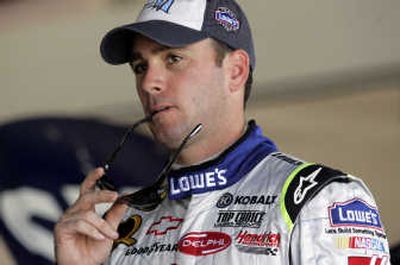
At the end of the racing season, it’s all about the Chase for the NASCAR Nextel Cup, the playoffs, if you will, in stock car racing’s elite division. The Chase, however, is a recent phenomenon, the brainchild of NASCAR chairman and CEO Brian France. To understand how it works and what to follow, here are 10 frequently asked questions about the final 10 races.
Q: What is the Chase?
A: The Chase is the method of determining the Nextel Cup champion. Twelve drivers qualify for NASCAR’s postseason – the top 12 drivers in the driver championship points standings after 26 races – and they are seeded according to the number of victories they collect in those first 26 races. In the final 10 races of the season, they accumulate points toward the championship. The driver with the most points at the end of those 10 races is crowned Nextel Cup champion.
Q: Who is in the Chase?
A: Jimmie Johnson, Jeff Gordon, Tony Stewart, Kurt Busch, Carl Edwards, Denny Hamlin, Jeff Burton, Kevin Harvick, Kyle Busch, Martin Truex Jr., Matt Kenseth and Clint Bowyer.
Q: How long has The Chase been part of NASCAR racing?
A: The Chase was introduced in 2004, concurrent with the change in title sponsorship of NASCAR’s top series from Winston to Nextel.
Q: Who were the first three Chase winners?
A: Kurt Busch won the inaugural Chase in 2004. Tony Stewart and Jimmie Johnson were the 2005 and 2006 champions, respectively.
Q: What’s different about the Chase this year?
A: The Chase was expanded from 10 drivers to 12 this season. In addition, NASCAR dropped the rule that allowed drivers below the top 10 who stood within 400 points of the leader after 26 races also to qualify for the Chase.
Q: How does that work exactly?
A: Each driver who qualifies for the Chase starts with a base of 5,000 points. To that total, add 10 points for each race victory in the first 26 events. With victories in the last two races of the regular season to bring his season total to six, Johnson enters the Chase as the top seed with 5,060 points, followed by Hendrick Motorsports teammate Gordon with 5,040 (four wins).
Q: What happens to drivers who don’t make the Chase?
A: They continue to race each weekend, although they’re not eligible for the championship. Drivers not in the Chase are still competing for race wins and portions of the Nextel Cup prize fund commensurate with their final standing in the points.
Q: Are the final 10 races different from the first 26?
A: Only in the sense that there’s a two-tiered competition going on – one for the championship and another for the victory and position in the driver standings. On the surface, the races don’t appear different – 43 cars start each event in the Chase, and all are competing for the win, although only 12 drivers are eligible for the championship. Stewart, for example, narrowly missed the Chase last year but won the most Chase races – three.
Q: NASCAR keeps track of owner points as well as driver points. Is there a Chase for car owners, too?
A: The short answer is “yes,” and there can be differences in the lineup from the Chase for drivers. For example, Mark Martin, who is running a limited schedule this year, didn’t qualify for the drivers’ side of the Chase, but the Dale Earnhardt Inc. car he shares with Regan Smith (with Bobby Ginn as the owner of record) had a good chance to make the owners Chase until a series of lackluster finishes over the past few races knocked the car out of the top 12.
Q: What is the hallmark of the Chase format?
A: Closely contested championships. For example, Busch won the first Chase by eight points over Johnson in a battle that wasn’t decided until the last lap of the last race of the season at Homestead-Miami Speedway. Had Johnson, the race runner-up, passed Greg Biffle for the win on that final lap, Johnson, not Busch, would have been champion.