
Energy, tweaked
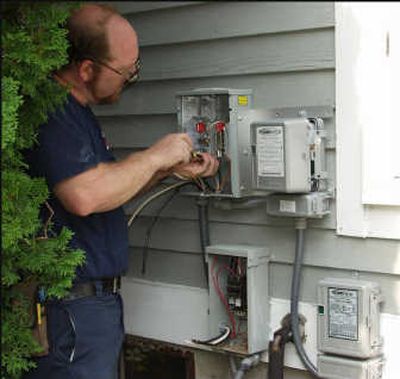
Starting this fall, 100 home and small business customers will test new Web-connected devices that cut energy use and could save millions in surplus-power purchases and ratepayer bills when Avista Utilities needs to buy extra energy on peak-demand days. The test will let those home users and business owners add smart two-way devices that can be controlled by Avista and that can reduce energy use when power demand strains the utility’s capacity.
The public utility will install the devices for 100 homes and businesses in Moscow and Sandpoint. The units will replace home thermostats or attach to hot water heaters and air conditioners. Those Web-controlled units, developed by publicly traded Comverge, based in New Jersey, will allow Avista’s control center to turn down thermostats or temporarily turn off water heaters when Avista hits peak-demand periods that strain its resources.
The Comverge technology being tested is part of a broad national electric utility initiative called demand-response – allowing utilities to find ways to tweak energy use by consumers at peak times.
“At times mother nature causes things to happen that our system doesn’t have the capacity to handle,” said Leona Doege, the utility’s Demand Side Management project director. Those peak-demand moments often occur either during busy winter weekends or during hot summer days, she said.
When facing forecasts that demand will exceed a utility’s energy capacity at key times, extra power is purchased at whatever rate the market offers. At times those peak orders for extra energy can add millions of dollars to a utility’s costs, said Avista spokesman Hugh Imhof.
Avista hopes to start installing the test devices in October. It’s targeting the two Idaho cities because residents there have advanced automated meters that allow for two-way communication between user and utility control centers.
The Sandpoint and Moscow test will run for two years. If successful, the Comverge devices could be deployed across the full Avista network wherever the utility has installed the two-way automated meters, said Doege. The devices would only be installed for residents and small businesses who want them, noted Imhof.
About 50 of those taking part in the Idaho test will get units called the Comverge Superstat, a programmable thermostat configured over the Internet or from the front panel. The rest will get a device called the load control receiver, which is attached to hot water heaters, heating systems or air conditioners.
Each unit will be identified to the Avista control center by its own network address. When Avista needs to lower total energy consumption across the network, the system will send out radio signals to the Comverge smart devices and turn them down or off.
Avista can choose to reduce thermostat levels or water heater activity across the full network of devices installed, or just within a selected region where peak demand might be an issue, said Doege.
The way Avista will activate those devices is through radio signals like those used by pager systems, said Bud Vos, a Comverge spokesman.
Thermostats will drop temperatures by one to three degrees at most; water heaters will turn off for a short duration of perhaps 10 to 15 minutes. The home user has some control over durations and temperature range when configuring the units via the Web tool.
The technology allows for a constant change in settings by the home user. For instance, the resident could be on vacation in Hawaii and then log onto the Web and change any setting on the devices at home in Lewiston or Pullman, if desired, said Vos.
Once taking part in the pilot program, Avista’s guinea pig customers will be alerted to an upcoming adjustment via a signal but will have the option to decline the adjustment.