
Construction on shaky ground
Commercial building starts to mimic decline in housing sector
WASHINGTON – If you thought 2008 was a bad year for the construction business, just wait for 2009.
Earlier this year, as job losses related to the housing slowdown piled up, new construction of apartments and office buildings, hotels and hospitals continued at a steady clip. But now, with the economy sputtering and building loans harder to come by, the pipeline for new projects is quickly drying up, threatening to put as many as 400,000 more laborers out of work next year, industry groups say.
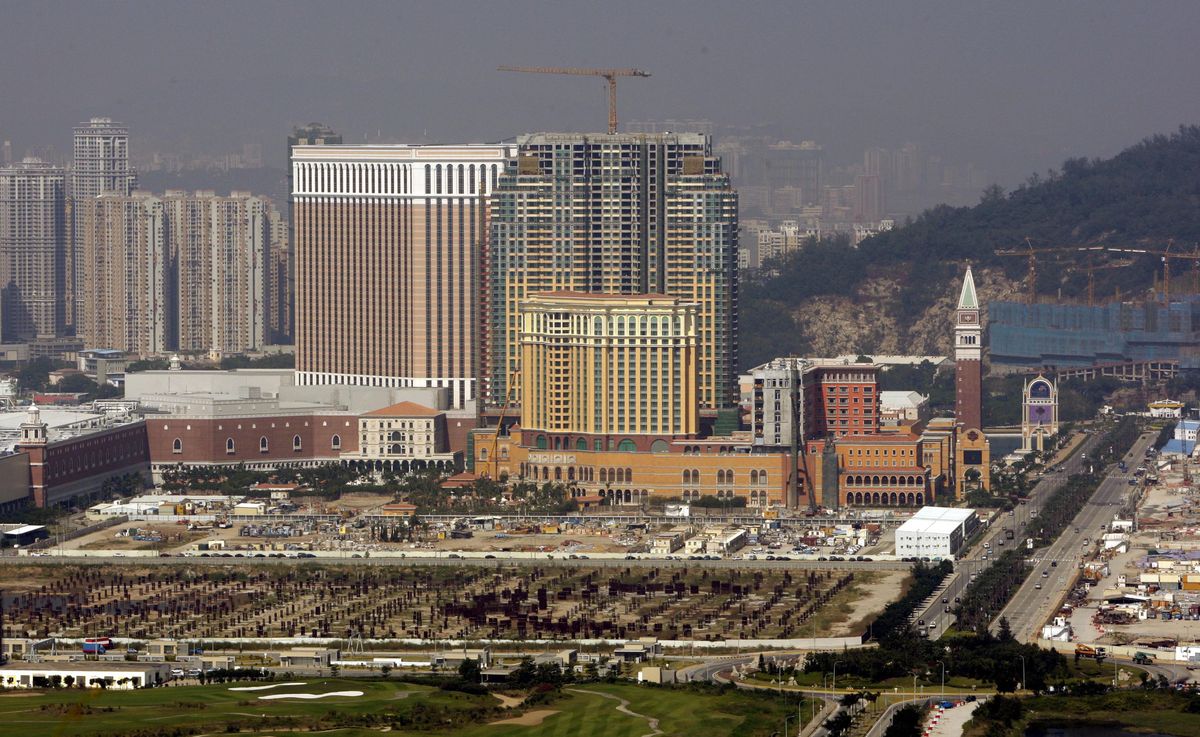
Nonresidential construction tends to lag behind the rest of the economy because of the length of time it can take builders to secure the necessary financing and government approvals. Cranes in the air now are the legacy of rosier financial times.
Census data highlight the ways in which nonresidential and residential construction trends recently diverged. In October, spending on private, nonresidential construction was up 8.3 percent compared with a year earlier, while private, residential construction spending fell by 23.6 percent in the same period.
The relative strength of the nonresidential construction sector helped mask job losses related to the housing market, said Anirban Basu, chief executive of the Sage Policy Group in Baltimore. Many workers who had been in residential construction were able to find jobs on commercial projects.
In Las Vegas, for instance, where the housing market has been particularly hard hit, workers turned to offices and hotels for construction jobs.
“When residential took a hit almost two years ago, we were able to pick up real good talent that was out there to come to work on the commercial side,” said Joe Taylor, an official with Laborers International Union Local 872. “There were so many jobs going on, we needed the people. Now those people are feeling the pinch and have moved on to other things.”
Taylor said he and others are only now starting to see a drop-off in nonresidential building. When construction was suddenly halted on the $4.8 billion Echelon resort project on the Las Vegas Strip over the summer, about 200 of the local’s members were laid off. Taylor said 700 of his 6,000 members are now out of work, compared with 150 this time last year.
Since the credit crisis hit in September, investors have been running scared from any debt backed by loans to apartment buildings, office space or warehouses, freezing financing for new projects.
“The only spending we will see in nonresidential (next year) is what has already started,” said Joel Bloomer, senior equity analyst for Morningstar.
A further slowdown in construction has wider implications for the economy beyond the 6.9 million people it employs.
“As construction in general falls, I expect more than just construction employment to suffer,” Bloomer said. “Employment in every industry that has benefited from commercial real estate investment should slow – architects, engineers, janitorial, hospitality, building material manufacturing, commodity input providers, distributors.”
The question now is how long will the slump last and how bad will it be. The last time the nonresidential construction sector had a slowdown, following the recession of 2001, the slump lasted four years, said Kermit Baker, of the American Institute of Architects.
Bill Copeland, owner of Elite Steel Buildings, a small contractor in Mesa, Ariz., that works on warehouse, retail and municipal projects, said the sooner the slowdown ends, the better. Arizona had the largest decline in construction employment of any state – 17 percent – from October 2007 to October 2008, according to the Bureau of Labor Statistics.
“The contractors that I talk to are all pretty much in agreement: Those who survive will do pretty well when it picks back up again,” he said. “It’s just trying to survive this bloodbath.”