
Immigrants stocking up on rice
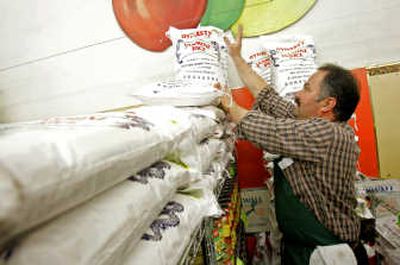
RICHMOND, Calif. – Shoppers surveyed shelves loaded with rice at the Ranch 99 Asian supermarket, chatting in languages from Mandarin to Portuguese as they hunted for their favorite varieties, checked brand names and compared prices before heaving 50-pound bags into their carts.
Skyrocketing prices and media reports of a shortage are driving many immigrants and U.S. Asians, Hispanics, Indians and others to stock up on rice – a once inexpensive staple that is reaching record-high prices across the country. In Indian corner markets and warehouse-size supermarkets specializing in Asian goods, customers who usually take home a 20-pound bag are taking two, or even reaching for the 50-pound bag.
“It’s all in the news, on TV and newspapers,” said Grace Yap, originally of China, who was shopping at Ranch 99 with Birgitta Elmahdy, born in Sweden.
“I’m from a place that eats a lot of potatoes, but I bought two bags,” Elmahdy said. “Then I thought about it – that’ll last me a year!”
Emphasizing that there is no rice shortage in the United States, economists and commodity traders blame the price increases confronting U.S. consumers on factors including the weather in producing countries and the increased buying power of some nations, such as China. Chief among those factors was the decision by India, Vietnam, China, Egypt, Cambodia and Brazil to curtail exports to protect prices at home, said Nathan Childs, an economist and rice expert with the Department of Agriculture.
Seeking to tame rice prices, which have more than tripled since January, Thailand proposed an OPEC-style cartel Friday with major rice exporters Laos, Myanmar, Cambodia and Vietnam to give them more control over international prices.
Take escalating prices, add to that news of food riots abroad, and many American buyers are choosing to be safe and purchasing more, especially since rice keeps well. That sends ripples all the way up the buying chain, said Pat Daddow, owner of the California Rice Exchange, a platform where farmers sell to processors.
“You hear prices are going up, so instead of buying one bag, you buy five,” he said. “Everyone is anticipating a price rise, so they’re trying to buy ahead of it. That creates a short-term rise in demand, and higher prices.”
The stockpiling has led U.S. warehouse retail chains to limit sales of bulk imported Thai jasmine, Indian basmati and long grain white rice – varieties not grown domestically. Sam’s Club, a division of Wal-Mart Stores Inc., caters to small businesses such as restaurants, and limited shoppers to four 20-pound bags each.
All types of rice grown in the United States have seen price increases as they fill in demand usually met by their competitors abroad. But it’s the imported rices preferred by Southeast Asians, Indians, Filipinos and many Chinese that are in the greatest demand and going for the highest prices.
In early April, Thai jasmine was selling for $1,000 a ton, and basmati for $2,000 a ton. That translated into 50-pound bags selling for between $36 and $40, which led some buyers to take home all the rice their local stores carried and created spot shortages in certain immigrant neighborhoods.