
laying the groundwork
Get a jump on spring flowers by planting fall bulbs
Trying to resist the fall bulb displays at garden centers around town? Don’t be afraid, because bulbs are easy to grow. And with minimal care, they will come back year after year. This is the time of year to plant bulbs for springtime color, so let’s get started.
The hardiest spring-blooming bulbs for the Inland Northwest include tulips, daffodils, hyacinths, narcissus, crocus, and grape hyacinths. Other equally hardy bulbs that are less common are alliums, Glory-of-the-Snow and Guinea Hen flowers.
Bulbs can be purchased at local garden centers and through mail-order companies. Master Gardener Steve Nokes suggests buying bulbs early in the fall for the best selection.
“Choose the largest, firmest, healthiest bulbs you can find,” he says.
Selecting the right bulbs is important. “Don’t even try tulips if you live in deer country,” says Nokes. “They are one of their favorite treats although you can always plant some in spots that the deer can’t get to.” Spraying the foliage and buds with deer repellent also helps.
Pocket gophers love to eat the tulip bulbs themselves. Unless you’re willing to plant the bulbs in wire baskets, your best bet is to plant bulbs they don’t like, such as daffodils and narcissus.
Most bulbs will grow in full sun to part shade. “Make sure they get enough sun, at least six hours, but more is better,” advises Karen Marcus, sales associate at Northwest Seed & Pet.
Bulbs thrive in well-drained soil. When preparing the site for planting, add organic material such as compost, peat moss or well-rotted manure. Nokes says “the best fertilizer is bone meal which provides the nutrients bulbs need to grow.” Mix fertilizers into the soil before setting the bulbs into their planting holes.
When deciding where to plant your bulbs, avoid placing them in a single row because that’s boring. Clusters of bulbs provide the best visual effect. Combinations of bulbs – such as grape hyacinths and tulips – are attractive but be sure to select varieties that flower at the same time. Another effective technique is to plant a large quantity of bulbs in a swath through a planting bed. For a natural look, plant bulbs in irregular patterns.
The rule of thumb is to plant bulbs three to five times as deep as the bulb is tall, and space them two to three bulb widths apart. Marcus says “it’s important to plant them at the proper depth because of the frost heaves that occur during our winters.” Tulips, daffodils, narcissus and hyacinths should be planted with the pointed side up. For unusually-shaped bulbs like crocus, look closely to identify where the roots will emerge and plant that side down.
The easiest way to plant several is to dig a large-diameter hole, prepare the soil, place the bulbs in the correct spacing and carefully refill the hole. If the fall weather is especially dry, lightly water the planting area.
After the bulbs have bloomed next spring, let the leaves die naturally rather than removing them prematurely, Marcus advises. “Then fertilize them for next year’s blooms.”
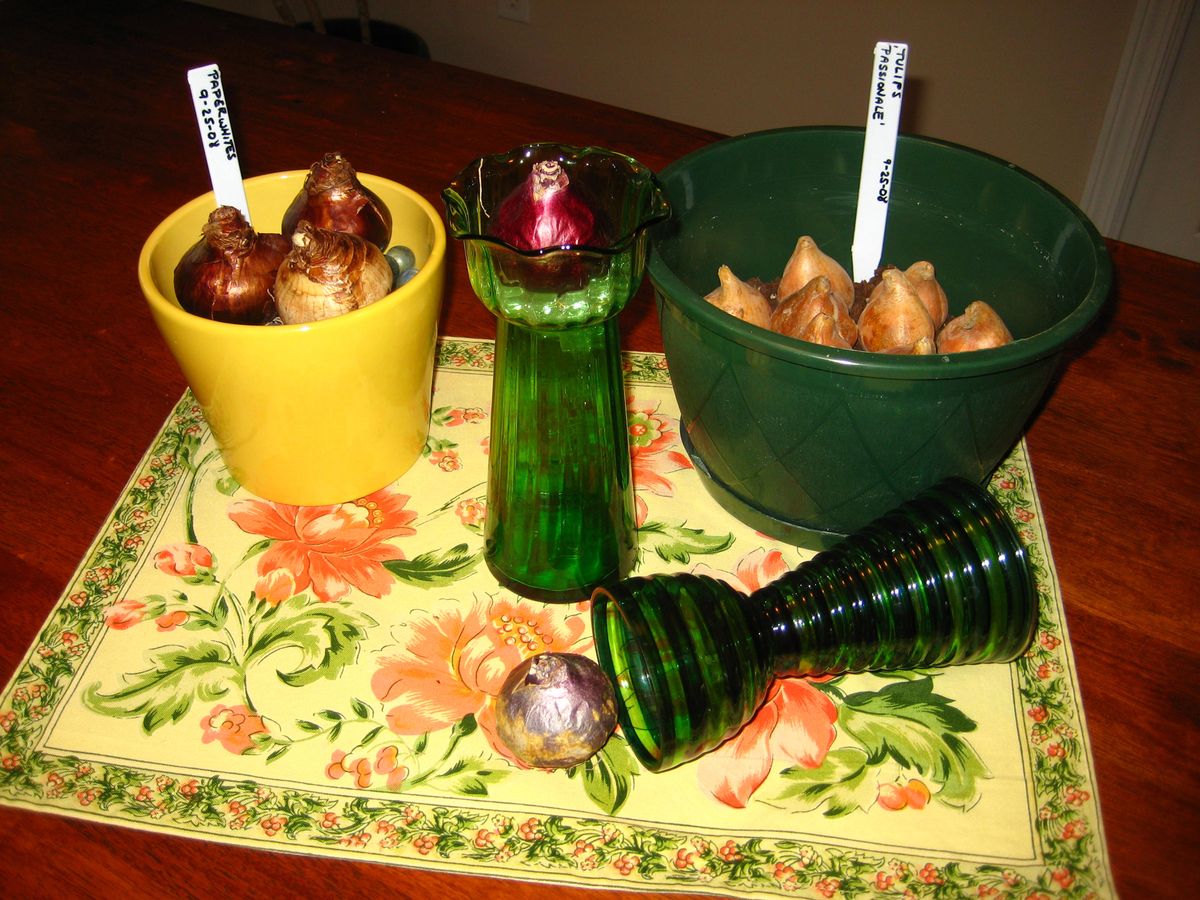
If you live in an apartment or don’t have a garden, you can still enjoy growing flowers from bulbs by using vases or containers. Here’s how:
Garden centers sell special hourglass-shaped vases to grow hyacinth bulbs in. Choose a bulb that will bloom in your favorite color – peach, yellow, pink, white, purple or light blue – then fill the lower portion of the vase with water. Set the bulb in the top section. The water level should be kept just below the bottom of the bulb. Put the vase in a dark location like a cupboard, closet or basement and monitor the water level. After six to seven weeks, the bulb will have long roots. Once the flower bud is three inches out of the bulb, gradually move the vase into brighter light. For the next few weeks, your reward will be a showy blossom and its incredible scent.
There are two categories of bulbs that can be grown indoors in containers: those that don’t require a chilling period and those that do.
The first category includes paper-white narcissus and Amaryllis. Plant them in a short, wide pot filled with potting mix or place them in a shallow bowl filled with pebbles so the roots have something to hold onto. Add water to the pebble-filled bowl until it covers the bottom quarter of the bulbs. Place the container in indirect light for two weeks, then move to a brighter location. They will bloom in about four weeks.
Tulips, daffodils, crocus and Dutch iris require a chilling period of 16 weeks. Fill the bottom two inches of a six-inch deep pot with potting soil. Plant the bulbs thickly and finish filling the pot with soil. Place the pot in an unheated area like a garage or basement that averages 35 to 45 degrees during the winter. At the end of the chilling period, move the pot to a warmer area that gets indirect sunlight. Once the bulb shoots are four inches tall, move the pot to a sunny location and enjoy the show.