Size matters
Thin, obese patrons of Chinese buffets differ on dining styles

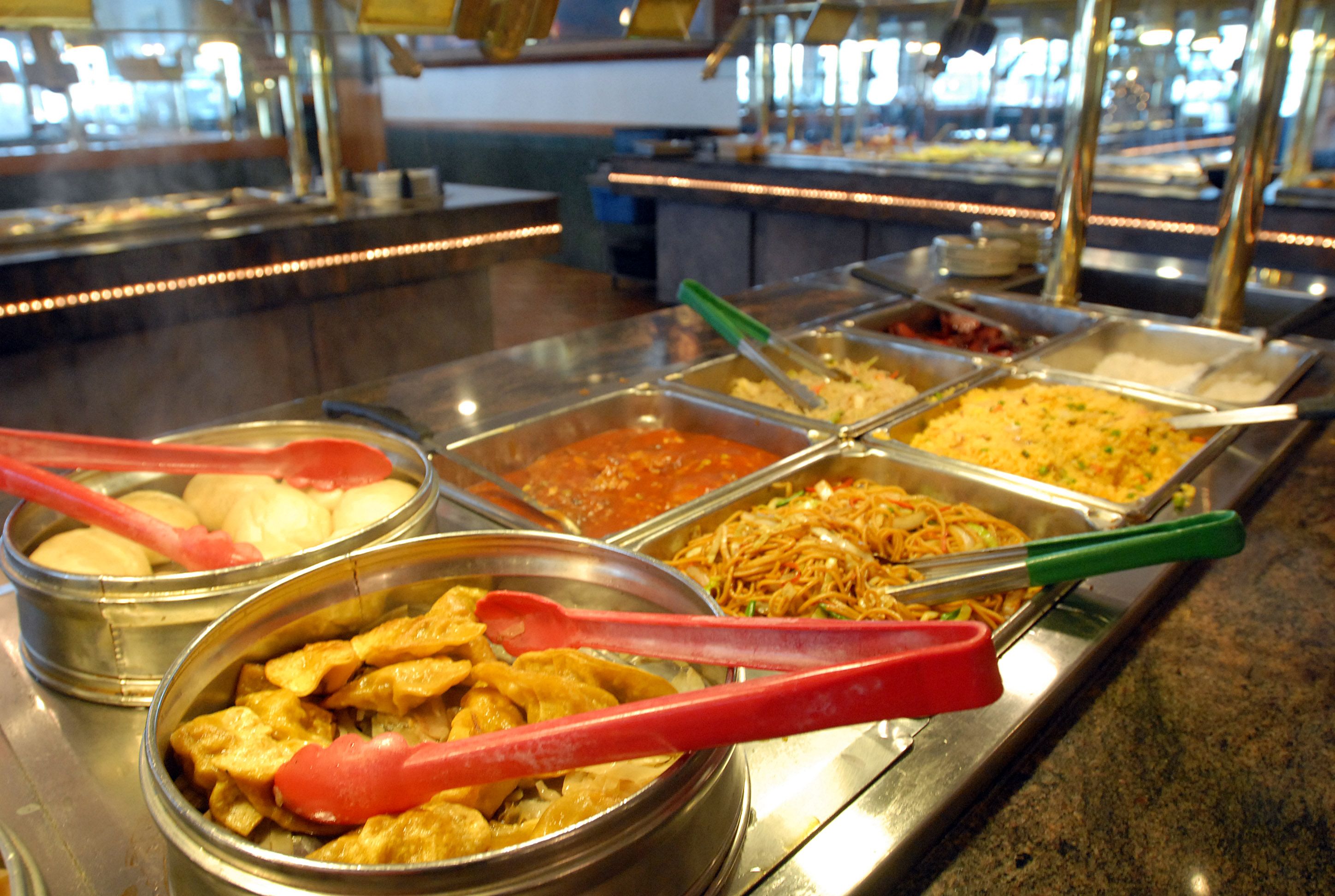
When it comes to eating at Chinese buffets, normal-weight diners have a much different approach from that of obese patrons.
Customers who are not heavy are more likely to browse the buffet before serving themselves, use chopsticks instead of forks and sit with their backs to the food, a study by Cornell University’s Food and Brand Lab shows.
Researchers had 22 trained observers watch 213 patrons at 11 all-you-can-eat buffets at Chinese restaurants around the country.
Among the findings in the journal “Obesity,” published in advance online:
•71 percent of normal-weight diners browsed the food offerings before serving themselves vs. 33 percent of obese patrons.
•27 percent of normal-weight people chose seats facing the buffet vs. 42 percent of obese diners.
•38 percent of normal-weight patrons sat at a booth rather than a table, compared with 16 percent of heavy diners.
•24 percent of normal-weight people used chopsticks; 9 percent of heavy patrons did.
•Overweight people sat an average of 16 feet closer to the buffet than normal-weight people.
•Normal-weight people chewed each bite an average of 15 times, compared with 12 times for obese people.
“Obese people pick up a plate and start serving themselves, where other people are more likely to walk around and look at the food either with a plate or before they even pick up one,” says lead author Brian Wansink. He’s on leave from his job as director of the Cornell lab and serving as executive director of the U.S. Department of Agriculture’s Center for Nutrition Policy and Promotion.
“Anything that made the food more convenient to eat tended to be things that obese people did. They sat closer to the buffet, used a fork instead of chopsticks and chewed fewer times. Many of these patterns of behavior could lead to overeating without them realizing it.”
Collin Payne, the paper’s co-author and an assistant professor of marketing at New Mexico State University-Las Cruces, says the take-home messages from the buffet study can apply to other environments. Thinking about what you’re going to eat before you scoop it on your plate and taking the time to chew your food thoroughly may help you control your weight, he says.