
Crab seasons cheer many
Producers enjoy growing supply, demand
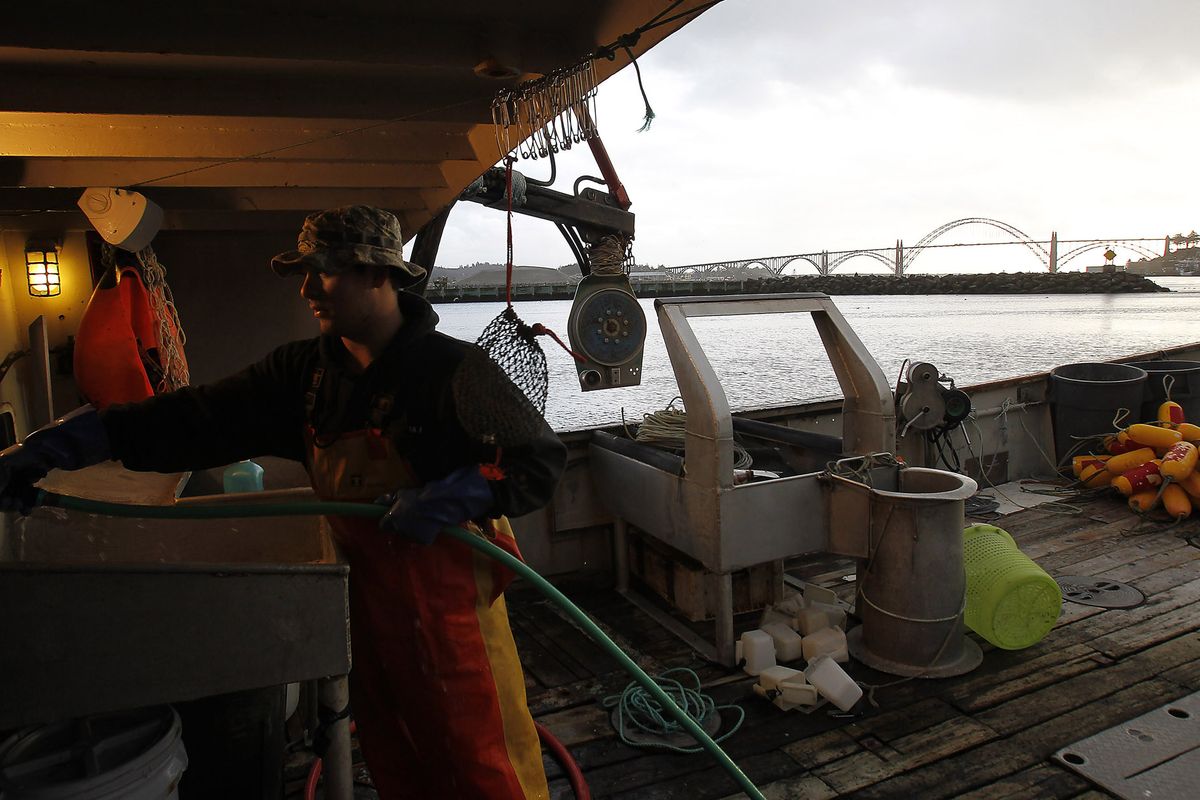
NEWPORT, Ore. – Travis Flatt stood at the edge of a tote full of writhing Dungeness crab and surveyed the Corsair’s catch, a bounty of fat crustaceans on their way to a live tank, purchased right off the dock.
The 21-year-old deckhand would have preferred a bigger haul than the 800 pounds the Newport boat brought in last Saturday, but at $3.10 a pound, this load will probably represent a $250 paycheck for his share of a long day’s work.
There’s reason to revel all along the coast, for fishermen and the communities that rely on what the boats bring in during a time of year when tourism revenues wilt. Crab, and the $40 million it has brought the fleet in the past 2 ½ months, has become a mainstay – not just as the state’s largest fishery but as a source of income upon which the Oregon Coast has come to rely.
Oregon ports hauled in 23 million pounds of crab last year, and this year’s catch may top 20 million pounds.
Combined with the stable, healthy prices fishermen got for their crab from the time the season opened, the 2010-’11 season will go down as a highlight, said Nick Furman, executive director of the state Dungeness Crab Commission.
“It’s a big shot in the arm,” Furman said. “In any sense of measurement, this is an excellent season.”
A two-week delay in the start of the crabbing season allowed crabs to fatten up, giving consumers plump, healthy crabs in return for higher prices at the market.
“The quality this year was the best we’ve seen in quite a while,” said Ryan Rogers, owner of Eugene’s Fisherman’s Market, even if the “number of crab out there might have been a little disappointing.”
Before the recent spate of 20 million-plus-pound seasons, 18.2 million pounds was the all-time record, Furman said.
Since 1961, crabbers have brought in an average of 10.6 million pounds each season. If you shorten the window to the past 30 years, though, that number is 12.3 million pounds. And over the past decade, the average number of pounds landed in Oregon is 18.6 million.
What’s changed is a number of factors, at sea and on shore. There are clearly more crabs in the water, and while the reasons for that are somewhat mysterious, it’s generally agreed that favorable ocean conditions all along the food chain are responsible. The Pacific has been consistently brewing up the right amount of plankton and macroinvertebrates to make for a healthy run of Dungeness.
There also have been ceaseless demand for crab and prices that don’t drop appreciably even when there’s plenty of crab to go around.
Time was, the fleet would be put on limits if crabbers brought in too much product, because most of it was headed for regional markets that could only absorb so much crab. Now, thanks to several good years that have lined the coffers of crab distributors and groups such as Furman’s, there’s money to attend trade shows and send samples of Dungeness around the world.
On the East Coast, Oregon crabs are competing with lobster. And, as China becomes more prosperous, its increasingly affluent citizens are clamoring for more of Oregon’s crustaceans, especially if they can make it there alive.