
In the Kitchen with … Mom for Thanksgiving
She’s always switching up the sides.
But, I can count on Mom’s turkey. She’s been using the same recipe for Thanksgiving since 2002.
“Up until that point, it was just kind of hit and miss,” she said. “But then I came across the brine recipe, and it’s been perfect.”
The brine recipe became Mom’s go-to Thanksgiving turkey recipe after she saw it in a newspaper – not this one – then tried it and loved it.
Fourteen years later, upon request, she emailed me the link. But at home, she still uses her original newsprint version.
When she found her now-favorite recipe, she said, “I just cut it out of the paper and stuck it in my book,” that is, some cookbook, a hard-copy.
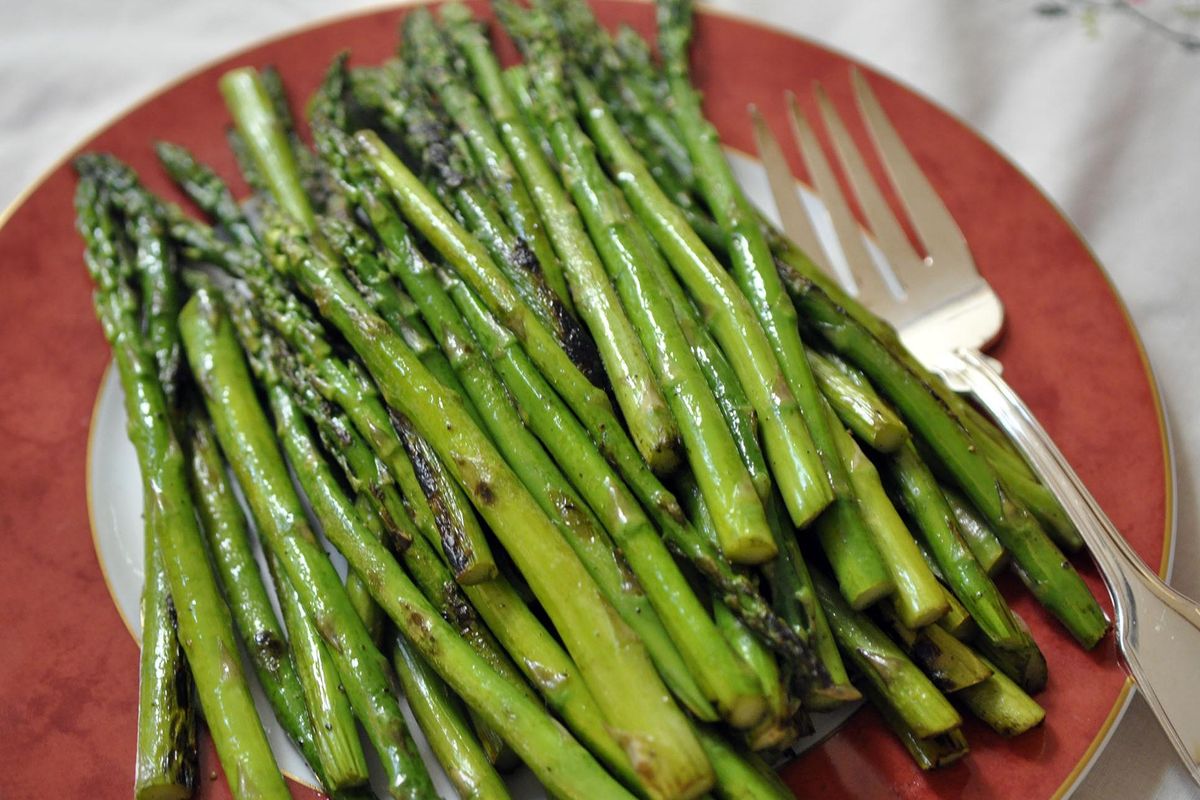
Mom doesn’t use recipes for her side dishes, which might include a line-up like this: steamed carrots with honey and butter, grilled asparagus, gravy, cranberries, and roasted potatoes and parsnips with extra-virgin olive oil, rosemary, salt and pepper.
“People want stuffing, so you have to do that,” she said. But, in general, “I do very simple things.”
Mom makes her stuffing with onions, celery, mushrooms, chestnuts, butter – “whatever I have on the shelf, maybe sausage, maybe bacon.”
She starts it on the stove top and finishes it in the oven. But getting specific instructions or measurements is practically impossible.
“You fry the onion. You fry the celery. You melt the butter. You either use some broth or some water. You add some sausage. Then, you stick it in the oven and call it good. It’s not complicated.”
Same thing goes for her gravy, which she makes with corn starch rather than flour. “I like that better,” she said.
She didn’t say why.
It doesn’t really matter.
Her method goes like this:
“You use some drippings, add water and corn starch and taste it. If it’s too salty, you add more water. Cook it until it gets thick. You kind of experiment as you go.”
Growing up, we always had turkey at Thanksgiving. The bird was a given. But it was never the same. These turkeys, Mom said, were “not so much failures. But, maybe, they were too dry.
“Grandpa would always compare my turkey to Grandma’s turkey. Her turkeys were always moist, and I don’t know why. I think it’s because she covered hers with the roaster top.”
Mom didn’t do that. But she tried all sorts of other methods.
“I tried it in a bag, in tin foil, with garlic and onions the way Grandma does it. It was OK, but it wasn’t good” – until she discovered Moist and Tender Turkey with Pan Gravy from Greg Atkinson, a contributing columnist to the Seattle Times for three decades and owner of Restaurant Marché on Bainbridge Island.
Grandpa had died a year earlier, so he never got to try Mom’s moist turkey. The first time she made Atkinson’s recipe, she followed the instructions exactly. That’s what she does every time she tries a new recipe, she said.
After that, she’ll stray from the directions, sometimes slightly – as in this case – other times, much more dramatically.
If she feels like it, she’ll add an orange “or something.” She usually cuts down on the salt.
Other home cooks who tried the recipe also reported their birds were too salty. Because of this, Atkinson recommends using a bird that hasn’t been pre-basted or brined.
“After the soaking, I just put rosemary sprigs and pressed garlic under the skin and inside the cavities throughout the bird,” Mom said. “There’s no additional seasoning required after the soak and moderate application of the rosemary.”
She’s been happy with the results every time. “The turkey turned out nice and moist, just the way they said it would. I would say it was foolproof.”
Moist and Tender Turkey with Pan Gravy
From Greg Atkinson of the Seattle Times
In his original column, published Nov. 24, 2002, Atkinson explained the reason a good salt soak works. In a phenomenon known as Brownian Motion, particles suspended in liquid, including still liquid, tend to move around randomly, resulting – Atkinson wrote – “in a more or less even distribution of particles. For the soaking turkey, that means an exchange of particles is taking place between it and the bath water. The bird soaks up some salt water and actually gains a little water weight, so the resulting roast is indeed juicier.”
1 (16-pound) naturally raised turkey
4 cups kosher salt
2 cups brown sugar
2 tablespoons whole black peppercorns
4 bay leaves
1 gallon boiling water
8 pounds of ice cubes
2 tablespoons cornstarch, for the gravy
The night before you plan to serve the turkey, wash out a cooler just large enough to hold the bird. Unwrap the turkey and put it in the clean cooler. Remove the giblets from the turkey and refrigerate them until the turkey goes in the oven. Make the brine: Stir the kosher salt, brown sugar, peppercorns and bay leaves into the boiling water, remove from heat and let the mixture steep for 20 minutes. Stir in enough ice to bring the level of the liquid up to 2 gallons. Pour the icy brine over the turkey and cover the cooler. Allow the turkey to soak in the cold brine for 12 to 24 hours. Use gel packs if necessary to keep the brine below 40 degrees. (Adding more ice would dilute the brine.)
Preheat the oven to 350. Transfer the turkey from the cooler to a roasting pan and discard the brining solution. Roast the turkey for 3 1/2 to 4 hours or until the thigh meat registers 180 degrees. Loosely cover the bird with foil during the last hour to prevent over-browning. Meanwhile, simmer the giblets in a saucepan with 4 cups of water for 3 1/2 hours; add more water as needed to keep the giblets covered.
Transfer the turkey from the roasting pan to a platter and let it rest for 20 minutes before carving. While the turkey is resting, make the gravy. Strain the broth made from the giblets into the roasting pan and stir it around to pick up any bits. Strain the liquid back into the saucepan and bring it to a boil. Dissolve the cornstarch in 2 tablespoons of water and whisk it into the boiling broth. Serve the turkey hot with the pan gravy.
Yield: 12 servings, with leftovers
Note: It’s very important that the turkey stay cold during the brining process. Otherwise, bacteria will have an opportunity to spoil the meat. Make sure the brine is cold when it goes on the turkey and use gel ice packs to keep it below 40 degrees while the bird soaks.
Roast Potatoes, Parsnips and Carrots
Adapted from “Jamie’s Ministry of Food” by Jamie Oliver
2 1/2 pounds potatoes
6 parsnips
6 carrots
1 bulb garlic
3 sprigs fresh rosemary
Sea salt
Freshly ground black pepper
Olive oil
Preheat oven to 400 degrees.
Peel the vegetables and halve any larger ones lengthways. Break the garlic bulb into cloves, leaving them unpeeled, and bash them slightly with the palm of your hand. Pick the rosemary leaves from the woody stalks.
Put the potatoes and carrots into a large pan – you may need to use two – of salted, boiling water on a high heat and bring back to the boil. Boil for 5 minutes, then add the parsnips and cook for another 4 minutes. Drain in a colander and allow to steam dry. Take out the carrots and parsnips and put to one side. Fluff up the potatoes in the colander by shaking it around a little – it’s important to ‘chuff them up’ like this if you want them to have all those lovely crispy bits when they’re cooked.
Put a large roasting tray over a medium heat and either add a few generous lugs of olive oil or carefully spoon a little of the fat from the meat you’re cooking. Add the garlic and rosemary leaves. Put the vegetables into the tray with a good pinch of salt and pepper and stir them around to coat them in the flavors. Spread them out evenly into one layer – this is important, as you want them to roast, not steam as they will if you have them all on top of each other. Put them into the preheated oven for about 1 hour, or until golden, crisp and lovely. Serve immediately, with your roast dinner and your gravy.
Grilled Asparagus
1 pound fresh asparagus spears, trimmed
1 tablespoon olive oil
Salt and pepper, to taste
Preheat grill for high heat.
In a large mixing bowl, toss asparagus spears with olive oil to lightly coat. Season with salt and pepper, to taste.
Grill on high heat for about 2 to 3 minutes, or to desired tenderness.
Mom’s Basic Cranberry Sauce
1 (12-ounce) bag cranberries
1 cup sugar
1 cup water
Orange zest, to taste
Bring all ingredients to a boil, then simmer on medium heat until all of the cranberries pop, about 10 minutes.