
Concert review: Spokane String Quartet program doesn’t go according to plan, but it was magic nonetheless
To begin the second in this season’s series of concerts by the Spokane String Quartet, Helen Byrne, its cellist, stepped to the microphone to explain some changes that had been made in the program.
Some in the audience may have been disappointed to learn that the performance of Beethoven’s genre-busting Violin Sonata No. 9, known universally as the “Kreutzer Sonata,” had been dropped, as had been that of Leos Janacek’s emotionally volcanic String Quartet No. 1, subtitled “The Kreutzer Sonata” by its composer, since the work was inspired by a short novel of that name by Tolstoy.
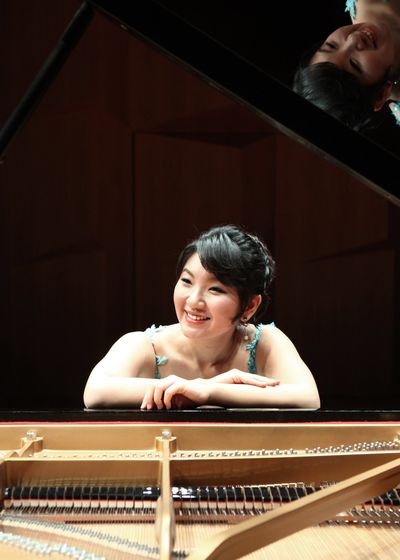
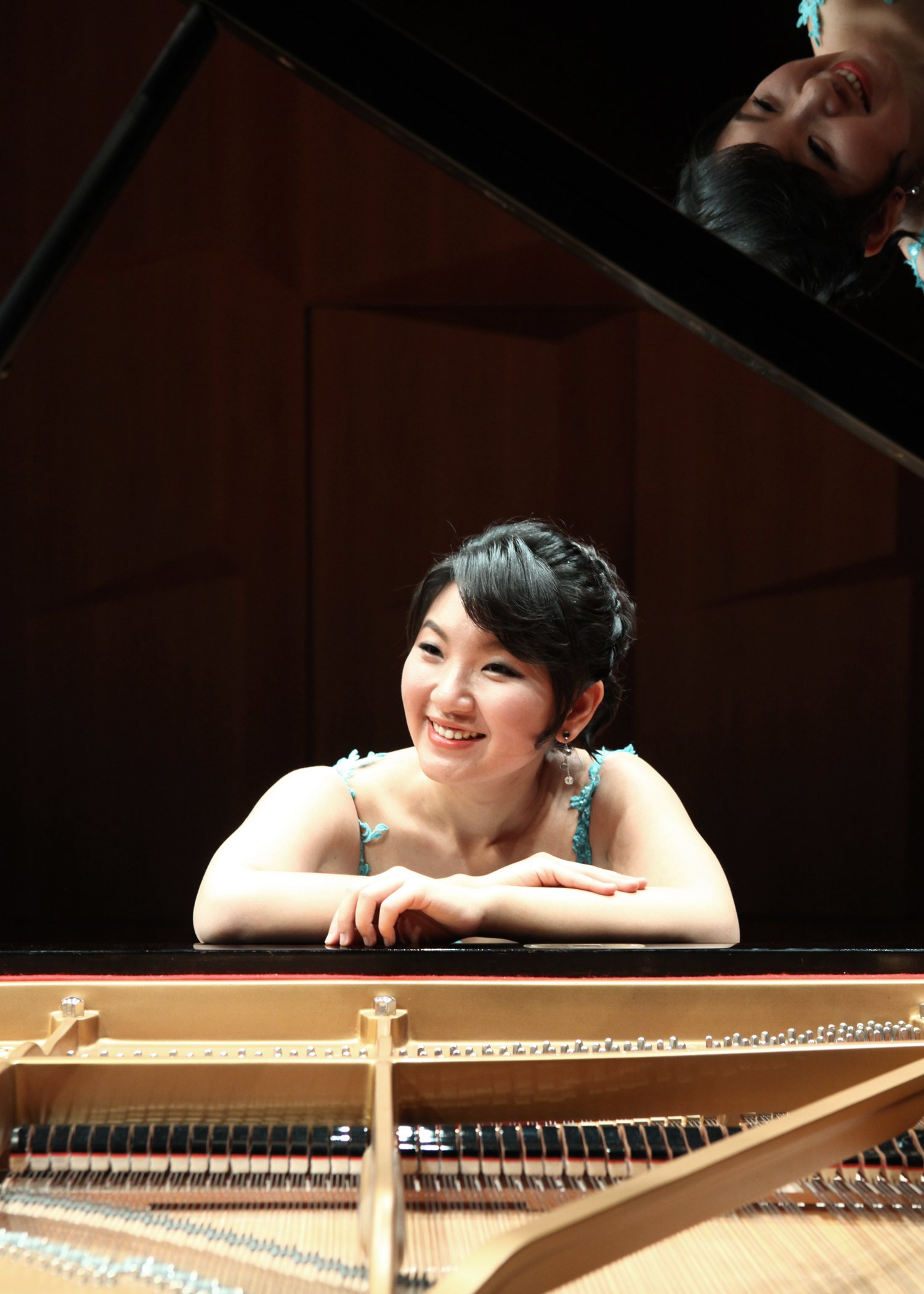
Byrne explained that Mateusz Wolski, first violin of the quartet and concertmaster of the Spokane Symphony, had a family emergency, thus requiring the substitution of pieces that could be performed by the players who remained. Fortunately, those included guest pianist Yoon-Wha Roh, who on short notice was able to reach into her large repertoire and produce two marvelous gifts for the audience:
A group of “Four Images for Piano” by Jihyun Kim , as well as one of the jewels of the chamber music repertoire, the Piano Trio No. 1 in D minor Op. 49 of Felix Mendelssohn (1809-1847). The final piece on the original program, the entrancing Piano Quartet No. 1 in C minor Op. 15 by Gabriel Fauré (1845-1924), remained unchanged, since Wolski’s participation was not required.
One may have hoped that the Beethoven-Janacek pairing, which is fascinating to contemplate and would doubtless prove revelatory to experience, might reappear at a future concert, but any feelings of regret were soon swept away by Roh’s brilliant rendition of Kim’s four solo “Images.” They were originally entitled “Etudes,” which is understandable, because they fulfill the traditional purpose of instrumental etudes to cultivate and display the performer’s command of specific technical demands of their instrument. In this case, mastery was displayed both by the performer and the composer, who are colleagues at WSU.
It was at Saturday’s concert impossible to determine the line that divided the brilliance of the composer from that of the performer. Her “Four Images” displayed Kim’s deep understanding of her two most prominent antecedents in the composition of piano studies: Frederic Chopin and Claude Debussy, who both possessed such extraordinary creativity in the marriage of harmony and piano technique as to produce revolutionary changes in the course of musical history. Whether or not Kim will have the same effect on the music of our time remains to be seen. Suffice it to say, however, that she certainly possesses the ability to do so, while her colleague, Yoon-Wha Roh, has the sensitivity and intellect to hear every bit of brilliance contained in the music, and the sovereign technical command necessary to make them audible to us.
Kim plainly was not thinking about trills and octaves when she named the “Four Images” – “A leaf falls, the water ripples,” “Effervescent,” “Chamber of Mirrors” and “Pulsar Glitch” – but that is what she marked down on the page, and what Roh confronted when she picked those pages up and beheld a series of demands that would exhaust an ordinary pianist. Ordinary, however, is what Roh definitely is not, and so she was able to convey to us, as though no technical impediment existed, the very sensory stimuli that inspired the composer. That is the magic of music of the highest level.
It is exceptional that an artist capable of such dazzling work as a soloist can subordinate herself to the demands of chamber music as perfectly as did Roh in the two works remaining on the program, in which she was joined by members of the Spokane String Quartet. Despite the obvious differences between Mendelssohn and Fauré, they both responded in the same way to demands for change in the musical fashion of their day. Mendelssohn continued committed to the clarity of form and laws of harmony found in the works of Mozart, rather than following the revolutionary lead of such contemporaries as Berlioz and Chopin. For his part, Fauré studied and admired the operas of Wagner without ever following him in his radical departure from tonality and symphonic structure.
As a result, the audience at Saturday’s concert at the Fox heard two works which, while separated by 40 years and yawning gaps in intellectual tradition, made very similar demands on their performers, and offered very similar pleasures to their listeners. Both Mendelssohn’s trio and Fauré’s Quartet led the listener along the classical path that begins with turbulence and uncertainty, moves forward through successive moments of exuberance and tranquility, and resolve finally in, if not joy, at least acceptance. Both works require total cohesion and unanimity among the performers. They may speak in different accents, but always with a single voice, which must be that of the composer
Both Mendelssohn and Fauré were accomplished pianists, and provided piano parts in their chamber music that requires terrific virtuosity. At the same time, however, the piano part must never dominate or stretch the instrumental fabric out of shape.
We know this, because both composers employed the technique of sharing a musical phrase or melody among several different instruments. For example, Byrne began the Mendelssohn Trio with one of that composer’s most memorable melodies, but soon handed it off to Amanda Howard-Phillips, violin.
All the while, the melody was surrounded by a cloud of turbulence, in the form of cascading arpeggios from Roh’s piano. The balance among the three players had to be perfect, or the beauty of Mendelssohn’s inspiration would have been marred. It never was.
With the start of the Fauré, the addition of violist Jeanette Wee-Yang to the texture of the group brought with it even greater coloristic potential, but also a greater demand for detailed attention to subtle changes in phrasing and dynamics on the part of all players.
Their consistent perfection of balance and ensemble made one grateful for the chance to hear this music performed not by a group of starry soloists, such as populate the catalogs of Sony, Warner and Universal, but rather by equally gifted, dedicated ensemble players, whose great joy lies not in distinguishing themselves from a cloud of competitors, but in ascending to a level at which their personalities become indistinguishable from that of the composer.