
Reel Rundown: ‘Mr. Scorsese’ documentary examines filmmaker’s work life and his impression on cinema

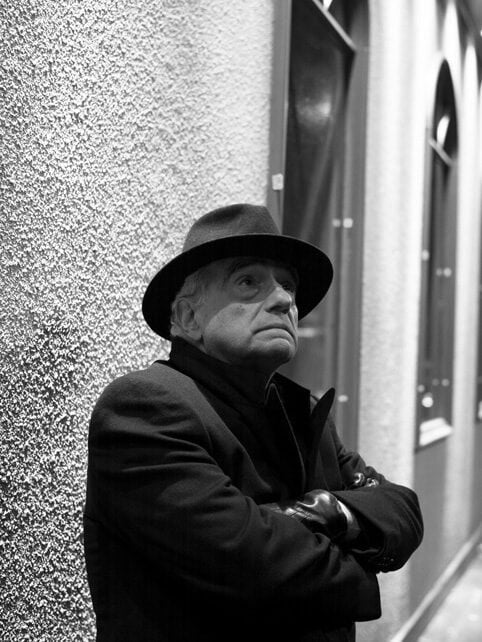
If your average film fan were to describe the movies of Martin Scorsese in one word, that word likely would be “violent.”
After all, Scorsese is the guy who made 1976’s “Taxi Driver,” a film in which a demented loner played by Robert De Niro ends up massacring several people in a house of prostitution. He made 1990’s “Goodfellas,” featuring a sociopath played by Joe Pesci who not only shoots a guy to death but knifes another one repeatedly – to a similar end.
Scorsese’s 2006 film “The Departed” features several characters getting shot in the head, and 2019’s “The Irishman” details the murder of former Teamster head Jimmy Hoffa. And don’t forget “Raging Bull,” Scorsese’s 1980 biopic of the boxer Jake LaMotta that is a graphic portrayal of ring viciousness.
Then, too, as Rebecca Miller’s Apple TV documentary miniseries titled “Mr. Scorsese” shows, the New York-born and -bred Scorsese has directed a number of nonviolent films as well. “Alice Doesn’t Live Here Anymore,” for example, as well as “The Age of Innocence,” “Kundun” and “Hugo.”
Yet pretty much everything that Scorsese has created in his long career has certain things in common. Many of his films focus on the Italian-American experience he grew up in, especially involving crime. And most, if not all, involve a search for meaning, especially involving the palpable nature of sin and the power of redemption.
In her documentary, which is split into five more or less one-hour episodes, Miller uses a blend of movie scenes, Scorsese family film footage and talking-head interviews with a number of Scorsese’s family, friends and colleagues to explain who the filmmaker is, how he became that way and what he has meant to world cinema. Prominent among the interviewees are other famous directors such as Steven Spielberg, Brian De Palma and Spike Lee.
And unlike any number of similar celebrity studies, Miller doesn’t play down Scorsese’s darker personality traits. His periodic on-set rages, for example, or the cocaine habit that not only derailed his career for a while but almost killed him.
As for his being a father, the three daughters that he sired over his five marriages have had completely different experiences. If Miller’s movie is to be believed, it was only in his 70s (Scorsese is now 82) that he became a fully engaged parent.
Yet as actor after actor declaims, from De Niro to Leonardo DiCaptrio, Jodie Foster to Daniel Day Lewis, Scorsese can be a dream to collaborate with. Among other strengths, he is not just open to but invites attempts at improvisation to help improve the work.
And Scorsese himself does not shy away from Miller’s questions, even if he is more apt to simply admit to his weaknesses and failures than to seek contrition for them. “Anger is good,” he says at one point. The trick, he adds, comes from knowing how to “rein it in.”
Director Miller has her own experiences with renowned artists. Her father was the Pulitzer Prize-winning playwright Arthur Miller, and she has been married to the three-time Oscar-winning actor Day Lewis since 1996. Furthermore, she is a filmmaker in her own right, having previously directed seven features, including a 2017 documentary study of her father titled “Arthur Miller: Writer.”
The best part of “Mr. Scorsese” for some of us is the many snippets of his films that Miller spotlights. Add to that her liberal use of the music of the one rock band most associated with her subject: the Rolling Stones.
As for Scorsese himself, it is Miller’s husband who sums him up best. “He’s such an interesting combination of things,” Day Lewis said. “because he is, I think, a sensualist, but he works like a coal miner. And he has the vocation of a man of the cloth.”
Note that Day Lewis’ description of the man and his work employs far more than a single word.