
Not forgotten: Daughter of Spokane cold case victim says resolution brings relief, but not justice
When Lisa Anselmo’s father called her in 1997 to say her mother had been killed and abandoned on the fringes of downtown Spokane, she slammed her phone down and began to weep.
“The detectives were gonna call me, but my dad called me. He said … ‘Your mom was killed.’ And I was like, ‘How?’ and he told me she was murdered,” Lisa Anselmo, now 47, said in a phone interview Thursday. “My heart dropped.”
Her mother, 45-year-old floral designer Margaret Anselmo, had gone out on a January afternoon to cash a check. She never came home.
She was raped and beaten to death. A delivery driver found her body found face down Jan. 3, 1997, in a snowy alley at 714 E. Pacific Ave. Police believed she was the victim of an apparent random act of violence. Her cause of death was due to blunt force trauma to the head.
The thought of her mother lying alone in an alley left for dead shattered Lisa, who had just graduated from Central Valley High School. At the time she was too young to make sense of her feelings, she said. She, her brother and her dad were devastated.
“I was a wreck. I was mad. I was young,” Lisa Anselmo said. “I didn’t know what to do.”
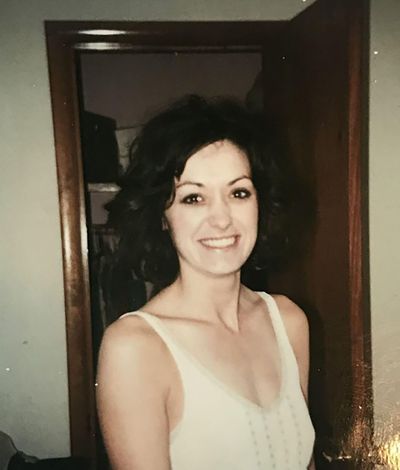
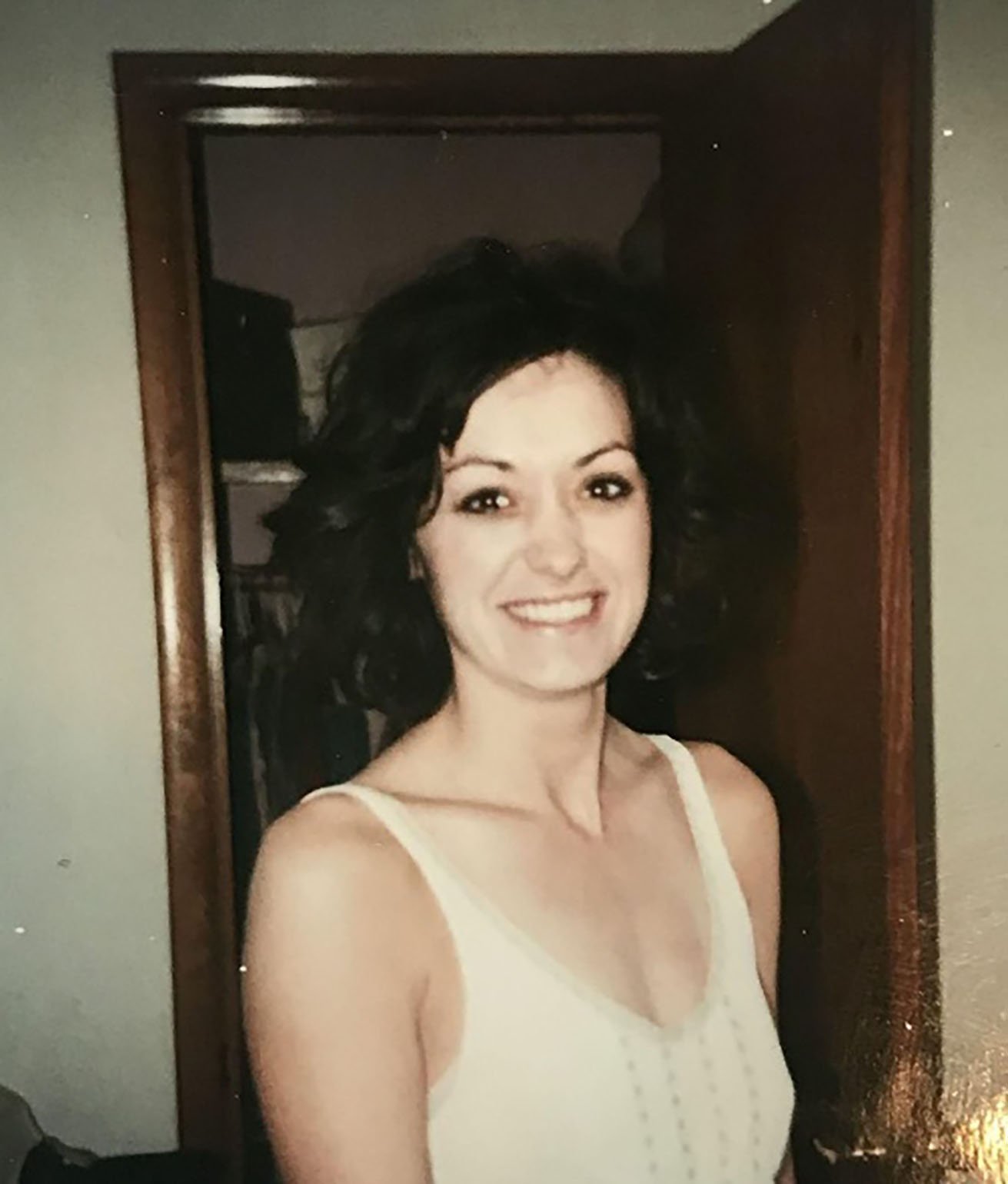
The last time Lisa Anselmo had seen her mother, she was being treated for a mental health problem in the hospital. She had struggles, Lisa acknowledged, but she was a loving mom who doted on her children. Lisa would frequently refer to her as “Wonder Woman” for her cascading dark hair and deep dark eyes that closely resembled the features of the superhero.
“I loved my mom and she loved me,” Lisa said. “She was just beautiful. I used to sit there and watch her put her makeup on all nice.”
More than two decades would go by without answers as to what happened to Margaret Anselmo. Lisa would frequently stop by the police station and demand answers about why they were not doing more to solve her mother’s case, she said. Lisa was angry, started drinking to cope with her feelings and allowed her mother’s death to “ruin my life,” she said.
Investigators collected DNA samples left on her body from the person who likely killed her. That evidence was stored away for years with the hope that one day it would be used to find her killer. Detectives over the years would re-open the boxes of evidence and scour over police reports to see if anything was missed, said Spokane police Sgt. Zac Storment.
In 2022, Storment began to pry into Anselmo’s death. With the advances made over the years in forensic genetic genealogy, he knew that might be his best bet to solve her case.
The Spokane Police Department and Washington State Patrol Crime Lab submitted the evidence left at the scene to a Texas-based forensic laboratory owned by Othram, a corporation specializing in forensic genetic genealogy to help solve cold cases. Othram scientists used genome sequencing, a process to identify variations in someone’s DNA, to develop a profile for Anselmo’s killer.
Scientists would come to Storment with a possible relative and he would have to track down the person and other family members in their lineage to see what person could match the profile of the suspect.
The process isn’t fast.
“As soon as I get the next sample in the family line, it goes back to the scientists. And I wait,” Storment said. “And I wait.”
“Genealogy is a slow burn. It slowly emerges,” Storment said. “It’s like driving through fog. You get close enough to finally confirm what you think you see.”
Through the fog, Storment was able to match the DNA left on Anselmo’s body to Brian James Anderson, who died by suicide in 2009 when he was 33. If he was alive today, police would arrest him on suspicion of rape and murder.
This week was the first time Lisa had ever seen a picture of Anderson, she said. It reminded her that his family is probably hurting just as much as hers, she told The Spokesman-Review.
The DNA found at the crime scene was in CODIS, a national system maintained by the government to hold the DNA of convicted criminals. But there was never a match to link that DNA to Anderson. He had a felony on his record, but not one that qualified for his DNA to be placed into the system, Storment said. It allowed him to slip by police for all these years.
“I feel relieved, let’s say – but I don’t feel like I got the justice for it because he (is dead),” Lisa said. “But I do feel good that it’s all done. It was like this load off of my shoulders. We all cared and had so much love for her. But now we want to be at peace with it.”
The conclusion to Anselmo’s case using DNA forensic technology is the 41st case in Washington in which law enforcement has identified a suspect of a crime, Othram wrote on its website.
Police have not been able to establish a motive for the crime. When Anselmo was found that day, she still had money inside her purse. There was a 25-year age gap between Anselmo and Anderson, who was 20 years old in January 1997. She also lived in the immediate area, while he did not. Storment does not believe they knew each other, he told The Spokesman-Review.
But if they did, or there is more to the story, Storment wants to know. He is hoping the public attention on solving the cold case may unlock memories of people who could provide more clarity to why Anselmo was bludgeoned, raped and left alone in an alley.
With more work, Storment is confident other Spokane cold cases can be solved the same way. He sees the other families out there, waiting for the same news – that their loved one’s death has been solved.
He agonizes when he has to tell them it takes time.
It is frustrating, too, he said. But that helps keep him motivated. Murder “forever matters,” he said, no matter how long ago it happened.”
“It’s something that shouldn’t be forgotten,” Storment added. “These families don’t get to walk away from it, and we shouldn’t, either.”
The police department does not have a dedicated cold case unit like some departments do, which can prolong the time it takes to solve a decades-old case. But the department does have Storment, a dedicated sergeant who refuses to give up.
“He said ‘I put your mom’s picture up on my wall, in the office,’ ” Lisa Anselmo recalled Storment telling her. “He told me he wasn’t going to let it go until it was done.”