Community Cookbook: Oh, the pastabilities!
The pasta universe here on planet Earth is vast. Galaxies of pasta shapes and pasta dishes can be found around the world. It’s still unknown whether aliens on other planets share humankind’s passion for pasta; I’ll wager they do. Are pasta-seeking space aliens the cause of so many unexplained UAPs (UFOs)? Here’s a small selection of American and Italian pasta dishes that I’ve always enjoyed and invite you to enjoy as well.
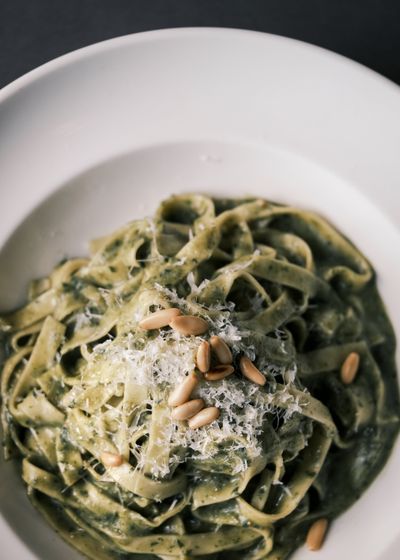
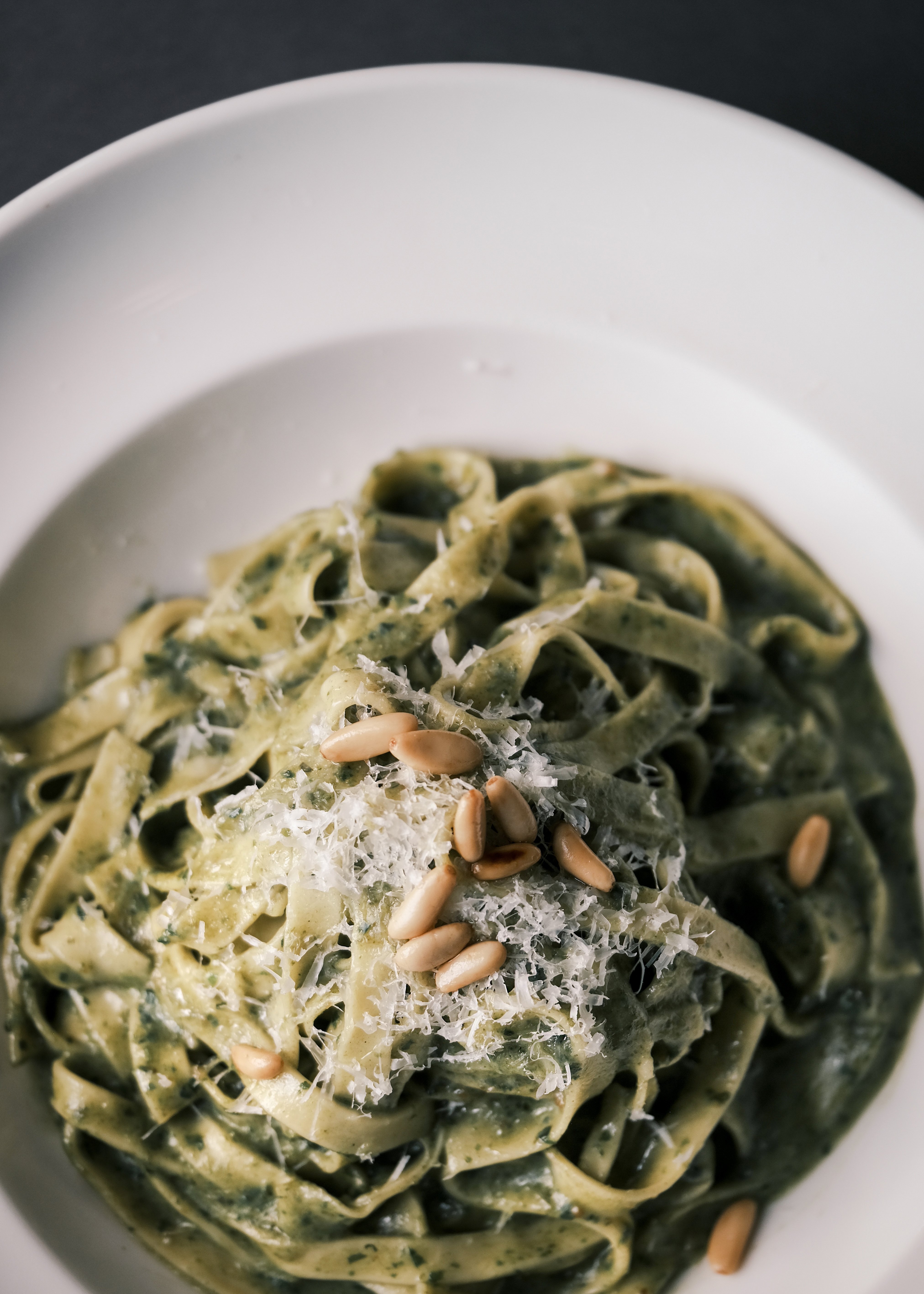
Trenette col Pesto, sometimes called green spaghetti (well, I call it that), is an ancient pasta dish hailing from the lush Ligurian region of Italy. Traditionally made with a string pasta called trenette, linguine substitutes nicely.
The dish’s vibrant green sauce, Pesto alla Genovese, is one of the most famous Italian sauces. It’s made with basil, olive oil, garlic, Parmesan cheese and pine nuts. Grocery store prices for enough fresh basil to make a sizable batch of pesto are prohibitive, and much of it will be stems. Unless you grow your own, a second mortgage on the house or selling the car may be necessary. I could be tempted to do just that for a good batch of homemade Pesto alla Genovese. Growing a couple of plants at home is much easier and less complicated. Jarred and refrigerated pestos are practical alternatives, though not as robust and flavorful. Store-bought pesto eliminates much of the work and time involved in preparing the dish, and Linguine col Pesto takes full advantage of that.
Aunt Jean’s Macaroni and Beef is one of a category of popular dishes here in America. They go by several names, including American Goulash, Beefaroni, and Macaroni and Beef in Tomato Sauce. Recipes abound, including brand-name recipes on can labels and boxes. Beyond macaroni, beef, tomatoes and onions, the ingredients vary. Aunt Jean’s version was always delicious and popular. I hope I’ve done her justice with this rendition.
Strangozzi di Spoleto, another Italian pasta dish, is traditionally made with a string pasta called strangozzi. The simple tomato-garlic sauce is made with fresh tomatoes. Today’s recipe streamlines preparation by using canned tomatoes and tomato sauce, with fettuccini substituting for strangozzi.
Linguine col Pesto
This dish originates from the region of Liguria in northern Italy. It’s prepared traditionally with a pasta called trenette. Linguine makes a good substitute. Trenette col Pesto, or green spaghetti, as I like to call it, is one of the most famous pasta dishes in all of Italy. Homemade pesto is much better than store-bought. If you can afford to buy enough fresh basil in the grocery stores to make a good batch of pesto, you’re in a higher tax bracket than I am. Unless you grow your own, jarred and refrigerated pestos are more convenient and less expensive.
8 ounces dried linguine
1½ cup peeled russet potato, sliced into ⅝-inch cubes
¾-1 cup pesto, or more to taste
Freshly grated Parmesan cheese
Break the linguine in half, if preferred. Cook in salted, boiling water until tender, adding the potato after two minutes of cooking. Drain, reserving ½ cup of pasta water (the potatoes can also be cooked separately in salted, boiling water until fork-tender). Dilute the pesto with ¼ cup of reserved pasta water. Combine the pasta and sauce. Stir in the potatoes and additional pesto or pasta water, if needed (don’t add too much water). Liberally sprinkle Parmesan cheese over the top. Serve hot, with plenty of freshly grated Parmesan cheese on the side.
Notes: You can extend the pesto slightly and make it creamier by adding a small amount of cream, half-and-half or evaporated milk. Leftover pesto freezes well.
Yields: Four main-dish servings
Aunt Jean’s Macaroni and Beef
When I was a youngster, our family had many picnics. One of my favorite picnic foods was the macaroni and beef that Aunt Jean sometimes brought. While not typical picnic fare, it was always delicious. She knew that it was one of my favorites. I created this recipe in 2005, 30-some years after last tasting Aunt Jean’s original dish. I think this comes pretty close to duplicating her macaroni and beef.
1 tablespoon cooking oil
1 cup chopped onion
1 cup chopped green bell pepper
1 pound lean ground beef
12 ounces dried regular-sized macaroni
3 (8 ounce) cans tomato sauce
1 (10¾ ounce) can condensed tomato soup
1 cup pasta water
2 tablespoons Worcestershire sauce
1½ teaspoon dried oregano
1½ teaspoon garlic powder
1½ teaspoon granulated sugar
¾ teaspoon onion powder
½ teaspoon chili powder
¼ plus ⅛ teaspoon black pepper
1 cup (about 4 ounces) sharp cheddar cheese
Heat the cooking oil in a medium stockpot or Dutch oven over medium-high heat. Add the onion and cook for one minute, stirring frequently. Add the bell pepper and cook until the vegetables are tender but still slightly firm, stirring occasionally. Add the ground beef and continue cooking until the meat browns, stirring frequently to break up the clumps; drain, if needed. Cook the macaroni in salted, boiling water until tender; drain well. Combine all ingredients, except the macaroni and c heese, in the stockpot or Dutch oven and heat just to a boil over medium heat, stirring occasionally. Stir in the macaroni and reduce the heat to high-medium. Cook until heated through, stirring frequently. Remove from heat and stir in the cheese.
Notes: Ground turkey or chicken can substitute for beef.
Yields: About 16 cups
Fettuccini di Spoleto
Kathy, a former girlfriend, and I cooked dinner at my apartment on our first date. We prepared a simple Italian dish from Ada Boni’s Regional Italian Cooking, one of only two cookbooks I owned at the time. It was called Strangozzi di Spoleto. Strangozzi is a ribbon-shaped noodle made with flour and water only. Spoleto is the Italian town from which the dish originates. We substituted dried fettuccine. Everything went fine with the dinner preparation. That is, until we discovered that Kathy had absentmindedly peeled two whole garlic bulbs, thinking that each bulb was a clove. We used all the garlic, around 20 cloves, and the sauce turned out pretty well. I’ve simplified the dish by substituting canned tomatoes for fresh and staying with fettuccine. I reduced the number of garlic cloves to six.
2 tablespoons extra-virgin olive oil
6 large garlic cloves, peeled and sliced ⅛-inch thick
1 (14½ ounce) can petite diced tomatoes
½ cup tomato sauce
2 tablespoons finely chopped fresh basil or 2 teaspoons dried
2 tablespoons finely chopped fresh flat-leaf parsley or 2 teaspoons dried
½ teaspoon granulated sugar
¼ teaspoon salt
⅛ teaspoon black pepper
8 ounces dried fettuccine
½ cup reserved pasta water
Freshly grated Parmesan cheese
Heat the olive oil in a medium skillet over medium heat. Add the garlic and cook until fragrant and it starts to change color, stirring frequently. Discard the garlic, if preferred. Add the next seven ingredients (through black pepper). Increase the heat to medium-high and bring just to a boil. Cover with a lid, reduce the heat to medium-low, and simmer for 20 minutes, stirring occasionally. While the sauce is cooking, break the fettuccine into halves or thirds (this is optional) and cook in salted, boiling water until al denté. Drain well, reserving ½ cup of the pasta water. Combine all ingredients, except Parmesan cheese, in a large saucepan or skillet. Cook until the fettuccine is tender and the sauce reduced, stirring as needed to prevent scorching. Transfer to a serving dish and garnish with Parmesan cheese and finely chopped fresh flat-leaf parsley, if preferred. Serve hot with freshly grated Parmesan cheese.
Yields: Four main-dish servings
Contact Dick Sellers at dickskitchencorner@outlook.com.